Fishing is a hobby that many enjoy, and when fishermen start reeling in sharks, it gets even more exiting. However, the Delaware Department of Natural Resources and Environmental Control is urging anglers to review shark species, regulations, and restrictions before casting their lines.
“Before casting their lines, anglers fishing for sharks in Delaware waters need to review species that may be legally caught and retained here,” said Cpl. John McDerby of DNREC’s Division of Fish & Wildlife Natural Resources Police. “Landing, attempting to land, possessing or removing any prohibited shark species from the water is illegal in Delaware, and prohibited shark species must be immediately released while still in the water. Also, removing any shark from the water for taking photos is dangerous and harmful to the shark.”
The popularity of shark fishing has increased in recent years and Delaware hosts many species of sharks, both in the Delaware Bay and Atlantic Ocean. The most popular sharks caught in Delaware are the sand tiger, sandbar, smooth dogfish, and spiny dogfish, DNREC said. However, anglers are prohibited from keeping sand tiger and sandbar sharks due to their low reproductive rate and overfishing.
All prohibited species must be immediately released to ensure maximum probability of survival, according to DNREC.
Prohibited Species
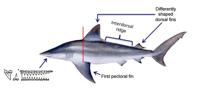
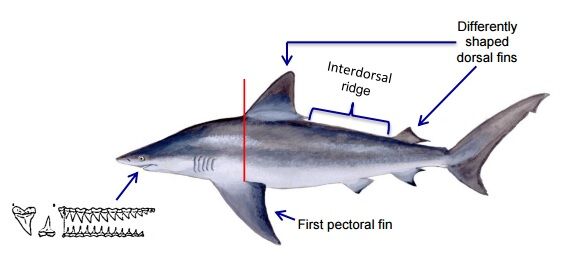
Sandbar Shark
Sandbarshark1
- Commonly mistaken for the bull shark
- Color of upper side is bluish to brownish gray with the underside a lighter shade of the same color
to white - First dorsal fin sits high and aligns with rear attachment point of first pectoral fin
- Differently shaped dorsal fins
- Upper teeth are broadly triangular and serrated
- Lower teeth are narrower and more finely serrated
- Commonly range in lengths from 3 to 7 feet
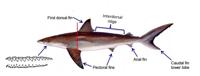
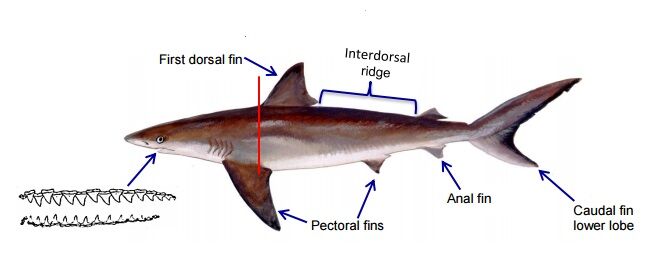
Dusky Shark
Duskyshark1
- Often mistaken for the sandbar shark
- Color of upper side is brown to gray with the underside white
- Large shark with a long streamlined body
- Very similar to the sandbar shark but can be distinguished by its smaller dorsal fin
- Upper and lower teeth are nearly erect
- Upper teeth are triangular with serrated edges
- Lower teeth are narrower and more finely serrated
- Less than 10 feet in length is common
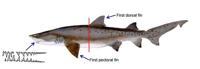
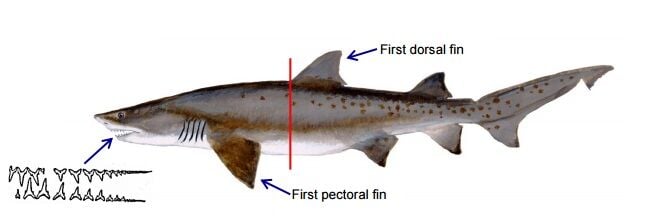
Sand Tiger Shark
Sandtigershark1
- Large bulky shark with a flattened snout
- Coloration of upper side is light brown or light greenish-gray with the underside a grayish white
- Many individuals have darker reddish or brown spots scattered on the body
- First and second dorsal and anal fins nearly equal in size
- Teeth are large needle-like and protruding from mouth
- The ragged looking teeth give the sand tiger shark a distinct menacing look
- Commonly range in lengths from 4 to 10 feet
(Source: DNREC)