








This could be considered a sequel to The Social Network (2010), the hit film about Mark Zuckerberg, the so-called founder of Facebook, the social media website that is currently the third, most-visited Internet location in the world. The success of which has made Zuckerberg a billionaire and as of 2026, in the top five of billionaires currently alive. Since the founding of Facebook, Zuckerberg and his company have been the subject of lawsuits and controversy. The 2010 film, which won Aaron Sorkin an Oscar for Best Adapted Screenplay, essentially documented the first lawsuit against Zuckerberg in 2004. This film, which is not only written but also directed by Sorkin, documents the lawsuit that required Zuckerberg to testify before the U.S. Congress, not his first time testifying before Congress but his second time testifying before Congress in March 2021. This film also documents what led up to him having to testify and what the substance was of why the U.S. Senate subpoenaed him, as well as what prompted the subpoena.
Mikey Madison (Anora and Once Upon a Time in Hollywood) stars as Frances Haugen, a data scientist who works at Facebook, starting in 2019. She has a desk at the company's headquarters in San Francisco. She's part of a department in the company called "Civic Integrity." The Civic Integrity team is meant to work to protect the public from toxic or dangerous things that are the result of the company. It's supposed to find problems with public engagement. Yet, it's obvious that the executives and specifically Zuckerberg don't like the department because it finds problems that ultimately cost the company money. However, Frances becomes aware that Facebook is radicalizing people and pushing them into hate groups, specifically right-wing hate groups.

Jeremy Allen White (The Bear and Shameless) co-stars as Jeff Horwitz, an investigative reporter for The Wall Street Journal. He mainly does political stories in Washington, DC, but he's called to the San Francisco area to cover Facebook, probably due to Facebook and its involvement in the 2016 Presidential election, which resulted in Zuckerberg testifying before Congress the first time in 2018. Jeff's focus seems to be on possible censorship by the company and its spread of misinformation. He becomes linked up with Frances who informs him that those issues are minor compared to the connection to hate groups that she's been noticing and bearing witness. She tells him that there's proof that Zuckerberg and the company are actively doing harm online. At that point, Jeff sees himself as akin to Neil Sheehan, the reporter for The New York Times who received the classified "Pentagon Papers" from Daniel Ellsberg. This makes Frances the Daniel Ellsberg of this situation who is handing over the classified "Facebook Files."
Most recently, Neil Sheehan was portrayed in Steven Spielberg's The Post (2017), and it feels as though that's what Sorkin is attempting. Spielberg's film was more about the conflicts and complications of journalists pursuing a particular kind of story, as well as the dilemmas that arise in something with huge national and global impacts. Spielberg's film was not that far flung from the Oscar-winning Spotlight (2015), which also centered on a group of journalists pursuing a huge story, and yes, Jeff is a main character here, but Sorkin's film is less about the journalist and whatever struggles he might have. Jeff has somewhat of a conflict at the end when there's some threat about what might happen to Frances if she goes public with her claims and accusations against Facebook.

Michael Mann makes you feel that threat in a film like The Insider (1999). Documentary filmmaker, Laura Poitras made us feel that threat in Citizenfour (2014). Both Mann and Poitras' films dealt with whistleblowers, which is the same here with Sorkin, and he's going off of facts, so if that kind of threat never truly materialized for Frances, then that's fair for it not to be here. Yet, Sorkin is a brilliant dramatist and screenwriter. He could've made us feel the stakes here more personally in some other way. I suppose the stakes are demonstrated in Sorkin's depiction of the Capitol riot on January 6, 2021. However, I'm talking about the stakes felt for either Frances or Jeff.
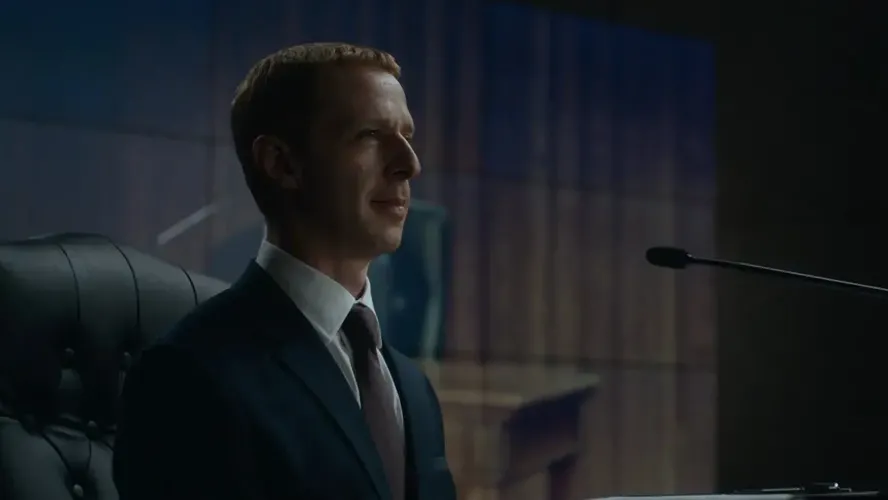
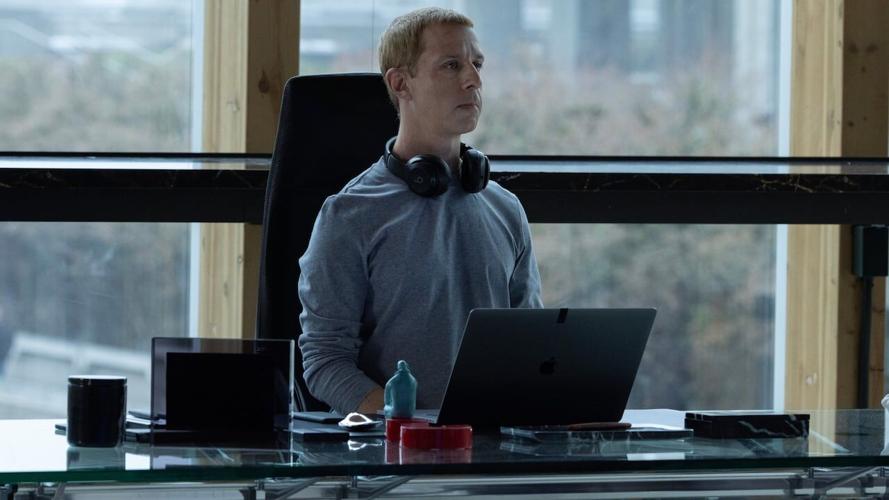
Jeremy Strong (The Apprentice and Succession) also co-stars as Mark Zuckerberg, the head and CEO of Facebook. He's an even more exaggerated version of the same character from the 2010 film. He was considered a jerk back then. He's even more of a jerk now. He doesn't seem considerate of his employees. When some of his employees make a presentation to him, he cuts them off, interrupting them and dismissing their feelings. He could be seen as just a tough boss, which wouldn't make him that much different from Miranda Priestly from The Devil Wears Prada (2006). As with the 2010 film, Mark is arrogant and believes he's better than everyone. Other than that, he embodies this idea that he simply wants to grow his company and further enrich himself, no matter the cost or who gets hurt. He's smug, and he's stuck on this idea that his company isn't responsible for the horrible things that get posted and how the algorithm is radicalizing people. Opposite Bill Burr who is playing a former investor, Mark Zuckerberg is able to debate Section 230 of the Communications Act, which gives him and his company immunity as merely a platform or a distributor that isn't responsible for what hate groups or spreaders of misinformation post.

Other than these debates, Sorkin structures this film in a similar way he did his Oscar-winning script for The Social Network. The 2010 film had the framing device of Mark Zuckerberg giving a deposition and hearing the depositions of those on the opposite side. The 2010 film then had flashbacks that showed how the two sides got to where they were. The 2010 film basically bounced back-and-forth between two timelines. This narrative does the same, bouncing back-and-forth between Frances and Jeff meeting in 2019, doing their Sheehan and Ellsberg thing, and Mark preparing for his Congressional testimony in 2021. A lot of it though is explaining what is at the core of the criticism aimed at Facebook vis-à-vis political discourse and elections. Sorkin's dialogue, which possesses a lot of exposition in his attempts to help viewers understand the nuts and bolts of the current Facebook complaint, is very snappy and witty. His characterizations might be a bit lacking, except when it comes to Frances, and Madison is probably the best performer here with White as a warm, calming presence, a kind of balm in the Sorkin-ness of it all.
Rated R for language.
Running Time: 1 hr. and 52 mins.
In theaters.