
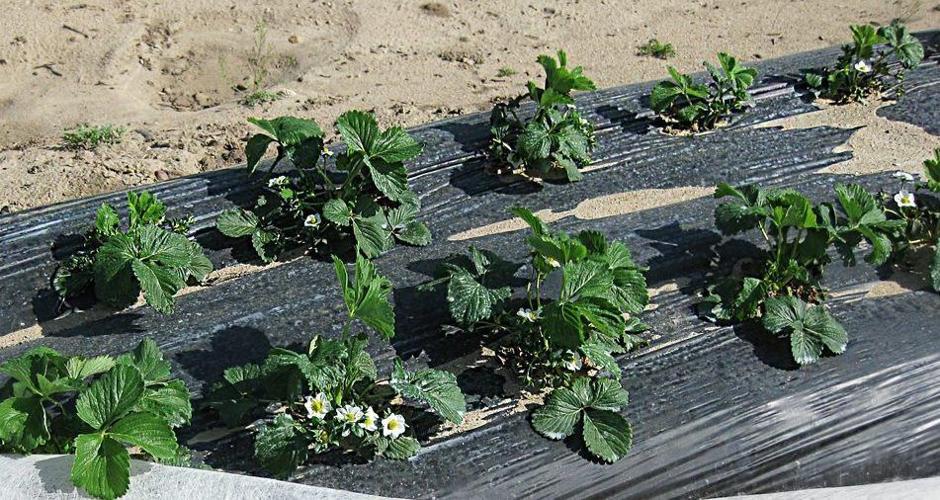
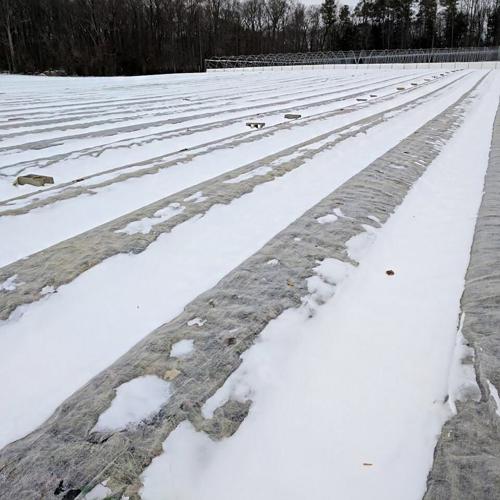
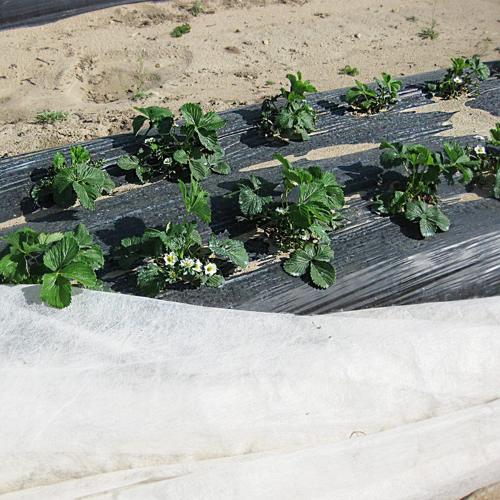


Fifer Orchard’s strawberry plants hibernate for the winter.
Fifer Orchards, located in Camden Wyoming, Del., has been in business for almost 100 years, which means it’s safe to say they know a thing or two about farming. Mike Fennemore, a fourth generation family member and owner, operator of Fifer Orchards, can attest to that.
Fennemore has been around the farm since infancy and has been a full-time employee since 2008. He says Fifer Orchards takes a different approach to strawberry growing on Delmarva.
“We grow strawberries differently than most folks in our geography especially north of here in Pennsylvania, New York, places where it gets even colder,” Fennemore says. “We’re in a bit of a micro climate — in a normal year we’re more similar to eastern Virginia or eastern North Carolina.”
Fennemore says everything Fifer does in terms of farming, comes from long term case studies over a 10 year pattern. Fifer uses research from various universities including NC State, University of Maryland and Virginia Tech, opposed to Cornell and Rutgers.
“We use a raised bed and we grow strawberries as an annual type crop,” Fennemore says. “We plant in August, harvest in April, May and June and that’s it for strawberry season.”
#DYK Fifer strawberry plants hibernate under row covers for the winter? We'll have the first red strawberries by late April if all goes well pic.twitter.com/CXWjPqqt1G
— Fifer Orchards (@fiferorchards) January 11, 2017
Fifer Orchards plants the strawberry crop as little plugs and receives a big healthy plant by Christmas time. The health the crop acquires leading up to late December, allows it to build up nutrients and strength to be ready for spring.
“We build the crop and when it gets cold, we cover it with polypropylene covers,” Fennemore says. “Now the plant is dormant, making it less susceptible to injury from cold. The cover offers a second layer of protection.”
Immediately after strawberry season, Fifer plants pumpkins into the raised bed system and the beds are reused and recycled in the same year. Not only is this a sustainable method, it also breaks the disease and insect cycle. In addition, raised beds provides irrigation where it’s needed. Trickle tape runs underneath the plastic layer, giving the crops no more or no less than what they need and conserving energy by placing water at the root zone.
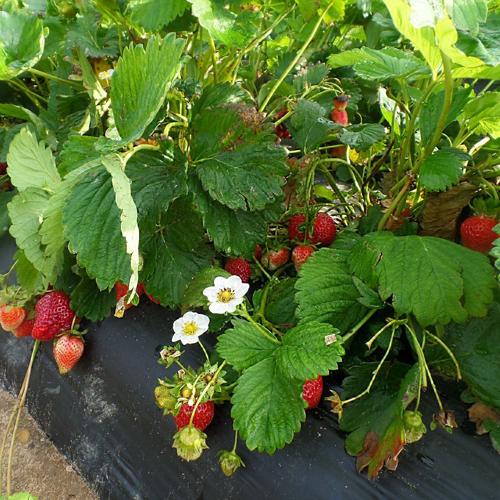
In March, Fifer uncovers the plant for bloom and 30 days after bloom, there is fruit.
The raised bed method is quite different to how a farm up north would grow strawberries. Northern farms typically grow strawberries for 2 – 3 years and plant and harvest strawberries as a perennial crop.
“They would harvest a little the first year, through out that winter and the second year they would receive a big crop, and then during the third year, receive a little crop again. Our strategy is to get all that you would get in that 2 – 3 years, in one season.”
Although the raised bed method works best for Fifer, Fennemore admits, it’s not always as easy as it sounds.
“Last year the cold weather in March and April required additional action on our part — re-covering them is very labor intensive, we place cinder blocks to weigh them, hold them into place.”
If needed, Fifer uses irrigation as a frost prevention method. Fennemore says it may seem counter intuitive but the water turns to ice which generates heat and serves as an insulator.
Check out this post from 2013:
Fennemore says in order to avoid this method, the best case scenario for farmers on Delmarva is a cold December, January and February and a slow warm up in April.
In addition to strawberries, pumpkins, broccoli, cauliflower, kale, Brussels sprouts and tomatoes all use the raised beds system.
To learn more about Fifer Orchards, visit www.fiferorchards.com.

Strawberries in bloom at Fifer Orchards (Photo: Fifer Orchards)