


Editor’s note: The views and opinions expressed in this review are solely those of Marlon Wallace and do not necessarily reflect the views and opinions of WBOC.
This film is the second adaptation of a novel by Angie Thomas. The first was The Hate U Give (2018), which was about the issue of Black Lives Matter, focusing on an African American girl who witnesses an incident with police, resulting in the death of an African American boy. The story in this film is not a sequel or prequel, but it is arguably set in the same world as The Hate U Give.
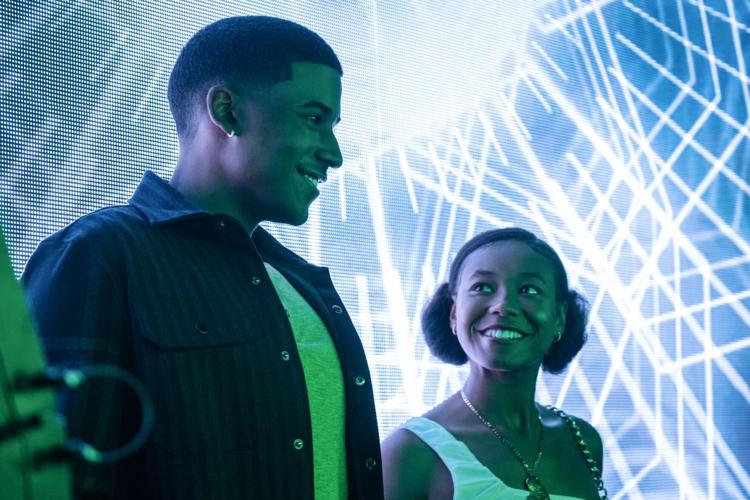
Jamila Gray, in her feature debut, stars as Brianna Jackson, a teenage girl living in Garden Heights, which is the setting of The Hate U Give. In The Hate U Give, the protagonist was a Black girl from that poor neighborhood but she was attending a private school called Williamson Prep that has a predominantly White population. Brianna doesn’t necessarily attend Williamson, but it seems as though she attends a school like it, not one in her neighborhood but one where she has to be bused.

It doesn’t seem to be a school where she has to pay to attend. Given Brianna’s family, their economic situation wouldn’t allow her to attend a private school like Williamson. Yet, Brianna is attending a school that seems to be predominantly White. She has to ride a bus to get there, but it’s not clear how far away the school is or if it’s outside her neighborhood. The students have to go through a metal detector and get past security guards to get into school. Yet, it’s not clear if that’s a result of the gang violence that killed people like Brianna’s father, an up-and-coming rapper, or if it’s just the result of the mass school shootings that have been the case since Columbine.
Sanaa Lathan (Love & Basketball and The Best Man) stars as Jayda Jackson, the mother to Brianna. After her husband was murdered, presumably to gang violence and gun violence, she became a drug addict and practically abandoned her children. Eventually, she got clean and took custody of her children, but she has struggled to maintain her job and pay the bills. Her son who is her eldest child helps by working at a pizza shop. She’s initially supportive of her daughter’s interest in rap music, but she does get worried that Brianna is going to head down a similar path as her father and possibly end up dead.

It’s through Brianna’s pursuit of a rap career that this film interrogates the nature of rap music and how it’s been commercialized. There is a bit of a conversation here about what it takes to be successful in rap music or the music industry in general, as well as how that affects the Black community from which that music originates. There is possibly a longer conversation to be had about rap music, who’s creating it and why, who’s selling it and why, as well as who’s consuming it and why. There also is a longer conversation to be had about the perceptions of rap music and the criticisms it gets about its depictions of violence and how some believe it instigates that violence. The screenplay by Kay Oyegun (This Is Us) touches upon that conversation and comes straight at it in ways that aren’t often put on the big screen.
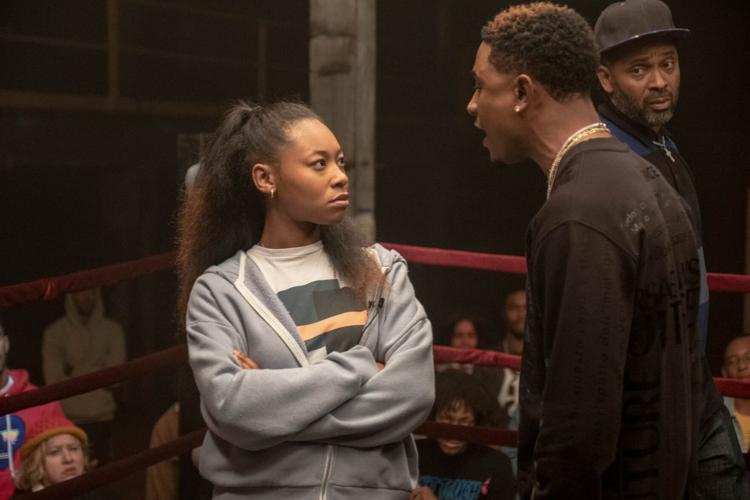
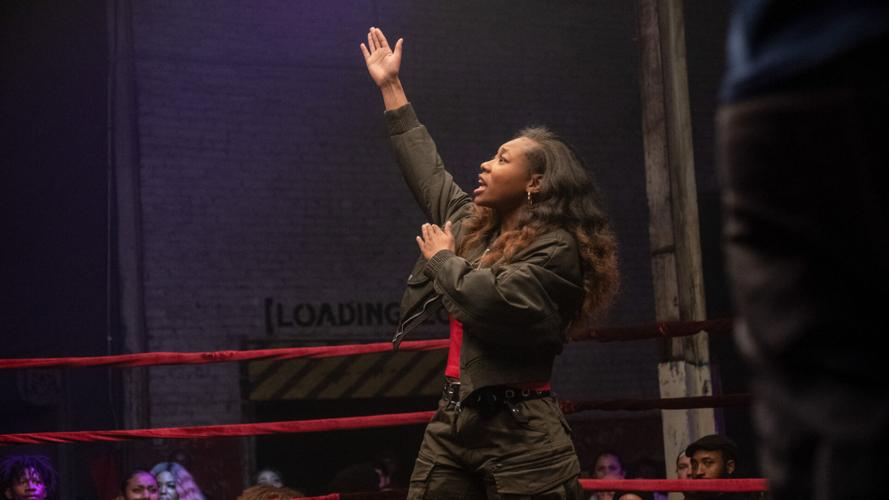
Method Man (Power Book II: Ghost and The Wire) co-stars as Supreme, a music producer who worked with Brianna’s father before he died. He has a son who is an aspiring rapper. He and his son attend these regular rap battles that happen in Garden Heights in what looks like an actual boxing ring. The rap battles are called “The Ring.” Supreme goes there to scout for talent. Regardless of who the people really are, Supreme pushes them to make music that reflects the gang violence and the thug persona that has become a stereotype within the Black community that many criticize.

Supreme knows that this persona is what sells and sells mostly to White populations who either exoticize or romanticize this persona and its ideas for whatever reason. It may be wrong, but Supreme understands that it will make them money and it seems to certainly have made him rich, as he lives in a large, beautiful house and the lap of luxury. Brianna sees all of his wealth and wants it for herself. However, she personally rejects the gang violence and thug persona. She’s one of the people who would be first to criticize, given what happened to her father. Yet, the question of the film is if she’ll go against her nature and put on an act or play the role of a thug in order to sell records and make money for her struggling family.
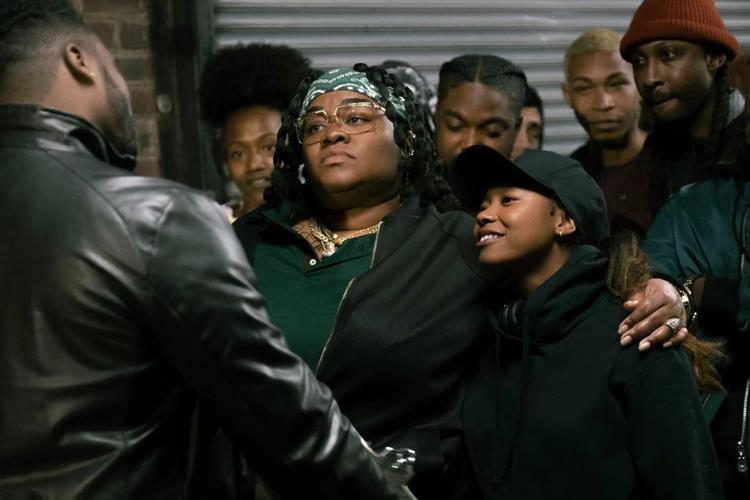
Da’Vine Joy Randolph (The United States vs. Billie Holiday and Dolemite Is My Name) also co-stars as Pooh, the auntie to Brianna. Pooh seems to be the sister to Jayda. When it comes to a thug persona, Pooh is exactly that. She was obviously raised on the streets. If anything pops off, she’s quick to pull a gun, which she has tucked in her waist. She’s apparently had some involvement with gang violence. However, she’s the one acting as Brianna’s manager. She’s the one who takes Brianna to “The Ring” in order to have these rap battles. For her, the thug persona isn’t an act or role. It’s Pooh’s real life.

If Pooh wanted to rap about her experiences, that would be okay, but, for Brianna to do so wouldn’t be right, authentic or true to who Brianna is. As we gather from bits here and there, Brianna is a bit of a nerd. She likes Star Wars, anime and Funko Pop!. She’s not into gangs or that street life. She has to discover what it means if she wants to portray that life and still live in the ghetto where it happens.
Michael Cooper Jr., in his theatrical debut, plays Malik, a friend of Brianna since fifth grade. When Brianna starts getting a taste of the rap world, he’s the one who reminds her of who she really is. He tries to help her not get swept up in the illusion that she thinks she has to put on. He’s there to keep her grounded. He’s also very endearing, always attempting to make her laugh.

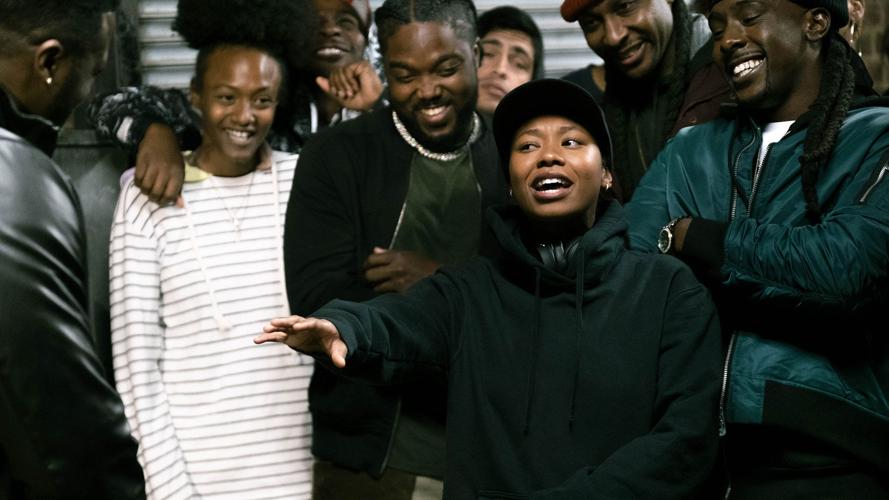
The film builds itself around the rap battles in “The Ring.” The battles themselves feel very subjective. There’s no sense of what the rules are, or if there are any rules. The winner seems to be based on crowd reaction, which could obviously be stacked or manipulated beforehand. Never do we see anyone who necessarily lacks talent. Each person who gets in the ring can come up with rhymes and rather cutting insults. The only progression that we see in that regard is the length of the rhymes. Brianna starts out with short raps. By the end, she has a long rap that’s supposed to be made on the fly and it’s very epic. It’s also an incredible denouement for this film.
Ever since Issa Rae’s Insecure (2016), we’ve seen an uptick of films and even TV shows about female rappers. We had Roxanne Roxanne (2018). Recently, there was Queens (2021) on ABC and Rap Sh!t (2022) on HBO. This film along with these other recent properties about female rappers have done more to interrogate rap music and the industry, as well as criticize the culture within it. I would argue that it does so even more than something like Straight Outta Compton (2015).
Rated PG-13 for strong language, sexual references, some violence and drug material.
Running Time: 1 hr. and 55 mins.
In theaters and available on Paramount +.