
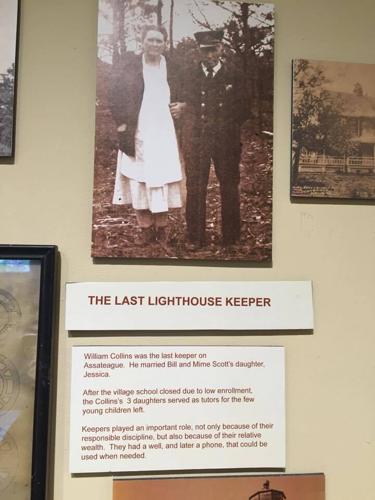

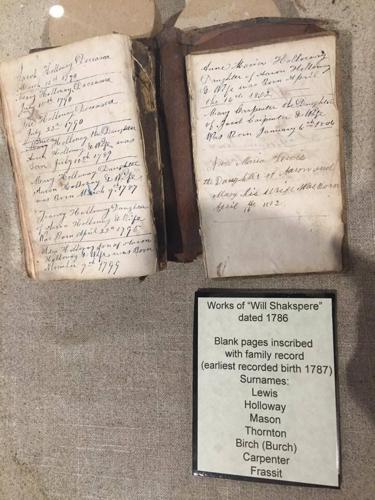

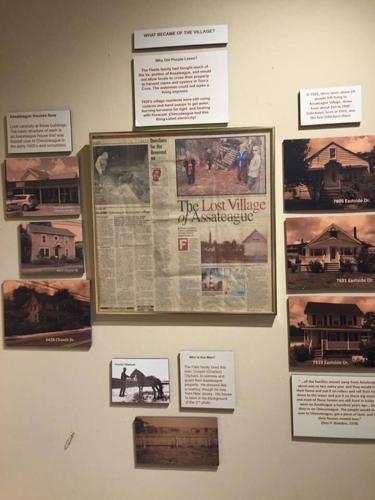

A walk-through of Assateague Island, beginning in 1867.
Deb Bender spent her childhood growing up on Chincoteague Island, a small town on Virginia’s eastern shore. As a young, inquisitive adolescent, Bender spent a lot of her spare time exploring Assateague Island with friends.
“I was exploring with my friends and we found an old dilapidated building,” Bender recalls. “In the building, we found an old ladle and frying pan and just being able to see that as a young girl was fascinating.”

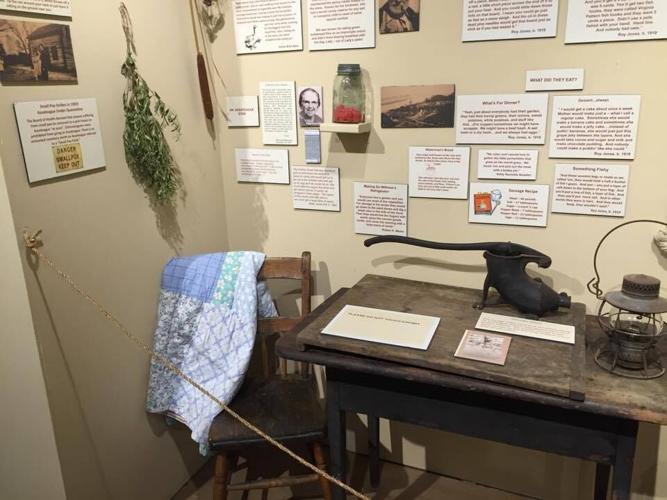
Part of The Museums of Chincoteague Island’s latest exhibit (Photo: Deb Bender)
Bender’s interest in the island continued to grew throughout her childhood into her adult years which is why Bender and her cohort, Lisa Cannon, decided to help create The Museums of Chincoteague Island’s latest exhibit.
“Both of us are in love with the history of Assateague,” Bender adds. ” Lisa is from the city and when she moved to Chincoteague, she was fascinated at how people lived in such a remote area.”
The Museum of Chincoteague Island’s newest exhibit, entitled “When Assateague Was Home,” looks at the various aspects of daily life in the village of Assateague, a tiny isolated community that existed for more than 200 years on the Virginia portion of Assateague Island.
The exhibit’s timeline begins in 1867 and follows Assateague Island’s inhabitants until their departure from the island. In addition to the timeline, the exhibit showcases the lifestyle of those living on Assateague in the the late 1800’s and early 1900’s.
According to Bender, the public will learn about remedy potions used on Assateague, how residents kept mosquitoes from getting in their houses, their daily cuisine and what the children did for fun.
The duo was able to extract information from a couple sources, one of which was Roy Jones, who is still living today. Currently 97 years old, Jones recalls the time he spent on Assateague Island during his childhood and the day his family left in 1933.
“He’s created maps of what Assateague looked like, how the village was placed in 1925…they’ve all been reproduced,” Bender said.
In addition to Jones’ first hand accounts, Bender and Cannon used other memoirs of people who lived there, two of which have never been displayed in public.
“My favorite part of working on the exhibit was interviewing members that had connections to Assateague wether it was spending their summers there or talking with Mr. Roy Jones about living there,” Bender says.
Anyone with additional information on Assateague Island’s history can contact Ennis Barbery Smith at (757) 336-6117 or museumofci@gmail.com. To learn more about the exhibit, visit chincoteaguemuseum.com.