
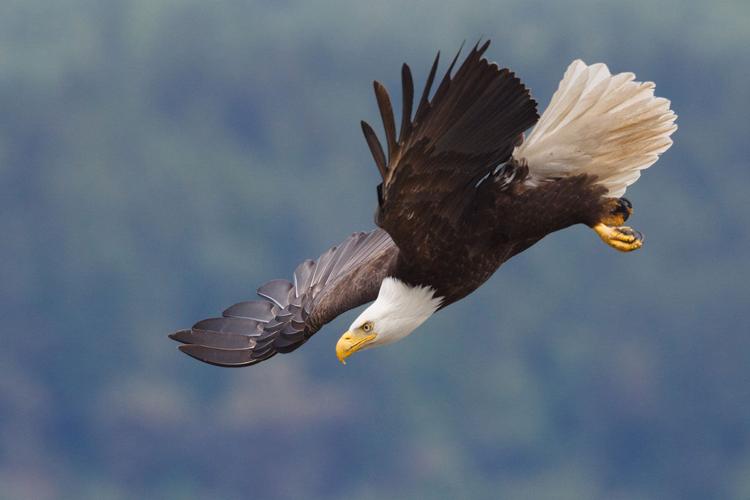
During the late half of the 20th century, it was pretty rare to look up in the sky and see a Bald Eagle soaring above.
In 1977, there were 44 nesting pairs of Bald Eagles in the state, representing an all-time low. This shortage can be largely attributed to the over abundance of harmful pesticides in the environment, namely dichlorodiphenyltrichloroethane, otherwise known as DDT.
After spending multiple years on the federal threatened and endangered species list, Bald Eagle populations finally made a comeback in 2007.
According to the Maryland Bird Conservation Initiative, today, the Chesapeake Bay region is home to the largest concentrations of Bald Eagles in the lower 48 states, with an estimated 400 or more pairs currently breeding in Maryland.
Why does the Chesapeake Bay region have the largest concentration of Bald Eagles?
Conservation Community Consulting Principal Dave Wilson says it can be attributed to a few factors.
The number one factor is the food sources in the area. Wilson says Bald Eagles consume fish and ducks which makes the Eastern Shore a perfect destination for these regal birds. On top of the food sources, there is a lot of nesting for these birds near shore trees as well as tributaries.
When the Bald Eagle population began to recover, organized surveys of Maryland’s Bald Eagle population were discontinued. Although the numbers are up, threats such a pollution, storms, coastal development and collapsing fish population make it imperative to continue these surveys.
This is where the Maryland Bird Conservation Initiative comes in.
The Maryland Bird Conservation Initiative is a partnership working to conserve birds and their habitats. The organization launched a new citizen science monitoring program in December to document the nesting success and productivity of the Maryland Bald Eagle population.
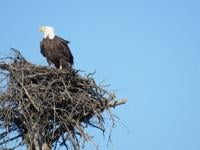
According to officials, the Bald Eagle nesting season in Maryland starts in October, with pair formation and construction of large stick nests in the upper crotch of tall trees. Eggs are usually laid in January and February, the clutch of 1-3 eggs usually hatch by mid April, and the nestlings fledge in May-June.
During this initiative, volunteers are asked to visit a nest multiple times between March and July to collect information on nest occupancy and the number of young. Wilson says the organization already has about 30 volunteers for the initiative.
“The volunteers will count and track Bald Eagle nests, find out if they are active, where they are and how many bald eagles there are in that location,” Wilson said. “We want to have a data set, engage the public and get them interested.”
Wilson says Bald Eagles are a species that really peak the public’s interest and the public should know how important these birds really are.
Another objective of the Maryland Bird Conservation Initiative is to have a great data source for the public, on these animals.
“We wanted to create one entity where you can get all the non-profit information,” Wilson said. “One website, one location.”
To learn more about this initiative, visit Marylandbird.org.
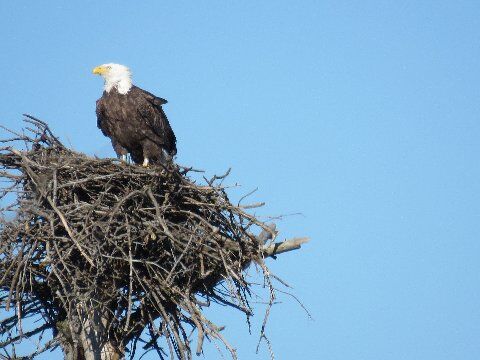
Photo taken by Arthur Weidner at Prime Hook Beach, Del.