NASA Wallops continues with STEM in the Sky Astronomy Series.
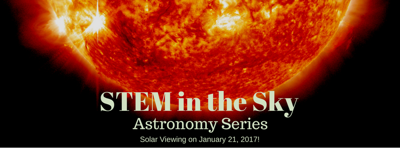
The NASA Wallops Facility Visitor Center is hosting a solar viewing on Saturday, Jan. 21 from 1 – 3 p.m. through the second installment of the STEM in the Sky Astronomy Series.
Visitors will have the opportunity to learn about Earth’s sun and participate in solar viewing through high powered telescopes, as well as view Sun-themed movies and activities. Admission is free of charge.
Kim Check, visitor center manager, said that the event will have plenty of interesting celestial activities for all ages.
“Some of the hands-on activities will include solar flare flipbooks, Sun-themed coloring pages, magnetospheric multi-scale mission scale model cutouts, and Sun catchers,” Check says.
Attendees will be able to safely view the Sun through a telescope to look for sunspots, solar prominence and flares, while learning about the upcoming 2017 total Eclipse, taking place on Aug. 21.

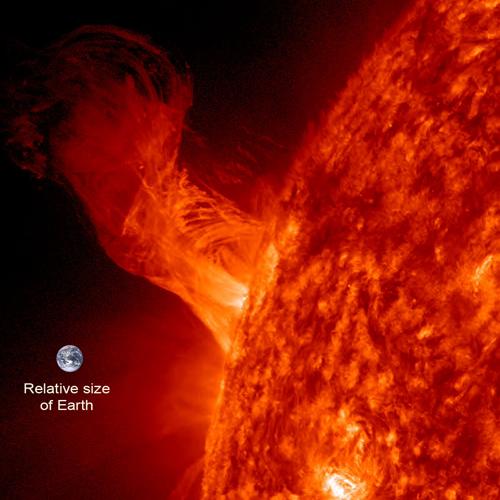
A photo displaying the Earth’s size relative to the Sun (Photo: NASA Wallops Flight Facility)
“Solar-themed data sets will be playing on the 3-dimensional Science on the Sphere Theater that will provide an even closer look at solar flares, storms and Sun-Earth connections,” Check says.
Along with the activities and interactive lessons, Check said that the event will also highlight the important connections between the Sun and Earth that drive the seasons, ocean currents, weather, climate, radiation belts and aurora.

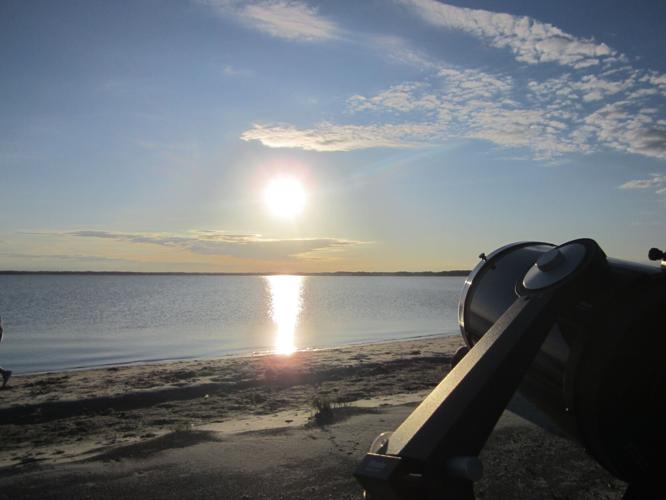
One of the telescopes on Wallops Island looking into the Sun (Photo: NASA Wallops Flight Facility)
This event will occur regardless of weather, however, solar telescope viewing is subject to cancellation due to inclement weather.
There will be a public event for the viewing of the 2017 Total Solar Eclipse on Monday, Aug. 21, so stay tuned for more information.
The STEM in the Sky Astronomy Series will continue with exploration of Jupiter in May, and ending with the Solar Eclipse in August. The series is funded in part through the 2015 Competitive Program for Science Museums, Planetariums, and NASA Visitor Centers (CP4SMPVC+).
For more information about this series or the visitor center, visit NASA’s Website and Facebook Page.