







Michael Grandage is a Tony Award-winning, stage director, having worked for the better part of 30 years. Grandage is himself openly gay, having a British, civil partnership with his male lover. Ron Nyswaner is an Emmy Award and Oscar-nominated writer, having penned Philadelphia (1993) and Soldier's Girl (2003). Both those stories were about closeted gay men, either professional or government workers. Here, Grandage and Nyswaner are adapting the 2012 novel by Bethan Roberts, which is set in Brighton, England, a seaside town in East Sussex County, along the southern coast of the United Kingdom. The novel depicts two time periods: the 1950's and the 1990's or perhaps the early 2000's. We follow three people through the decades who have to grapple with the homophobia that's both external and internal.
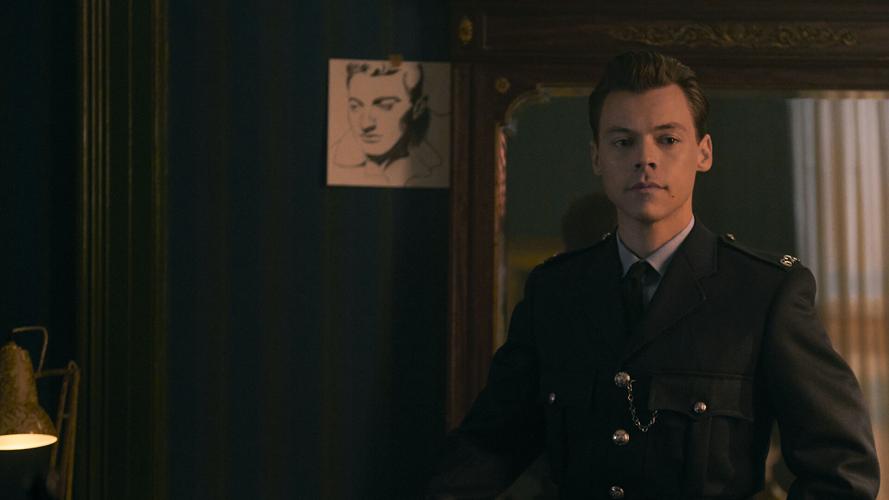
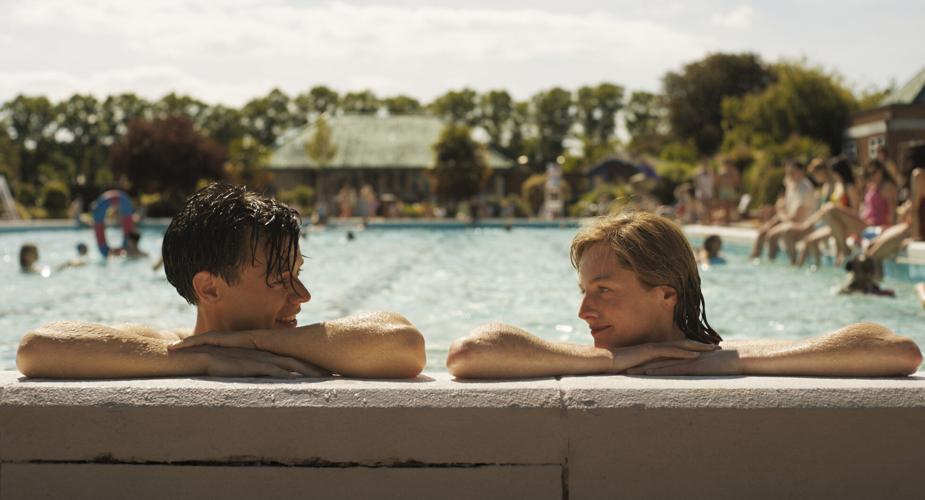
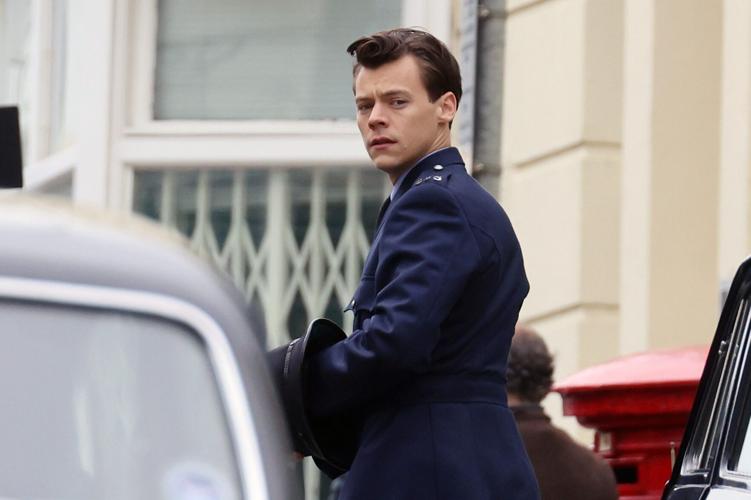
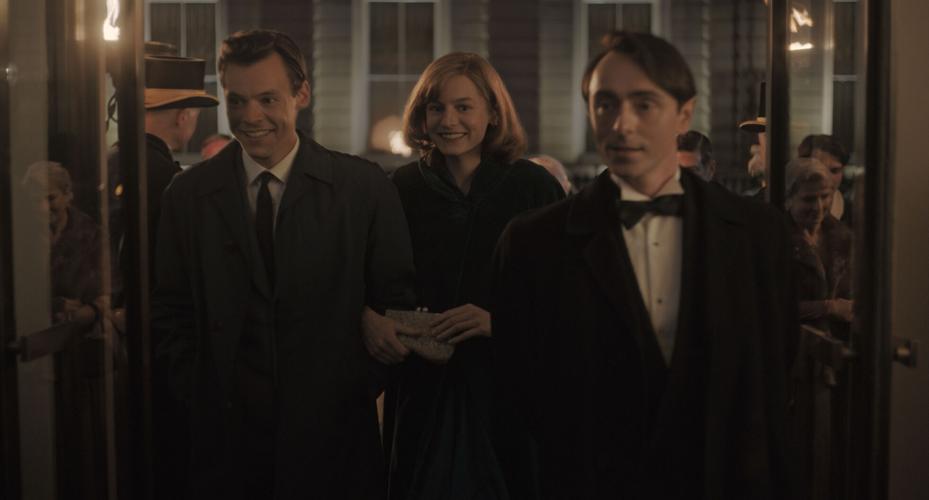
Harry Styles (Don't Worry Darling and Dunkirk) stars as Tom Burgess, a police officer who in the summer of 1957 goes to the beach with his friend and meets a young woman with whom he starts dating and quickly marries. He's seemingly conservative in his politics. He loves being a cop or "copper" as they're called in England. He has a rather black-and-white view of law and order. He's also pretty strict about traditional, gender roles and has a very narrow view of what gay men are. He thinks that to be gay, one has to be more effeminate or even flamboyant. He doesn't think someone like him can be gay.

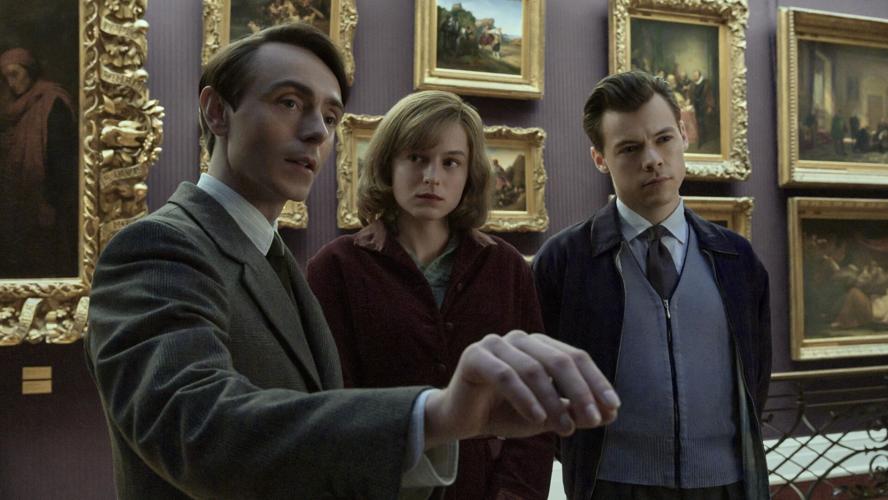
Emma Corrin (The Crown and Pennyworth) co-stars as Marion, a school teacher who is the young woman that Tom marries. Despite the times, she wants more than just being a housewife. She likes her career. She also likes art and literature and the finer things in life. She's not fancy or "posh" as they might say in England, but she is very educated and somewhat cultured. However, she's attracted to Tom, partially because he's the opposite. He doesn't really read or gets bored with things like opera. He's crude. It also probably helps that he's very handsome.
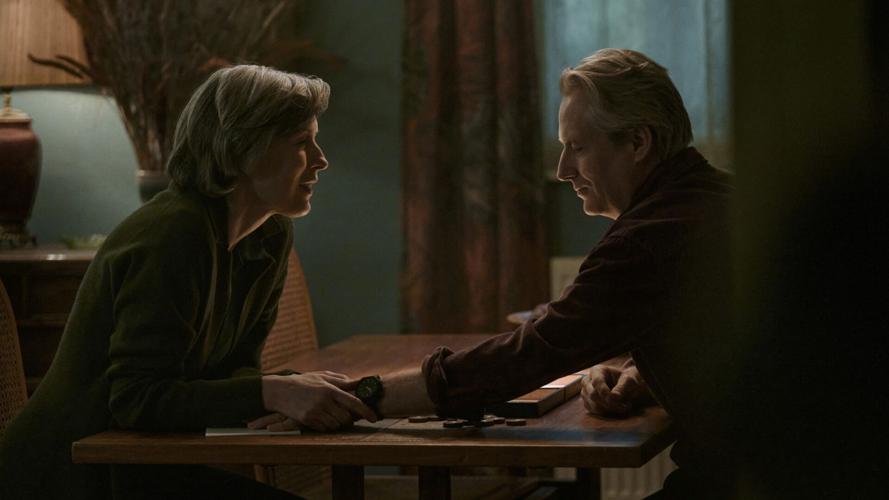
The film's narrative begins with Marion and Tom having been married for decades. It's not clear what year it is exactly, but it's likely the late 90's or early 2000's. Most likely, it's past the Margaret Thatcher era, which marked another conservative and homophobic time in the country. The film is instead set in a time where a gay couple can walk the streets of Brighton and be openly affectionate without too much fear. Obviously, homophobia continues into the 2010's and even 2020's, but Marion and Tom don't look older than their 60's. Older Marion is portrayed by Gina McKee (Phanton Thread and Notting Hill) and older Tom is portrayed by Linus Roache (Homeland and Law & Order).

David Dawson (Peaky Blinders and Luther) rounds out the cast as Patrick, a museum curator. Patrick is as educated as Marion, if not more so. He's as much into art and literature as her. He's very cultured and very liberal, being all for women pursuing careers and not just being housewives. He's also well mannered and very well dressed. He likes to travel and explore the world. He also doesn't fall asleep in operas. He's not as handsome as Tom, but, on paper, he's a better match for his wife. The only problem is that Patrick is gay. He goes to underground bars and is attracted to men. If that isn't clear, he keeps a diary or journal, detailing his same-sex attraction.
The older Patrick is portrayed by Rupert Everett whom some might recall from Another Country (1984) in which Everett also played an elderly gay man, looking back at his life and focusing on a closeted relationship he had that seriously affected him. Roache might be remembered from Priest (1994) in which Roache played a public servant engaging in a secret affair. All this to point out that the actors here have played similar characters in similar scenarios. Therefore, the material isn't new here, yet there was potential for a different or insightful take.

Tom being a closeted, gay cop definitely had potential. Cherish Oteka's The Black Cop (2021) won the BAFTA for Best British Short Film, which was about a closeted, gay cop, but that film was more about the issue of racism than homophobia, and how that racism intersected with the cop's job. This film could have been more about how homophobia intersects with Tom's job. Yet, we don't get too much of Tom's job depicted. British actor, Russell Tovey is currently in the series American Horror Story: NYC in which he plays a closeted, gay cop and that series is more about the intersection of homophobia and being a police officer. This film is similar to Stephan Lacant's Free Fall (2013), which is also about a closeted, gay cop, consumed with attempting to maintain a relationship with a heterosexual woman.
In a moment akin to Brokeback Mountain (2005), Marion discovers that Tom is having an affair with Patrick. That 2005 Oscar-winner didn't dwell on the aspect of the husband maintaining his secret affair. The gay man in Brokeback Mountain quickly becomes a single guy and that film becomes more about him dealing with loneliness and isolation. This film is practically the opposite. It's about the man choosing to stay married. As we see an older Tom, there's not much inkling that he regretted that choice. However, older Marion asserts that he did.

Older Marion in fact suggests that she and Tom weren't happy in their decades and decades of marriage. The film never explicates why. The film proffers that she's never be sexually satisfied. Yet, that's a problem that could have been rectified. Plenty of straight men have problems satisfying their wives. Yet, this film suggests that their physical intimacy isn't the true problem. Marion claims that Tom lied about being in love with Patrick, and thus not in love with her. Tom argues that he loved both. This film, like most romance films, is therefore pro-monogamy where human beings are only allowed to have one romantic partner. It's this idea that a person can only be in love with one person at one time, an idea that is dis-proven constantly.
A human can "love" more than one person at once. For example, a person generally loves both their mother and their father. Right there, that is a kind of polyamory that is constantly overlooked or dismissed. People don't put limitations on platonic love but they do put limitations on romantic or sexual love, which is myopic and often counter to how human emotions actually work.

This film's assertions also deny or overlook the fact that Tom's sexuality might be more fluid than what's being concluded. The assumption is that he's strictly gay, when by his own declarations he's more likely bisexual. Numerous people in the LGBTQ community complain about "bisexual erasure" or assertions where people ignore or refuse to believe that bisexuality exists. Of course, the issue is complicated by the fact that gay men historically have had to hide who they are due to homophobic laws that existed in countries like the UK in the 1950's. They hid by having wives whom they claimed to love. John Schlesinger's Sunday Bloody Sunday (1971) and Michael Mayer's A Home at the End of the World (2004) are exceptions that don't indulge in that kind erasure.
Without saying the word, Tom concludes this film by basically identifying as bisexual. Yet, Marion's reaction and her final decision reinforces its erasure. She might be justified in her decision to leave, given how she interprets her marriage to Tom. Unfortunately, the film never shows us any of that justification on screen. There are plenty of scenes showing us Tom and Patrick when they were younger and the passion between them being much stronger than the passion between Tom and Marion. It's short-hard for sure, weighing the physical attraction over anything else. Arguably, the sexual passion can't last forever. The question then becomes if Tom had spent the past few decades with Patrick and not Marion, would Patrick be complaining in the same way that Marion now is?
Rated R for sexuality and nudity.
Running Time: 1 hr. and 53 mins.
Available on Amazon Prime.