





This is Todd Field's third feature film. Both his previous features were nominated for Academy Awards. His debut was In the Bedroom (2001). It was up for Best Adapted Screenplay and Best Picture. His follow-up was Little Children (2006), which was also up for Best Adapted Screenplay. Both those films were based on previously published materials. This is Field's first feature that is a wholly original script. Like his previous films, this one centers on a woman. His women tend to be mothers, often grappling with motherhood opposite other desires or pursuits, mainly selfish pursuits. This is particularly true in his latter two films: Little Children and this one. Little Children focused on a woman's affair and was very much in her head, deeply trying to understand the why or whys.
Here, Fields is a bit more removed. He's not in the head of his female protagonist as deeply as he was in Little Children. Being in her head was expressed mainly through an omniscient narrator in Little Children. There is no narrator here. I'm not sure Fields wants to understand his protagonist here in the same way. It's probably because his protagonist here is masking a lot of what she does and often feels, only letting her true self be revealed in certain ways or places. As such, the protagonist here is a woman that one must intuit or interpret for oneself. Intuiting and interpreting things for oneself is also an outward theme that is stated in this film.

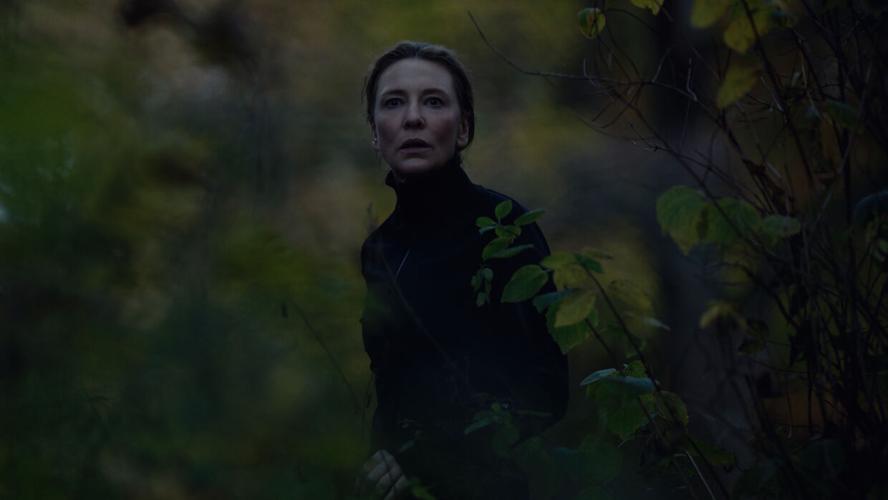
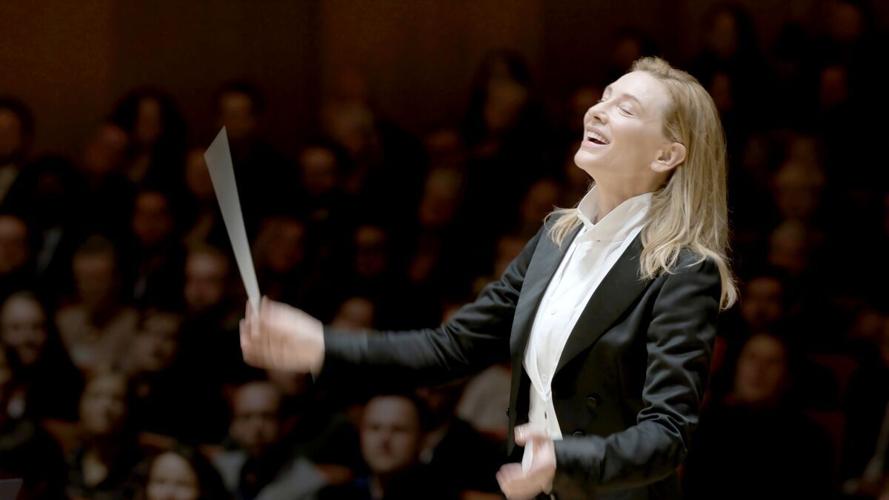
Cate Blanchett stars as Lydia Tár in director Todd Field's TÁR, a Focus Features release. Credit: Focus Features
Cate Blanchett (Blue Jasmine and The Aviator) stars as Lydia Tár, a highly acclaimed, music conductor. She's also a composer. She's a protégé of Leonard Bernstein. She's seemingly surpassed him, as she is a EGOT winner. She is currently the chief conductor of the Berlin Philharmonic. She lives in Germany with her wife. She refers to herself as a "U-Haul lesbian," though that might not be totally true. She and her wife have a daughter who seems to be in grade school. She might not be a U-Haul lesbian, but she clearly is a fierce mother who will ruthlessly defend or protect her daughter. Her loyalty for anyone else might not necessarily exist.
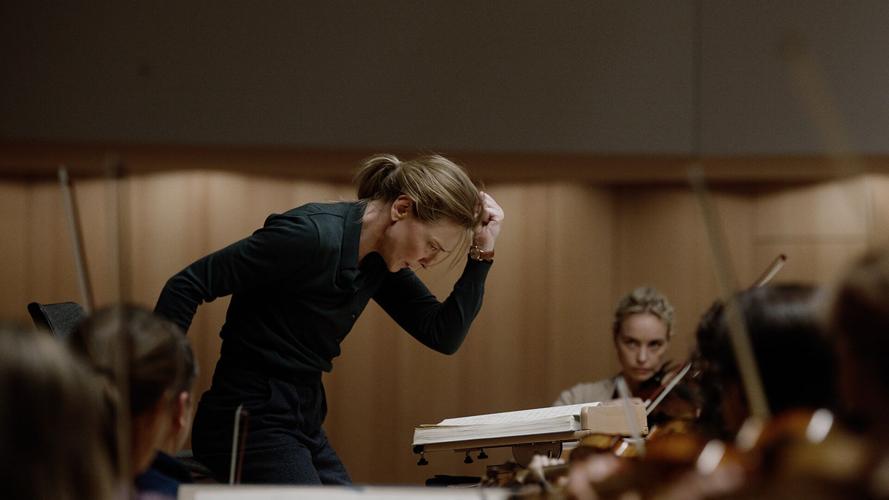
The film follows Lydia as she prepares to record a live album. The album is of Classical music, focusing on Gustav Mahler's "5th Symphony." The film is mostly a character study where we're not in her head, but we do get a sense of how she operates and how she ticks. We get her techniques as a conductor and her philosophy in regards to music. She's not only a conductor but she's also a teacher and we get a lot of her philosophy by way of her attempting to impart it upon her students. We also get her personal views of the world. She's obviously well educated, highly intelligent, exceedingly arrogant and as mentioned she can be somewhat ruthless, if only caring about what she wants.

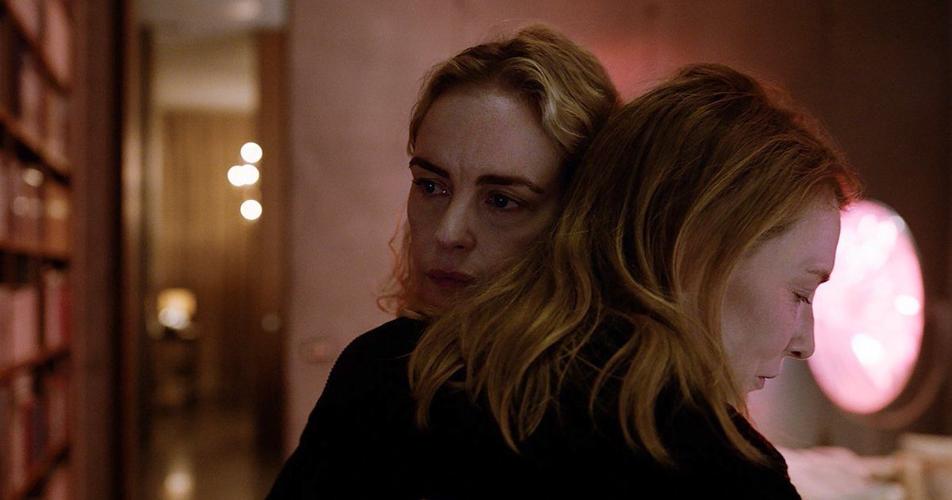
Nina Hoss (Phoenix and Barbara) co-stars as Sharon Goodnow, the wife of Lydia. She co-parents with Lydia for their daughter. Sharon also works at the Berlin Philharmonic. She's not high up but she does seem to be involved with certain management decisions. For example, when it comes to auditions, she's present to help choose new musicians. Sharon is also herself a musician. She plays the violin. She lives with Lydia in their very nice apartment in Berlin and she might be the legitimate U-Haul lesbian. In other words, she's very quick to be committed and faithful.
The same probably can't be said about Lydia. In fact, her infidelity is the catalyst for her downfall. There's a similar issue here with one that I had with Adamma Ebo's Honk for Jesus. Save Your Soul. (2022). Ebo's film was about a preacher who has already had his downfall. The downfall is due to a sex scandal. The issue is that Ebo's film never makes clear what exactly the sex scandal is. In that case, the distinction felt necessary between determining if we're talking about something that was merely inappropriate or something that was actually illegal. This film is similar in that Lydia's downfall is prompted by what could be considered a sex scandal, but Fields never makes explicit what exactly the sex scandal is. There's an implication but never a reckoning of it.

This is due to Fields directing this film with a bit of distance. There is a bit of keeping the film at arm's length from the audience. For example, the opening shot is of Lydia but as seen through the screen on someone's cell phone with the real Lydia blurred in the background. There's a later scene where Lydia goes inside what looks like an apartment building but it turns out to be abandoned or it might just appear that way to her. Presumably, a new musician at the Berlin Philharmonic from Russia named Olga, played by Sophie Kauer, lives there or maybe she doesn't. There isn't clarity over whether it's simply in Lydia's head or what. It could just be in a long line of cinema tradition of depicting a woman losing her mind or slowly spiraling mentally.

Much bones have been made about one particular scene here. Lydia is a guest professor at Juliard and we see a scene involving her teaching a class with students training to be conductors. One student named Max, played by Zethphan D. Smith-Gneist, is confronted. Lydia asks Max if they've ever listened to or conducted Johann Sebastian Bach. Max is a queer person and doesn't engage with Bach because Bach is a straight, White male. Lydia pushes back because she sees Max as being ridiculous. She basically argues separating the art from the artist and listening or examining or even embracing the music regardless of who made it. Ironically, the opening of the film is all about Lydia going on about Mahler's personal life, like his marriage to a woman named Alma. If she were truly about separating the art from the artist, why would she dig so deeply into the personal life of Mahler?
Blanchett of course gives a tremendous performance. She's absolutely believable as this conductor who is very manipulative at times. The latter portion of the film, as we watch her downfall, becomes a bit funny and more comedic. Because of Fields' distance and because we're never truly in her head or privy to what actually happened in terms of the sex scandal, I wasn't as engaged by this film as I was with Fields' previous. In one scene, it's implied that there are damning emails that could bring down Lydia, but we never see what was actually in those emails. The implications are meant to be enough, but they're not. As such, I wasn't sure how to feel about the ending and thus felt nothing.
Rated R for language and brief nudity.
Running Time: 2 hrs. and 38 mins.
In theaters.