







Steven Spielberg is 75-years-old. He's won the Academy Award three times. He's been nominated 19 times, going back to the 1970's. He's currently the highest ranked film director in terms of box office. Spielberg's films have grossed over $10 billion worldwide, more than anyone else. He is synonymous with blockbuster filmmaking, quality filmmaking that is highly commercial. Everybody who knows anything about cinema knows his name.
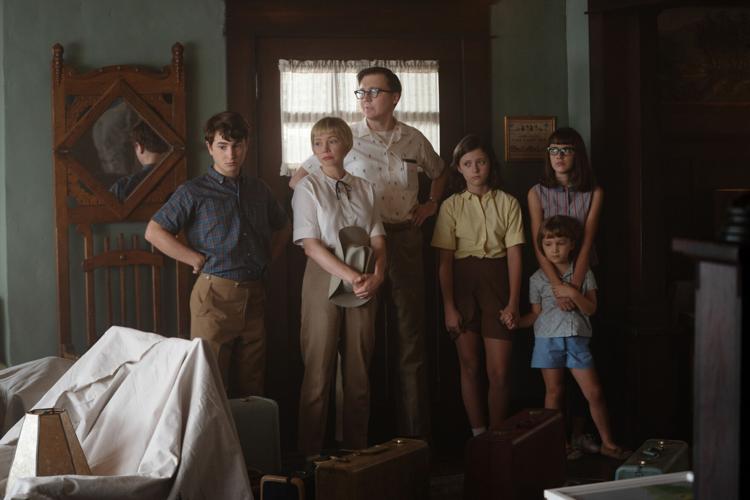
Five years ago, HBO's Spielberg (2017) was a documentary that featured an interview of the iconic filmmaker going over his 40-year career, starting in the 70's.There were references to his parents and even interviews with them and his siblings. Spielberg even spoke about his childhood. The documentary details how things from his childhood informed his storytelling, particularly when it came to the divorce of his parents. The Fabelmans is an autobiographical film, directed and co-written by Steven Spielberg, that reveals what happened concerning his parents' separation in more depth than the HBO documentary. Rather, this film follows a fictionalized version of his family from 1952 when they moved to New Jersey to 1966 when his parents divorced and Spielberg began his professional career in cinema.
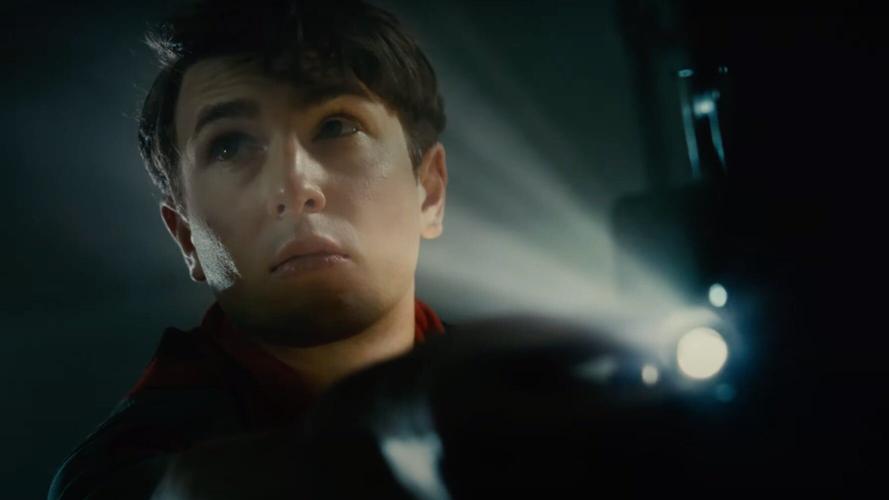
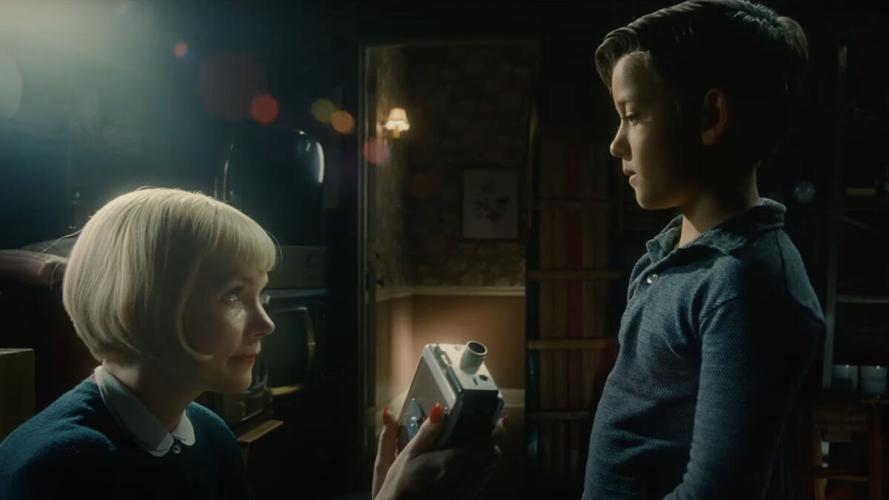
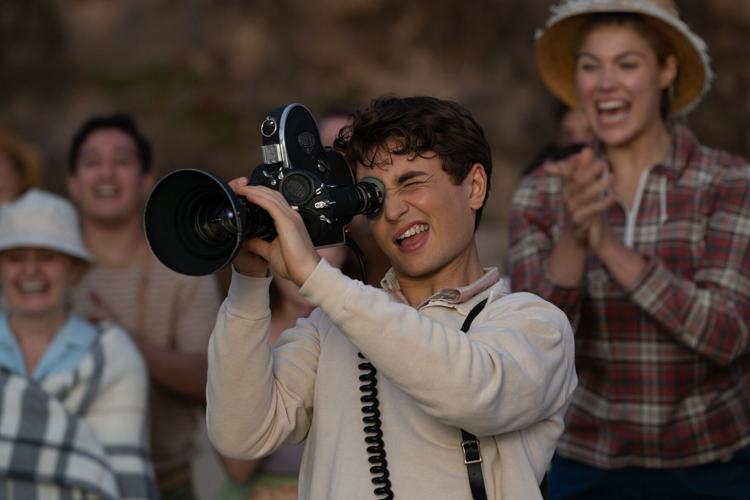
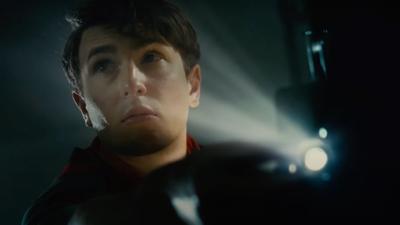
Gabriel LaBelle (American Gigolo and Dead Shack) stars as Sammy Fabelman, a Jewish teenager who seems to be the eldest child of a Semitic family that consists of his mother, father and what comes to be four, younger sisters. He's socially awkward. He has a circle of friends whom he knows through being a boy scout but he's no social butterfly. He's shy about talking to girls. He seems to be a mama's boy. This is mainly due to the fact that his mother supports his art or his passion, which is filmmaking, whereas his father doesn't. Ever since his mother gave him a 8 mm camera, he uses it to make adventure movies with his fellow boy scouts. He used to rope his younger sisters into being in his movies, but, he's inspired by the Hollywood pictures he's seen at his local movie palace.

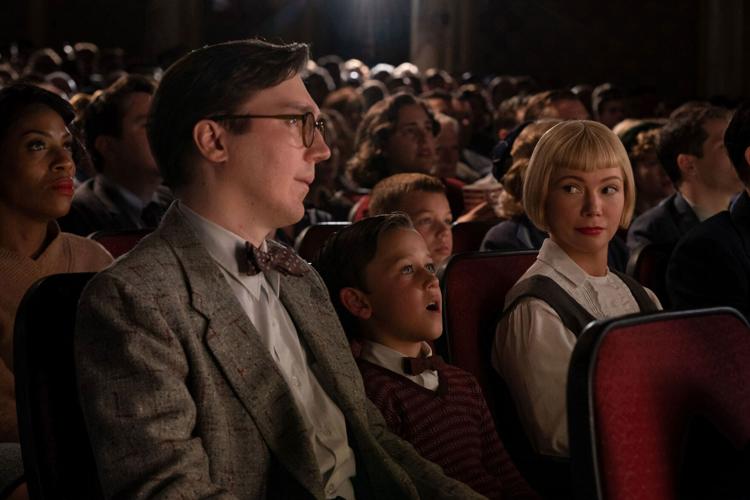
Michelle Williams (Blue Valentine and Brokeback Mountain) also stars as Mitzi Fabelman, the mother to Sammy. She's a former pianist and most likely dancer. She's a total artistic type who shares a love of art with her son. Her personality is very much a free spirit, creative, performative type who needs to entertain and be whimsical and fun. It's never explained why but she's married to a man who is quite possibly the opposite. It's not that her husband doesn't enjoy art. He seems to be engaged with her music and he has knowledge of it that goes beyond the average amateur, but there is a resistance to the pursuit of art that he sometimes exhibits that makes it curious as to what attracted her to him in the first place.
Paul Dano (There Will Be Blood and Little Miss Sunshine) co-stars as Burt Fabelman, the father to Sammy. Burt is an electrical engineer who starts out working for RCA. He gets another job at General Electric in Phoenix, Arizona. He then gets another job at IBM in northern California. The nearly 15-year period depicted in this film is as much about the effect and toll taken on the family from being moved from state-to-state or place-to-place. Like his son, Burt doesn't seem much of a social butterfly either. He's absorbed with collecting old televisions and using them to build other, electronic devices. He's a bit of a nerd in that way, so it's hard to imagine his courtship of Mitzi but he can at times be fun. His sole friend though is another engineer that works at RCA.

Again, there's no examination of what attracted Mitzi to Burt. If a key aspect of this film is about the separation and divorce of Mitzi and Burt, then insight into how their relationship first came to be would have been helpful. In the scenes involving Mitzi and Burt, they seem like a happy couple for the most part. There's no real indication of why the two would separate or even divorce. There is a specific reason why the two divorced, which this film does point out, but there's no insight as to what led to that reason. It's not really an examination of why things happened but simply the revelation that there were indeed things happening under the surface.
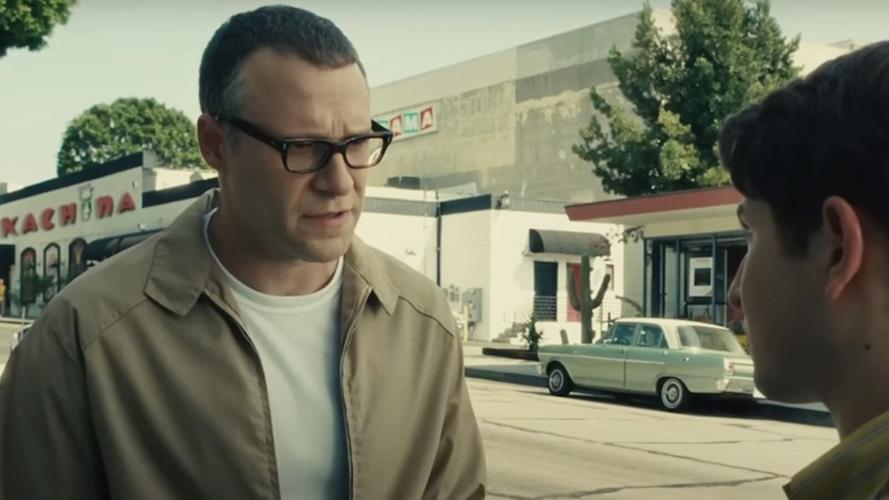
Seth Rogen (Neighbors and Knocked Up) also co-stars as Bennie Loewy, the aforementioned friend to Burt. He works with Burt at RCA. Personality wise, he's more gregarious and funny. He seems more attune to Mitzi's sensibilities than Burt. During a camping trip, it seems as if Bennie is more attune to being the father of this family than Burt. He's so ingratiated that Sammy's sisters refer to Bennie as "uncle." When Bennie's presence becomes a problem, again the film doesn't provide much in the way of insight as to how this came to be. Things are revealed about him but again we get no lead-up as to how or why those things happened.

This complaint is understandable given that the film is told mostly from the point-of-view of Sammy who wasn't privy to all the details about his parents' dissolution, but this film does have scenes that don't involve Sammy, as Mitzi's point-of-view is another key component here, so there's no real excuse for Spielberg not to have delved into it more. Instead, Spielberg delves into the handful of short films that he created while he was in high school. We see Spielberg's surrogate, Sammy, create several short films before high school and before his family's move to Arizona. Those films consist of Sammy simply trying to re-create scenes that he's seen at the theater whether it's the train crash in The Greatest Show on Earth (1952) or scenes from other thriller or horror films.
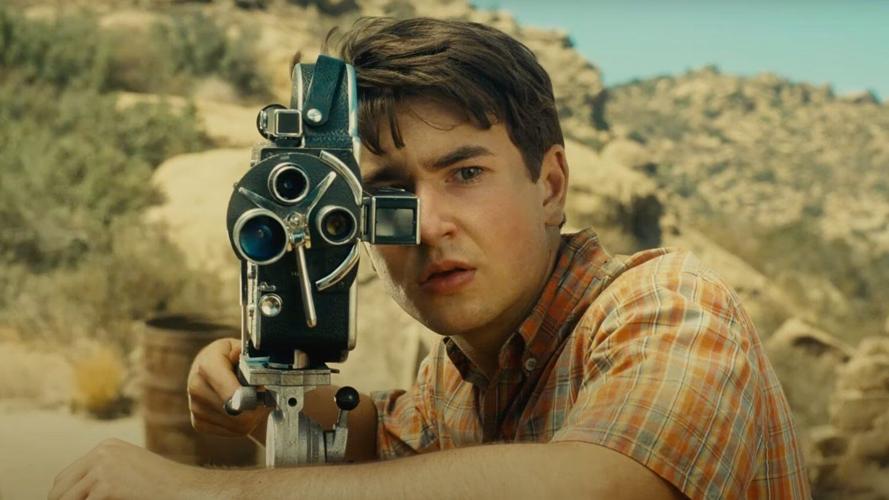
For cinephiles, one might be intrigued with learning a few of Sammy's tricks to achieve certain moments or visual effects in his short films. However, not much more is provided into his process of how he developed his tricks and put in the work of bringing it all together. For example, we see Sammy directing his short film called Escape to Nowhere (1961), which was an actual short film that Spielberg directed. We get a comical interaction of him talking to his main actor, Angelo, played by Stephen Matthew Smith, but we don't get the build up to that moment. Sammy does tell his father that he wanted to do a World War II film, but what his story is, how he choose his location, framed his shots or choreographed his action are all things we don't see. We don't get much of the pre-production or technical craft. He just, all of a sudden, is directing.

How he chose his actors and why would have been helpful to see. What did he see in his actors or was it simply that he was using friends who were available? The latter was probably true, but what was he trying to say or convey through film at that point? Was he just a teenager looking for thrills or was there something more to what he was doing? Did he think about acting techniques? Was it simply about conveying action? We also don't get much of his post-production or editing process. How did he choose his takes? How many takes did he have? What was he looking for or how did he decide what takes or what shots to use? None of these questions are answered, which is fine, given that this film might not be targeted to true cinephiles or those more interested in the craft than the average movie-goer.
Without that exploration of the craft, this film is reduced to yet another coming-of-age story about a young man from the Baby Boomer era. There are too many of those to make this one stand out, beyond the fact that it's about an icon. Given the current, political state and the rise of antisemitism in the country and world, this film could standas one that focuses on Jewish characters and centers them in a humanistic way. This film even addresses antisemitism in sequences involving Sammy being bullied and having to navigate people's religious bigotries. This is something that is very much warranted on the big screen right now.

To that end, there is a sequence where Sammy shows a film he did to his fellow classmates at school. One of his bullies named Logan, played by Sam Rechnor, is depicted in Sammy's film. Logan thinks that Sammy's film is going to depict him in a bad way because he did bully Sammy. Logan eventually confronts Sammy about the way he's depicted. It ends up being an intriguing conversation and a good performance from Rechnor, but it reinforces the fact that when it comes to Sammy's process and thus Spielberg's process for why he chose to depict people in certain ways, if at all, this film doesn't delve into that process. Love & Mercy (2015), another film starring Paul Dano, did a better job of showing an art's process.
This film does end on a funny joke that is about Sammy learning a tip about cinematography or the framing of certain shots. It's funny because it subverts expectations that Sammy is going to learn some artful, if not pretentious lesson about how to frame a picture with a camera. Instead, what he gets is a gimmick to utilize in filmmaking to make an image look more interesting than it otherwise would be. It's funny, but it felt as if it was a tip that Sammy didn't need. If there were some kind of critique of Sammy's cinematography throughout this narrative, then that comment or joke would have resonated more. Yet, Sammy's ability to frame shots and utilize the camera never felt like it was in dispute or in need of him improving or developing. So, I don't know what purpose that joke ultimately served.

Rated PG-13 for some strong language, brief violence and drug use.
Running Time: 2 hrs. and 31 mins.
In theaters.