
The week of this film’s release, an episode of the ABC series To Tell the Truth aired, which featured Steve Robles, a 2014 shark-attack-survivor. A quick Google search reveals several websites dedicated to shark-attack survivors. Clearly, there are lots of them, lots of survivors. Some come back horribly injured, but they do come back. Written by Anthony Jaswinski who seems to have a knack for horror films and directed by Jaume Collet-Serra who has a knack for action thrillers, three of which starring Liam Neeson, this movie feels like the best of both worlds, at least a competent mix of horror and action-thriller.
Ostensibly, it’s yet another film of man, or in this case woman, against nature. It can be put in a list beneath Jaws (1975), Open Water (2003) or The Reef (2010), films specifically about battling the easily demonized, great white shark. Here, the shark is as slasher. The shark is no better than Freddie Krueger or Michael Myers, acting out of psychotic vengeance, killing any and all within its sphere or path.
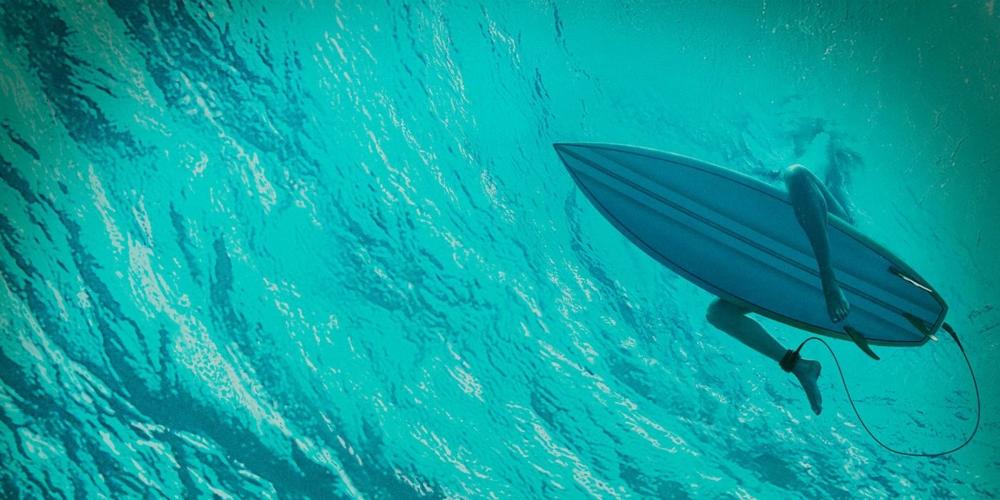
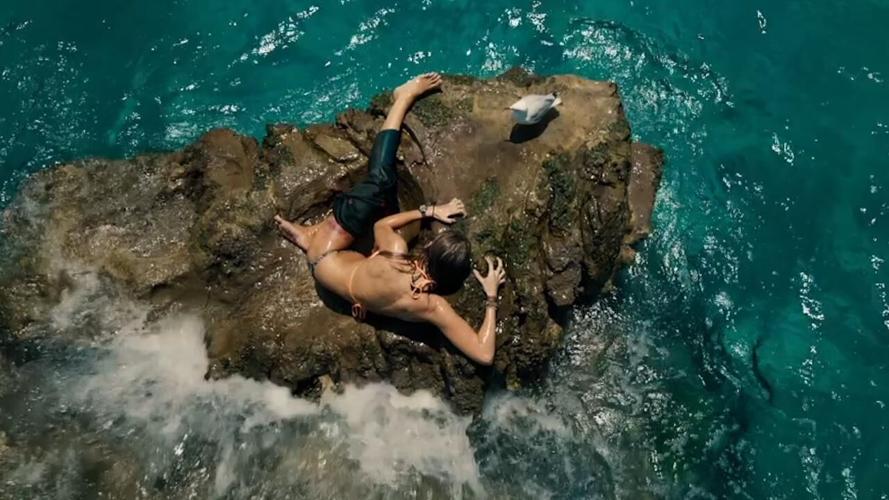
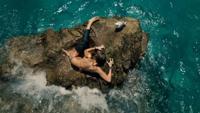
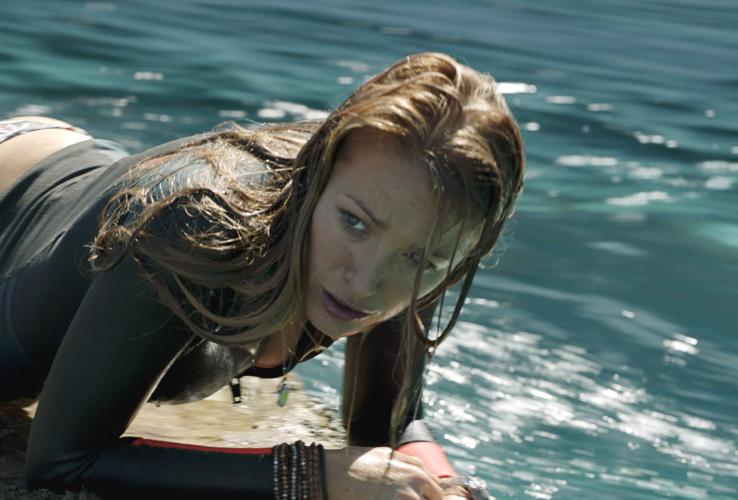
Blake Lively (Savages and Age of Adaline) stars as Nancy Adams, a medical student who is vacationing in Mexico. She’s also a well-trained surfer. She goes to a secret beach that her late mother visited where she goes surfing for the day. Things go bad when her leg becomes horribly injured and she gets stranded on some rocks in the middle of the water. Her injury isn’t so bad that she can’t swim to shore, but the water in between is infested with a very mean shark.

shallows1
Of course, the movie isn’t as exciting if the shark was just mean. No, it has to be super mean, super-duper mean, as well as highly, highly motivated. So much so, it’s a shark that’s willing to chew threw solid metal. It becomes an animal only slightly less ridiculous than the cartoon figures of Sharknado. The fun is all about upping the ante and making the shark cartoonishly more and more aggressive, or else making things more and more difficult for Nancy to escape.
I was reminded of films like The Ruins (2008), All is Lost (2013) and Gravity (2013) where characters are continually pushed or painted, further and further, into corners. It seems more and more likely that the characters are never going to get out. Yet, surprisingly they do or in some cases don’t. Sometimes, filmmakers will dangle the hope of escape and the characters will make near-escapes only to have the rug pulled out at last minute. It turns the film into a roller coaster.
At the same time, there’s also some female empowerment stuff in this, as Nancy deals with the loss of her mother and what she plans to do with her life. Typically, characters in these kinds of movies will have some issue to wrestle as they’re also wrestling with nature or in this case a shark. Of all the issues, her wavering on becoming a doctor is a good one because by the end she realizes than even her limited, medical training went a long way.
Collet-Serra does a good job at the beginning, which essentially is a surfing flick. It even seems as if Lively did her own stunts. His camera remains fairly close to her as it gracefully bobs up-and-down above and below the water. His lens even glides throw waves effortlessly. Things aren’t as dynamic when Nancy gets stranded on the rocks. Collet-Serra has a lot more wiggle room literally than Danny Boyle in 127 Hours whose protagonist was stranded in a rock, as opposed to on one.
Collet-Serra doesn’t employ the same tricks as Boyle, at least not all of them, to get us through what is basically a waiting game. Collet-Serra does have the beauty and the terror of the ocean to utilize at any point. One particular example is the use of jellyfish. The filmmakers really play up the beauty and terror of those aquatic creatures. Arguably, that’s a metaphor for the whole film.
Three Stars out of Five.
Rated PG-13 for bloody images, intense peril and brief strong language.
Running Time: 1 hr. and 26 mins.