




Editor’s note: The views and opinions expressed in this review are solely those of Marlon Wallace and do not necessarily reflect the views and opinions of WBOC.
The FX series premiered back in 2016. The second season premiered in 2018. This third season comes four years later. The series was delayed due to the fact that the cast of the show have become really successful and incredibly busy, so scheduling all of them has probably been a nightmare. The series was delayed again due to the COVID-19 pandemic. All of that has invariably caused the writing of the series to change to something that it accommodates all of that. That accommodation results in a mixed bag that works and fails perhaps to equal degree.
I’ve always been hot and cold with the series. I wasn’t really engaged with the first season and thought it was problematic in various ways. The second season was much better and definitely the strongest in terms of the overall storytelling. This season is really all over the place. A lot of the episodes can be tied together thematically in its exploration of race relations and racism with the perspective of deconstructing or bringing down white supremacy or white privilege in comedic or over-the-top ways. Only one of the episodes though, is really effective in that regard.

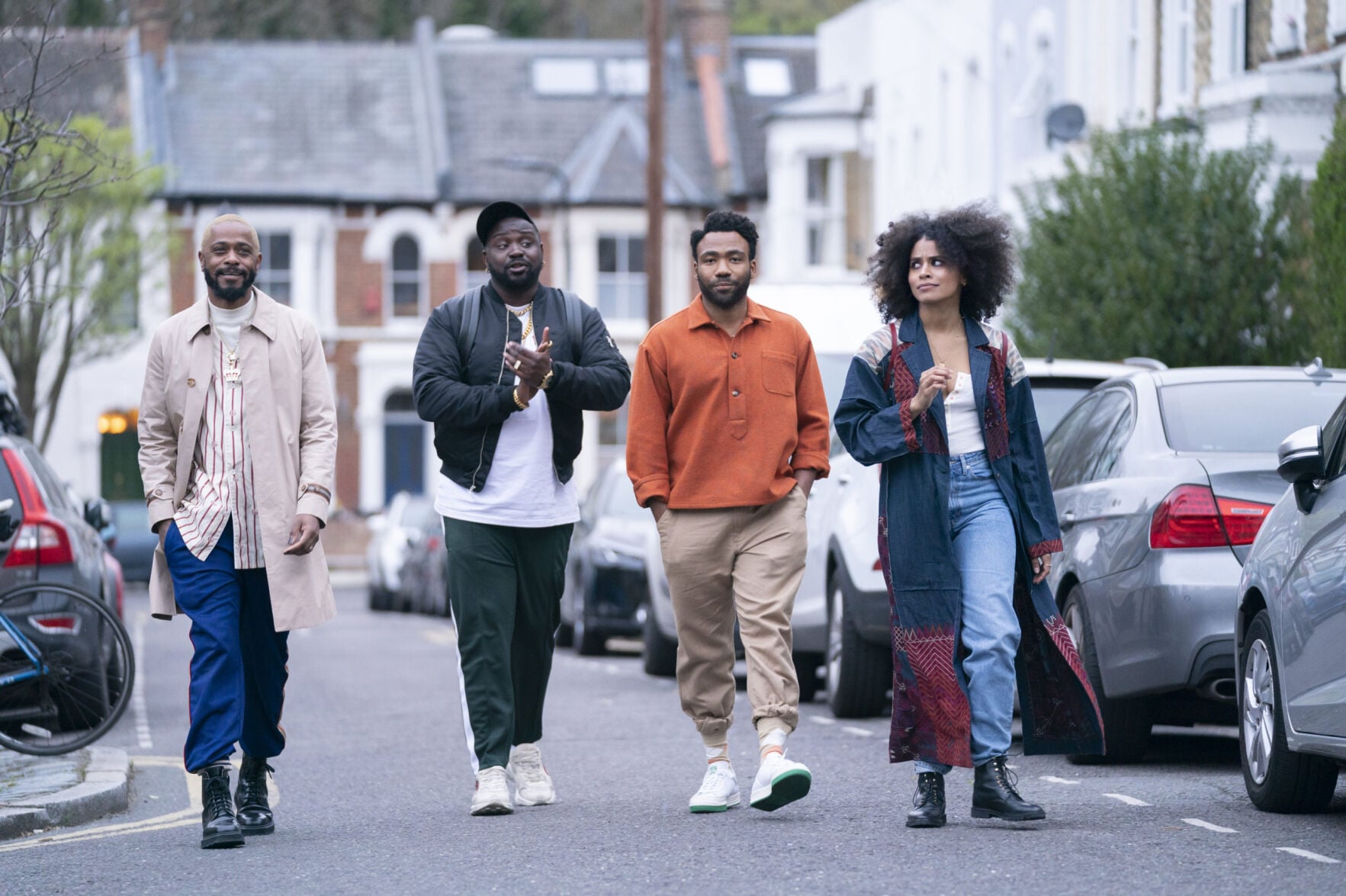
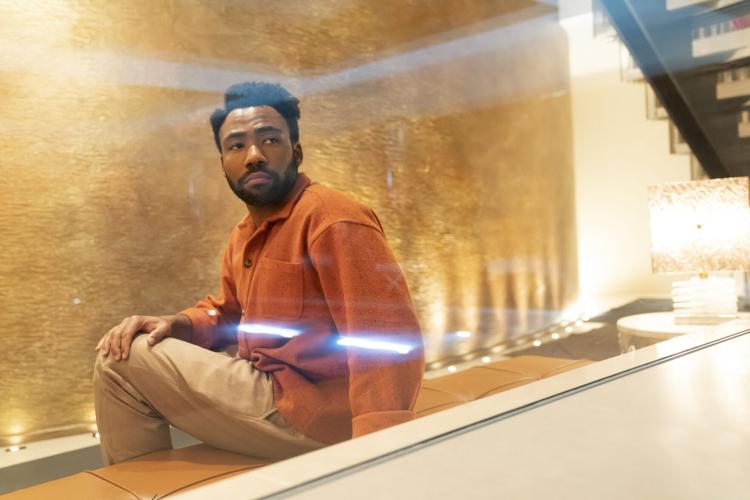
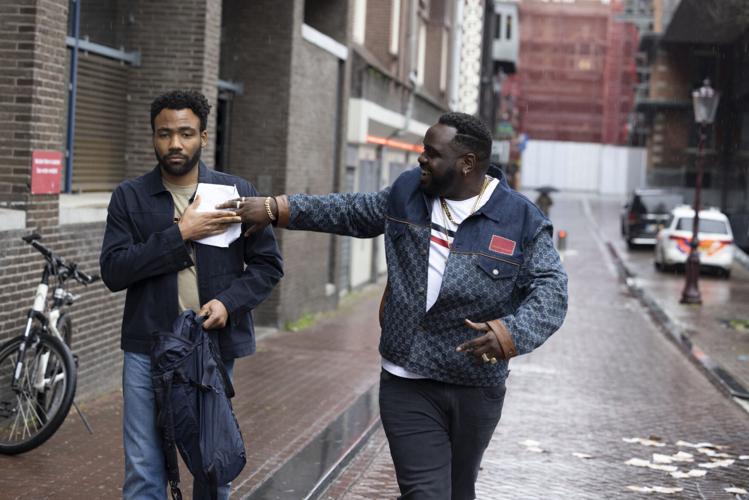
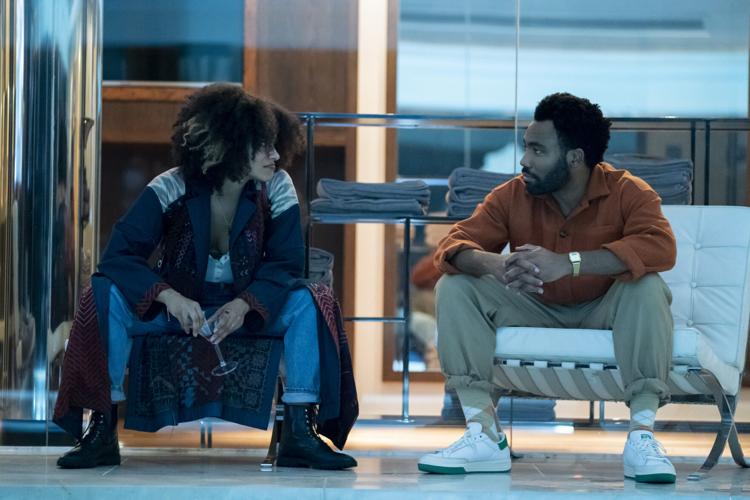
Donald Glover (Solo: A Star Wars Story and The Martian) stars as Earnest Marks, the manager for his cousin who is a rapper. He struggles to represent his cousin in the music industry. A lot of the comedy comes from that struggle, which often results in awkward or strange encounters. A little of that comedy continues in this season, as Earnest and his cousin are on tour in Europe. Yet, that fundamental premise is only continued in three of the episodes here.
Brian Tyree Henry (Godzilla vs. Kong and Eternals) co-stars as Alfred Miles aka Paper Boi, the cousin to Earnest who is the rapper or music artist in question. Lakeith Stanfield (Judas and the Black Messiah and Get Out) also co-stars as Darius, the Nigerian-American friend to Paper Boi who is part of Paper Boi’s entourage. Zazie Beetz (The Harder They Fall and Joker) reprises her role of Vanessa Keefer, a former teacher who is the mother to Earnest’s child. All of them wind up in Europe. Again, only three episodes are about the show’s fundamental premise and seeing these characters deal with the reality of their lives. A couple of the episodes focus on some of these characters in weird, virtually solo stories that diverge from the premise and become strange character studies that often fee like the show spinning its wheels.

The main cast of Glover, Henry, Stanfield and Beetz only appear in about half the episodes here. The other half, which is about four episodes, are standalone stories. This season almost comes across as an anthology. It could have almost been The Twilight Zone but with race relations and racism as the prevailing themes about which surreal situations are crafted. The show isn’t new to doing standalone episodes. In the second season, an episode titled “Teddy Perkins” was a standalone that had nothing to do with the show’s main premise or involved any of the main characters. Glover did perform in that episode but he was playing a different character than his Earnest Marks.
However, the standalone episodes here don’t even involve the main cast playing other characters. A whole bunch of new actors drop in for one-time appearances, only to disappear again. Those episodes tackle a variety of topics, including being woke and reparations. I don’t think those episodes work in a way that dispels white supremacy or white privilege in as much as it reinforces certain African American stereotypes. They also reinforce certain white liberal stereotypes. There is also a horror aspect to those episodes that felt inspired by Jordan Peele’s Get Out, but its horror scenes are so matter-of-fact and so deadpan in its tone that if you’re not on the show’s wavelength, those scenes could fall flat.

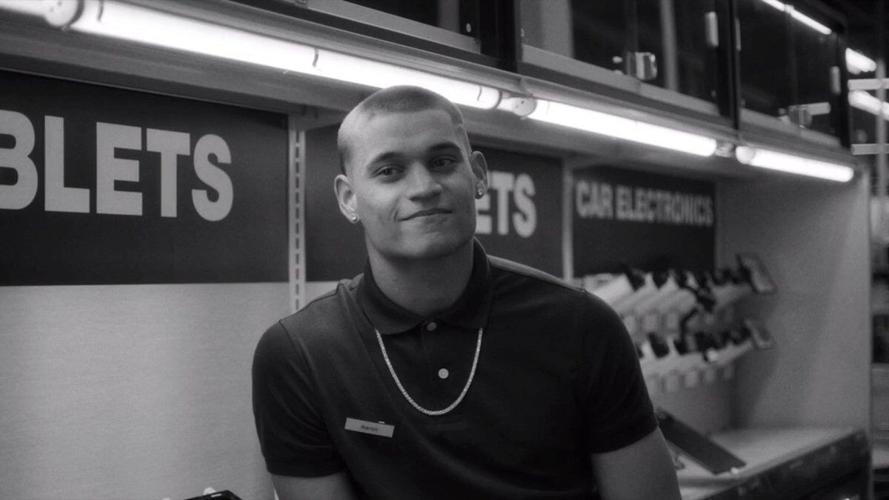
The only episode that I found to be really effective of the standalone entries was Episode 9, titled “Rich Wigga, Poor Wigga.” If one has seen Rebecca Hall’s Passing (2021), then this episode is basically that film but from the perspective of a teenage boy living in the modern era. I think the episode is effective mostly for the performance of Tyriq Withers who plays Aaron, a high school senior who wants to go to college but can’t afford it. Aaron is biracial. His father is Black but Aaron looks white. He has a white girlfriend and he arguably acts as if he’s a white person. When a wealthy Black man announces he’s giving out scholarships to all the Black students at his school, Aaron then has to prove his Blackness.
I think the episode opens up an interesting exploration of what is Blackness or what does it mean to be Black in this country. This episode explores the question of whether Blackness is simply a matter of biology, regardless of what you look or act like, or is it a matter of behavior or knowledge of culture? There’s also a question of whether Blackness is something that isn’t what an individual does or is and more about how society at large treats you. It explores those questions in sharp comedic fashion. Yet, in a lot of ways, it suffers from the same problem as Passing. It’s shot in black-and-white, probably more to emphasize or trick the viewer into perceiving Aaron more as white than if he were photographed in color. There are people who are of African-American descent and heritage but who are perceived as white, but the black-and-white photography does help with that trick. There is also so much that should and needs to be filled out about Aaron and why he’s seemingly acting white that this episode fails to convey, but it was still effective.

Rated TV-MA-LV.
Running Time: 30 mins. / 10 eps.
Available on Hulu.