
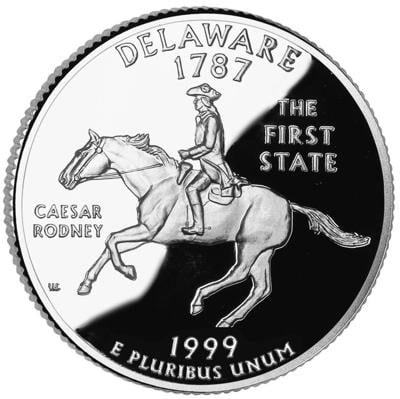

DOVER, Del. - Before Delaware became the First State, a late-night ride, two determined leaders, and one historic tavern helped shape the nation’s future.
It was the night of July 1, 1776, when Caesar Rodney set out from Dover to Philadelphia, racing against time and weather. Rodney arrived just in time to cast Delaware’s deciding vote for independence at the Continental Congress. His vote in favor helped push the colonies toward breaking free from British rule, marking a turning point in American history.
Joining Rodney in voting for independence on July 2 was Thomas McKean. McKean later served as President of the Continental Congress in 1781. Under the Articles of Confederation, that position functioned as the closest thing the young nation had to an executive leader, placing McKean among the earliest national leaders tied to Delaware.
Back in Dover, the Golden Fleece Tavern was becoming one of the most important buildings in early American history. Built in the 1730s and also known as Battell’s Tavern, it served as a hub for both community life and government activity during the American Revolution. The tavern hosted key political groups, including the Committee of Inspection and Observation, and played an important role in communication during the war.
When Delaware’s state government moved to Dover in 1777, the Golden Fleece became the meeting place for the Legislative Council, effectively serving as part of the state’s government headquarters until a permanent State House was completed in 1791.
In December 1787, 30 delegates gathered at the tavern to consider the newly drafted U.S. Constitution. Just days later, they voted unanimously to approve it, making Delaware the first state to ratify the Constitution. The tavern continued to play a role in early government, including discussions tied to the Bill of Rights, before it was eventually demolished in the early 1800s.
From Rodney’s ride to McKean’s leadership and the Golden Fleece’s central role in government, Dover stood at the heart of America’s founding. Together, these figures and that historic tavern helped secure Delaware’s place in history as the First State.