
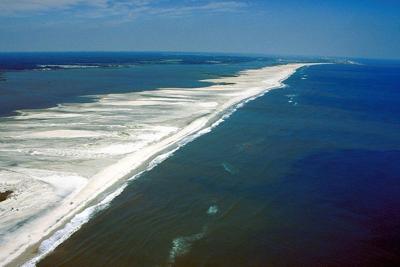
ASSATEAGUE ISLAND, Md. - While Assateague Island is best known for its iconic wild ponies, the barrier island's history stretches far beyond the animals that draw visitors from across the country.
In fact, Assateague was not always an island.
Before 1933, the land that is now Assateague Island was connected to both Ocean City and Fenwick Island. That changed when a powerful hurricane struck the area, carving out what would become the Ocean City Inlet and permanently separating the landmass.
In the decades that followed, developers saw potential in the island's pristine beaches and waterfront property.
During the 1950s and 1960s, several groups of investors attempted to transform Assateague into a resort destination. More than 5,000 lots were sold during the 1960s, though only about 30 homes were ultimately constructed. A road was even paved along portions of the island to support future development.
Those plans came to a halt in March 1962.
The Great Atlantic Storm of 1962 battered the East Coast, bringing powerful storm surges that completely submerged Assateague Island. The destruction highlighted the risks of building on the vulnerable barrier island and effectively ended large-scale development efforts.
In the years that followed, many landowners sold their property to the federal government.
Assateague Island was officially designated as a National Seashore in September 1965 by President Lyndon B. Johnson. By 1982, the federal government owned nearly all of the barrier island.
Today, Assateague Island welcomes more than two million visitors each year. Guests come to relax on the beaches, observe the island's famous wild ponies, hike nature trails, camp, and explore the natural beauty that has been preserved for future generations.
What was once envisioned as a bustling resort community now stands as one of the Mid-Atlantic's most treasured natural destinations.