


After seeing Toy Story 4 (2019), it was my belief that Toy Story 3 (2010) was still the best feature in this Pixar franchise. After seeing this fifth feature, it's still my belief that Toy Story 3 is the supreme entry in this animated, theatrical series. It's about toys that come to life and reckon with the fact that their sole existence is to serve children and make them happy. The sequels, and in particular the 2010 installment, deal with how the toys have a shelf life, and eventually a point comes where the children grow up and discard their play-things. The narratives usually involve the toys being separated from their child or their child's home and having to journey to get back. The third one was the ultimate example and felt like such an excellent finale. The fourth felt like a rehash of those narratives and themes. This fifth one feels like another rehash. These are sequels, so rehashing is kind of the point, to give people what they love again, and sometimes a sequel can surprise like the third one did, but this sequel is such a retread.
Director and co-writer Andrew Stanton is trying to comment on the modern-day and specifically all the digital and Internet-based devices for children. The object in question is a tablet that is essentially an iPad but for those in kindergarten or early grade school. It's commenting on how too much screen time for kids is bad because it prevents them from physical interactions with other youngsters or peers. It's also about how social media can lead to cyber-bullying, but, as things are rolled out, it doesn't feel like Stanton's commentary is that sharp. Yet, how sharp can it be when it's coming from Pixar, which is a company based in digital technology? It's not as if Stanton can totally condemn digital technology. For example, this film never wades into the water of video games or its stance on those kinds of entertainment. It mostly pushes an analog form of play, engaging with physical dolls as the best form. Yet, the problems presented aren't limited to digital tech, it could also be applied to analog things.

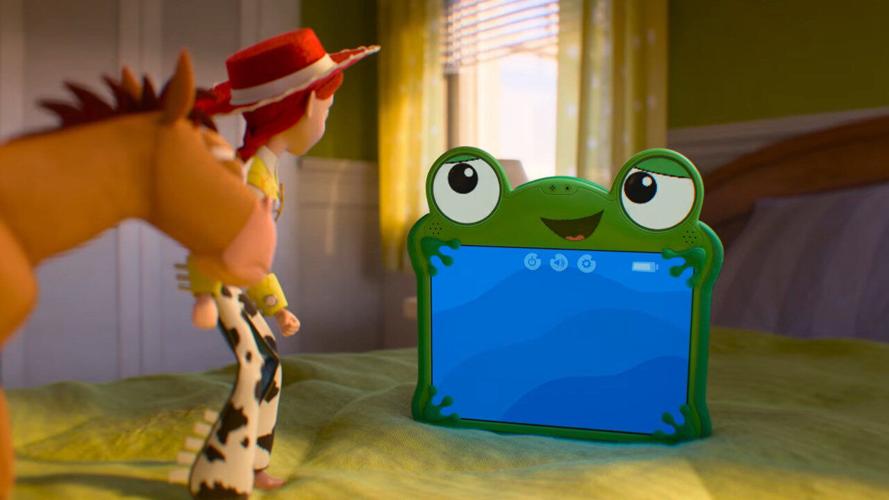
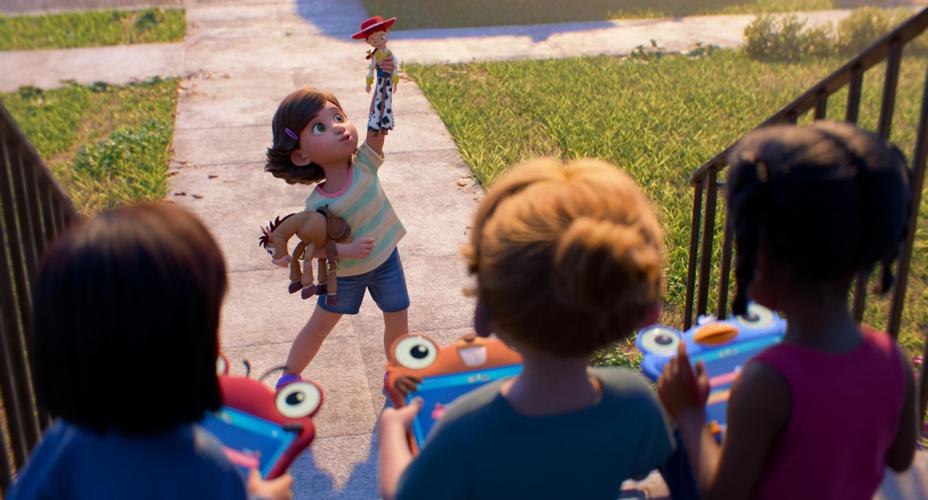
The toys in question belong to a little girl named Bonnie. She gets a tablet from her parents, called LilyPad because it's decorated like a frog. Through LilyPad, voiced by Greta Lee (Spider-Man: Across the Spider-Verse and The Tiger's Apprentice), Bonnie connects with other little girls. She was upset that she had not made any friends as of yet. When she goes to a sleepover with the other girls she met through LilyPad, all that happens are the girls sit together, look at their tablets, not interacting with each other. The film suggests that it's this Internet-based device that is responsible for this anti-social, anti-play behavior.
Before she got LilyPad though, Bonnie was reluctant or unable to connect to some kids who lived next door to her. She's a shy girl. She's not as outgoing as others. She tried to reach out, but she's not really great at follow-up or she can give up easily. LilyPad didn't do that to her, Bonnie was already exhibiting those shy behaviors. When she goes to the sleepover, the other girls shame her for still playing with non-digital toys, or dolls. However, having a LilyPad would not alone cause that kind of shaming. Girls tend to mature faster than boys and those girls could be into more mature things just as a matter of fact, such as in the film Are You There God? It's Me, Margaret. (2023).

At the sleepover, Bonnie and the other girls are on their LilyPad devices, not interacting with each other. That could of behavior could happen with analog objects. Bonnie and the other girls could have books and could be reading and not interacting with each other because they could be engrossed by whatever novel. Or, what about television? The girls could be not interacting because they're watching something on Disney Plus, perhaps even a Pixar film. If this film is condemning digital devices, is it condemning anything that can stream Pixar content? Ultimately, it's not, but the film doesn't even bring up the possibility of streaming video content.
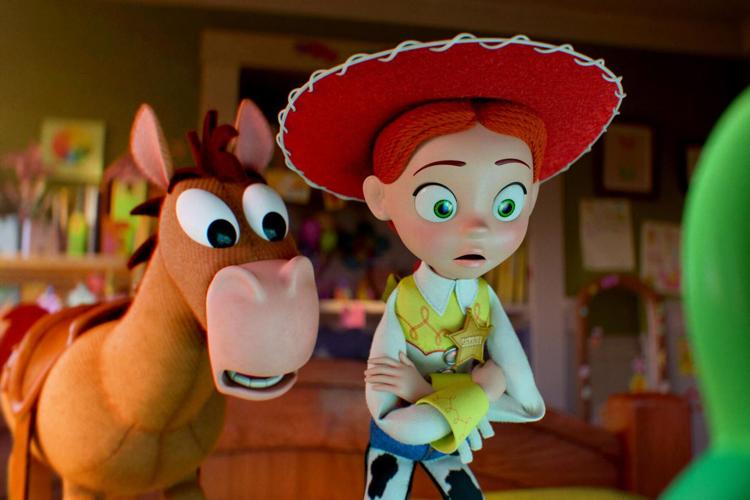
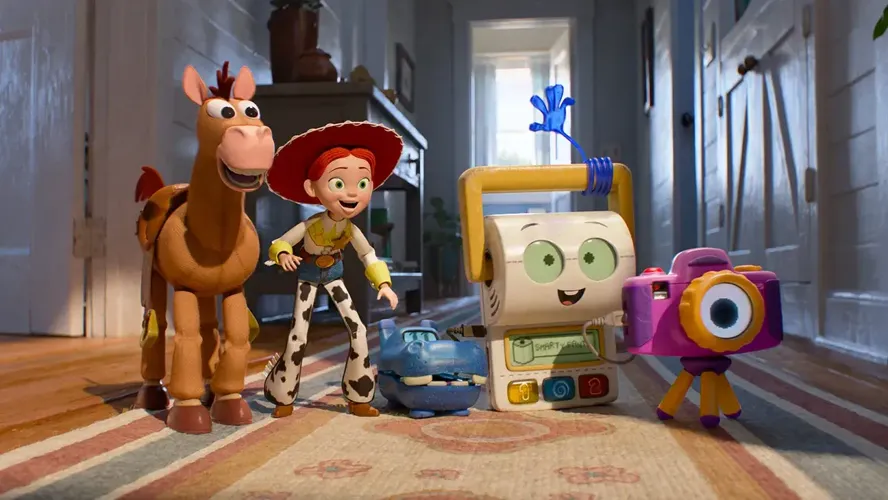
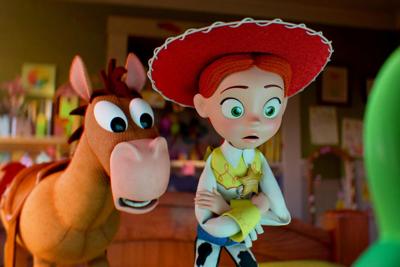
This film doesn't center on Woody, voiced by Tom Hanks, or Buzz Lightyear, voiced by Tim Allen. Instead, it focuses on Jessie, voiced by Joan Cusack, the cowgirl doll. She's the one leading the charge to get Bonnie to play more with analog things and engage with real people. It's sweet and sentimental, as Pixar tends to do. It's also funny with its introduction of previously unknown toys, including Smarty Pants, an electronic device that helps kids go to the toilet, voiced by Conan O'Brien. He's clearly the standout here and steals every scene he's in.

It's also pointed out that Buzz Lightyear is an electronic toy and indeed becomes a digital toy. Even though it's not explored all that much, it's inherent that accepting digital devices is something the toys have already done. It's odd that the text of the film doesn't make that bridge, but it's there in the subtext.
Rated PG for thematic elements and rude humor.
Running Time: 1 hr. and 42 mins.
In theaters.