

Study projects Loki Flake Graphite Deposit as a long-life graphite development project with positive economics; project to advance toward Feasibility Study
SASKATOON, SK / ACCESS Newswire / August 19, 2026 / Abasca Resources Inc. ("Abasca" or the "Company") (TSXV:ABA) announces positive results from an independent Preliminary Economic Assessment (the "PEA") for its 100%-owned Loki Flake Graphite Deposit ("Loki Deposit" or the "Project"), approximately 15 kilometres south of the Key Lake mill, Figure 1. The study projects the Loki Deposit as a long-life graphite development project with an after-tax net present value (NPV) of US$130 million and 16.7% internal rate of return (Table 1).
The Company's focus will now shift to continuing to acquire the technical data required for preparing a feasibility study ("FS"), while also obtaining an updated environmental impact assessment and the permits necessary to support future project advancement.
"Loki has continued to exceed our expectations. We are pleased to reach this significant milestone in our fast‑track journey to develop the deposit and to vest the staged project value. The PEA also provides Abasca with the technical data needed to support financing and offtake strategic processes, while advancing a long‑life graphite development project that aligns with our vision of establishing a reliable, long‑term source of graphite to support the federal and provincial governments' critical‑minerals supply‑chain security strategies," said Dawn Zhou, President and CEO of Abasca.
PEA Highlights
Long-Life Graphite Project: 2,750 tonnes-per-day ("tpd") open-pit mining and processing operation with a 19-year mine life, averaging 66,500 tonnes of graphite concentrate (with an average 95% grade) produced annually and 1.2 million tonnes of payable graphite over the life of mine. The Project's scale and longevity provide exposure to multiple graphite price cycles.
Positive Project Economics: Positive economics under the base case graphite price assumptions, generating approximately US$662 million in cumulative after-tax free cash flow under the base case.
Table 1: Loki Flake Graphite Project PEA Pre-Tax and After-Tax Economic Results Summary.
Graphite Price (US$/tonne) | US$1,450/tonne |
Pre-Tax Net Present Value (NPV) @ 8% | US$161M |
Pre-Tax Internal Rate of Return (IRR) | 16.6% |
After-Tax Net Present Value (NPV) @ 8% | US$130M |
After-Tax Internal Rate of Return (IRR) | 16.7% |
Note: Project economics are presented on an unleveraged basis and do not assume project debt or other financing arrangements.
Description of the PEA
The PEA outlines a conceptual development scenario for the Project based on the updated Mineral Resource Estimate (see "Mineral Resources" below), incorporating conventional open-pit mining and onsite graphite concentrate recovery through a 2,750 tonne-per-day processing facility.
The PEA was prepared by Tetra Tech Canada Inc. ("Tetra Tech") in accordance with National Instrument 43-101 - Standards of Disclosure for Mineral Projects ("NI 43-101"). The geology and mineral resources sections of the PEA were prepared by Understood Mineral Resources Inc. ("UMR").
This PEA is preliminary in nature. It includes Inferred Mineral Resources that are considered too speculative geologically to have economic considerations applied to them that would enable them to be categorized as mineral reserves. There is no certainty that the PEA will be realized. Mineral resources that are not mineral reserves do not have demonstrated economic viability.
A technical report supporting the PEA will be filed on SEDAR+ (www.sedarplus.ca) and on the Company's website within 45 days of this news release.
Project Overview
The Loki Flake Graphite Deposit is located approximately 15 kilometres south of the Key Lake mill. Provincial Highway 914, a north-south all-weather highway in Saskatchewan, crosses the project, providing ideal access. The Project consists of 12 contiguous claims (23,974 hectares or approximately 240 sq. km) which were staked during 2011 to 2012 and have been held and explored by a private company ("SaskCo") until the end of 2022. Abasca subsequently acquired the Project by reverse takeover leading to holding 100% interest in the Project.
The Loki Flake Graphite Deposit is underlain by the prospective uranium hosting rocks of the Wollaston-Mudjatik contacting zone (WMCZ) in the southeastern Athabasca Basin. The world's largest high-grade uranium deposits are associated with the unconformity between the Athabasca Basin and the Wollaston-Mudjatik basement as well as strongly graphitic fault zones. Most of the uranium occurrences and deposits associated with the Athabasca Basin are located near the boundary between the Mudjatik and Wollaston domains as either unconformity-related or basement-hosted type. The Project is located in the southern strike extent of these deposits and in the same regional magnetic low structure that hosts them.
On July 14, 2026, Abasca announced an updated Mineral Resource Estimate (the "MRE") for the Loki Flake Graphite Deposit. The pit-constrained MRE conforms to the Reasonable Prospects of Eventual Economic Extraction (RPEEE) requirements of NI 43-101 and includes an Indicated resource of 6.99 Mt at 8.27 % Cg in addition to Inferred resource of 15.83 Mt at 6.93 % Cg1.
PEA Economic Results
The Loki Deposit's PEA Economic Results are presented in Table 2. All dollar figures are expressed in US dollar and all units in metric, unless otherwise noted.
The PEA is preliminary in nature. It includes Inferred Mineral Resources that are considered too speculative geologically to have the economic considerations applied to them that would enable them to be categorized as Mineral Reserves. There is no certainty that the PEA will be realized. Mineral resources that are not mineral reserves do not have demonstrated economic viability.
[1] Please refer to the Company's news release dated July 14, 2026 and titled: "Abasca Increases Loki Flake Graphite Resource and Confirms Second Mineralized Trend at Thor Zone"
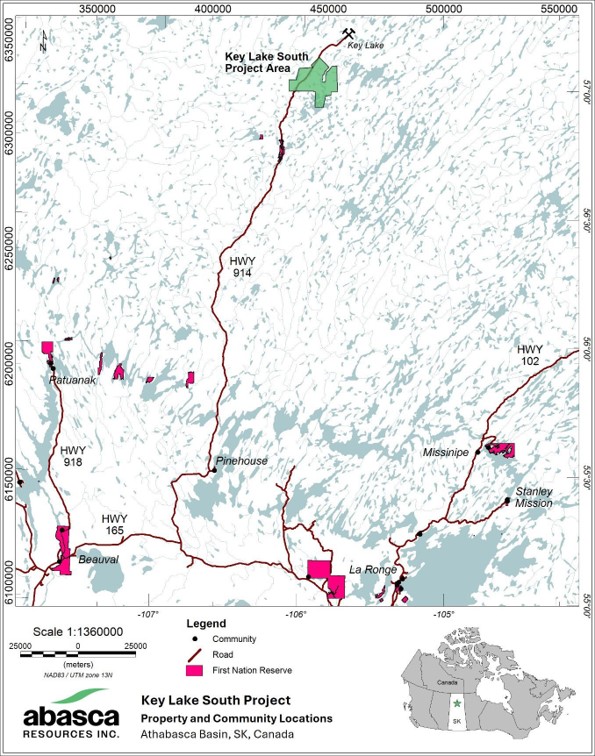
Figure 1: Map showing the location of the Key Lake South Project that hosts the Loki Flake Graphite Deposit
Table 2: Loki Flake Graphite Project PEA Economic Results
Description | Unit | Value |
|---|---|---|
Metal Price | ||
Graphite Price (Average) | US$/t | 1,450 |
Production | ||
Mine Life | Year | 19 |
Mill Feed Tonnage, Life of Mine (LOM) | Mt | 17.9 |
Mill Feed Grade, Life of Mine (LOM) | % Cg | 7.27 |
Concentrate Grade, Life-of-mine Average | % Cg | 95.0 |
Graphite Recovery to Concentrate | % | 92.3 |
Graphite Produced, Life of Mine (LOM) | dry tonnes | 1,263,000 |
Annual, Life of Mine Average | dry tonnes | 66,500 |
Operating Costs, Life of Mine (LOM) | US $M | 828 |
Unit | US$/t proc. | 46.34 |
Operational Revenue | US $M | 940 |
Capital Costs | ||
Initial Capex | US $M | 216 |
Sustaining | US $M | 64 |
Closure & Reclamation | US $M | 27 |
Total Capital Costs | US $M | 307 |
Economic Results | ||
Discount Rate | % | 8% |
Pre-Tax Unlevered Free Cash Flow (UCF) | US $M | 633 |
Pre-Tax Net Present Value (NPV) @ 8% | US $M | 161 |
Pre-Tax Internal Rate of Return (IRR) | % | 16.6% |
Pre-Tax Simple Payback | Year | 6.2 |
After-Tax Unlevered Free Cash Flow (UCF) | US $M | 477 |
After-Tax Net Present Value (NPV) @ 8% | US $M | 130 |
After-Tax Internal Rate of Return IRR | % | 16.7% |
After-Tax Simple Payback | Year | 4.7 |
Notes
Initial Capex represents upfront expenditures to construct and commission the mine, plant, and supporting infrastructure.
Sustaining Capex represents ongoing capital expenditures required to maintain production during the life of mine.
Payback represents years from start of commercial production to achieve cumulative positive after-tax free cash flow, including sustaining capital.
Exchange rate assumption: $0.72 USD per $1.00 CAD.
Non-GAAP financial measures are presented for additional information and benchmarking purposes only. See "Use of Non-GAAP Financial Measures."
Capital and Operating Costs
Initial CAPEX: US$216M, including contingency of US$24.3M and US$22.5M mining initial operating costs and equipment lease downpayment.
Sustaining Capital and Closure Costs: US$91.0M from Year 1 to Year 19, followed by a 4-year period of closure and reclamation.
Operating Costs: US$46.34/t processed, including mining and waste management (44%), processing (28%), G&A and site services (27%), and interest on mining equipment lease (1%).
Mineral Resources
An updated MRE, effective date April 23, 2026, was prepared by UMR in accordance with CIM and NI 43-101 Guidelines and replaces the previous mineral resource estimate with an effective date of April 10, 2025, Table 3.
The updated MRE incorporates the current geological interpretation and forms the basis of the 19 year mine plan evaluated in the PEA.
Table 3: Loki Flake Graphite Project PEA Mineral Resource Statement, effective date April 23, 2026
Classification | Cg Grade | Tonnes (Mt) | Cg Grade (%) | Contained |
Indicated | 2.30 | 6.99 | 8.27 | 0.58 |
Inferred | 2.30 | 15.83 | 6.93 | 1.10 |
Notes
The reporting standard for the Mineral Resource Estimate uses the terminology, definitions and guidelines given in the Canadian Institute of Mining, Metallurgy and Petroleum (CIM) Standards on Mineral Resources and Mineral Reserves (May 2014) as required by NI 43-101.
Reported Mineral Resources are constrained to a conceptual pit-shell above a cut-off grade of 2.30% Cg.
Numbers may not add up due to rounding.
The effective date of this Mineral Resource estimate is April 23, 2026.
The qualified person knows of no environmental, permitting, legal, title, taxation, socio-economic, marketing, political or other relevant factors that may materially affect the Mineral Resource Estimate in this release.
Mineral Resources are not Mineral Reserves and have not demonstrated economic viability.
Mining Method
The Company plans to develop the Loki Flake Graphite Project using conventional open-pit mining methods, including drilling, blasting, loading, and hauling with conventional mining equipment. Material will be drilled and blasted, then loaded into diesel-powered haul trucks using a fleet of hydraulic shovels and front-end wheel loaders.
To identify the optimal pit size and mining sequence, Tetra Tech employs the Lerchs-Grossmann (LG) algorithm to evaluate the net value of individual blocks within the block model. An assumed graphite concentrate price of US$1,450 per tonne has been applied. Life of mine (LOM) operating costs were estimated from both first principles and based on similar projects or operations. Figure 2 shows the PEA mine production plan.
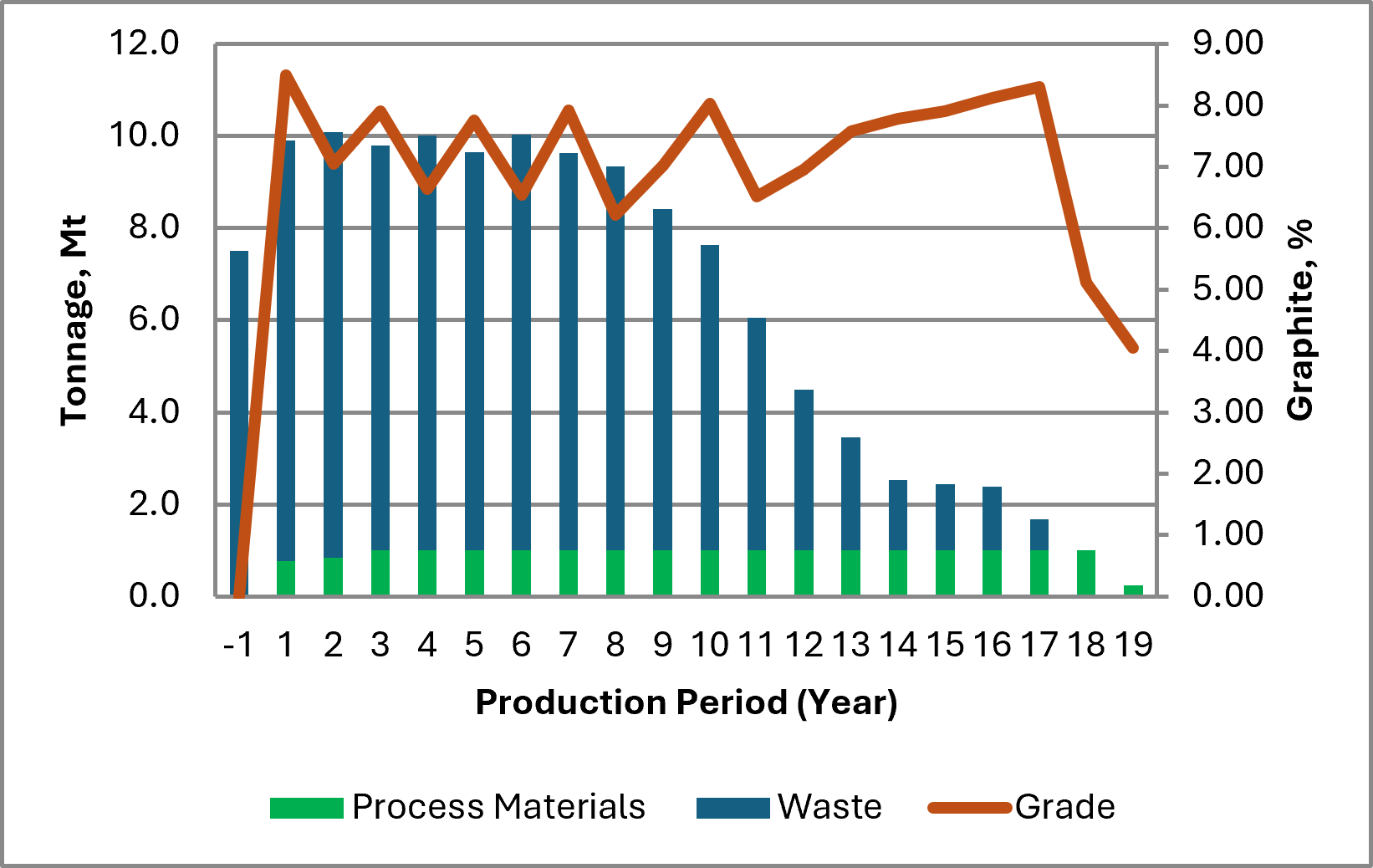
Figure 2: Loki Flake Graphite Deposit PEA Mine Production Plan
The life-of-mine plan comprises 17 years of active mining operations followed by two years of stockpile processing. Mining is conducted at a consistent rate of 10.0 Mt of material annually during the first seven years and slowly diminishing from Y8 to Y17, with a LOM average strip ratio of 6.1:1. The process plant is designed for a nominal throughput of 2,750 tonnes per day (approximately 1.0 million tonnes per year). Average payable graphite production over the 19-year mine life is estimated at approximately 1.23 million dry tonnes per year. Mill throughput is planned at 75% of nameplate capacity in Year 1, 85% in Year 2, and 100% from Year 3 onward, allowing for a controlled start-up and optimization of plant performance. The mill feed grade fluctuates between 6% to 8% from Year 1 to Year 17, before reaching 4% to 5% during the processing of the stockpiled material from Year 18 to Year 19.
Processing
A preliminary test program for recovering the graphite from the Abasca deposit was conducted by SGS Lakefield during 2025 and 2026. The test program included chemical characterization, mineralogical analyses, grindability testing, and flotation testing, graphite concentrate and flotation tailings characterisation.
The test results indicate that the samples respond well to conventional flotation concentration. The flowsheet uses separate flotation with staged regrinding for coarse and fine fractions respectively. The final concentrates are expected to be approximately 95% or higher.
Based on the test work results, a preliminarily optimized flowsheet was developed for this study. The process flowsheet is designed for 2,750 tpd and follows a conventional flotation circuit with staged regrinding process to produce sized high-grade graphite concentrate, which will be further processed at an offsite purification facility. The processing plant (Figure 3 shows simplified process flow diagram) will consist of the following:
A run-of-Mine (ROM) mill feed stockpile,
A primary crusher operating in open circuit,
A secondary crusher operating in closed circuit with a vibrating screen,
A crushed mill feed stockpile with reclaim feeders,
A ball mill grinding circuit operating with flash flotation and a classification hydrocyclone cluster,
A rougher flotation circuit comprising rougher and rougher-scavenger flotation, followed by a rougher-scavenger tailings dewatering circuit, including thickening and filtration processes to generate tailings filter cakes for tailings dry stacking at a lined tailings management facility (TMF) to mitigate the impacts of tailings acid generation potentials on environment,
A rougher concentrate upgrading circuit comprising
one-stage polishing regrinding followed by one stage of cleaner flotation,
second-stage polishing mill followed by three stages of cleaner flotation,
A fourth-cleaner concentrate sizing circuit to separate the upgraded rougher concentrate into coarse and fine graphite concentrate streams,
A coarse concentrate regrind mill, followed by four additional stages of cleaner flotation (5th to 8th cleaners) to produce a final coarse graphite concentrate,
A fine concentrate regrind mill, followed by five additional stages of cleaner flotation (5th to 9th cleaners) to produce a final fine graphite concentrate,
A concentrate dewatering and product handling circuit, including concentrate thickening, filtration, drying, final product sizing, and packaging.
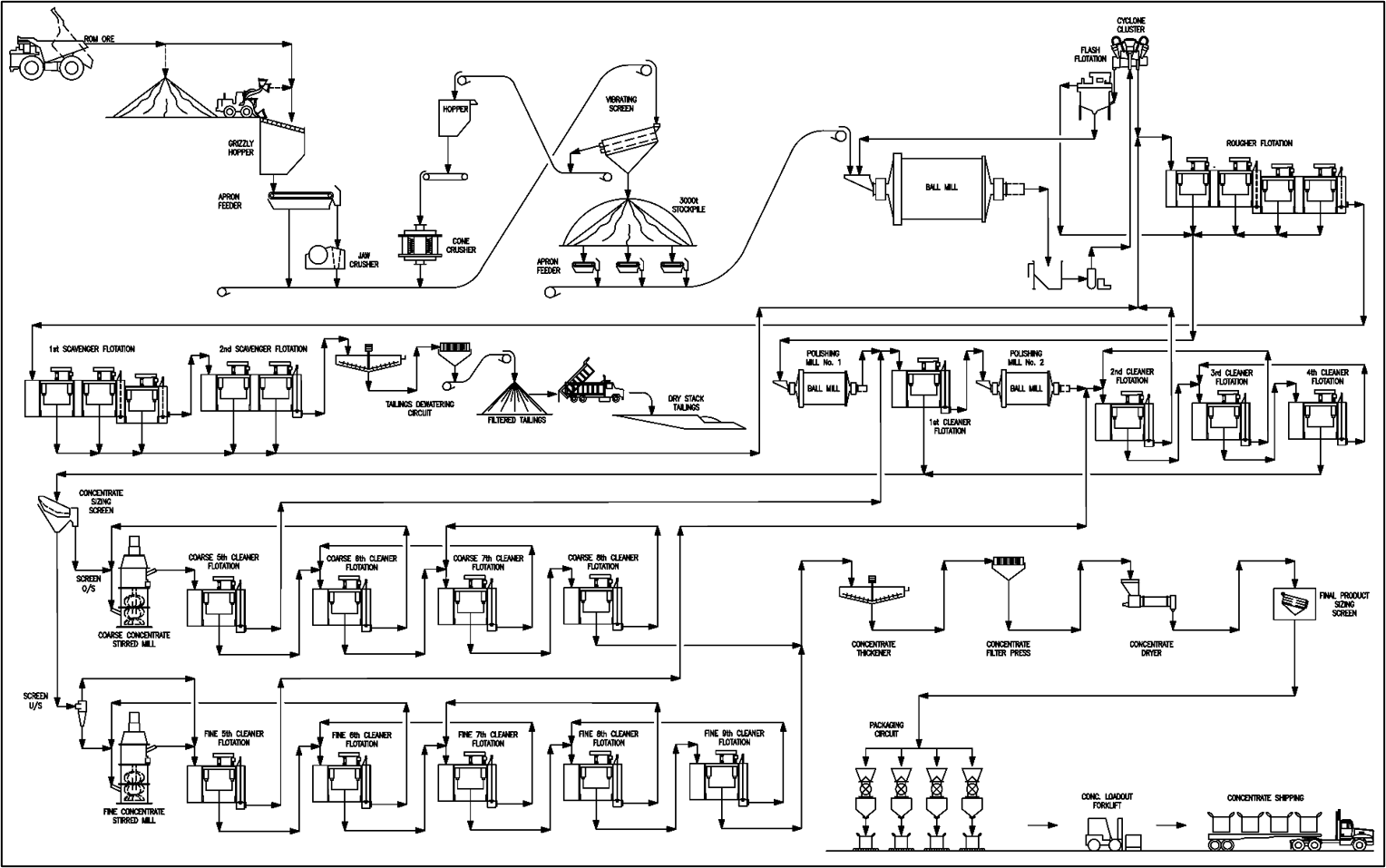
Figure 3: Loki Flake Graphite Deposit PEA Simplified Process Flowsheet
Infrastructure
The Project benefits from existing transportation infrastructure, proximity to provincial power network, and favourable site characteristics that support future development, including:
Road Access: The Loki Flake Graphite Deposit is located approximately 15 kilometres south of the Key Lake mill. Provincial Highway 914, a north-south all-weather highway in Saskatchewan, crosses the project, providing ideal access.
Power: The provincial power grid is 15 km from the Loki Flake Graphite Deposit, which can provide long-term cost-effective and reliable electrical power for the Project.
Water: Several surface water bodies are located near the project site and are expected to provide suitable water sources for future operations, subject to detailed engineering and permitting.
Waste Rock and Tailings Co-deposition Facility (WRTCF): The WRTCF was designed to accommodate 17.9 Mt of tailings and 108.4 Mt of waste rock over the life of the mine. The WRTCF will consist of co-deposited dry stacked tailings and waste rock, providing advantages over the conventional slurry Tailings Management Facility design.
Camp and Services: Existing accommodation camps nearby have the potential to support construction and operations. Camp services are expected to be provided by third-party contractors, creating potential business and employment opportunities for nearby Indigenous communities.
Overall Site General Arrangement: The overall site arrangement is presented in the Figure 4.
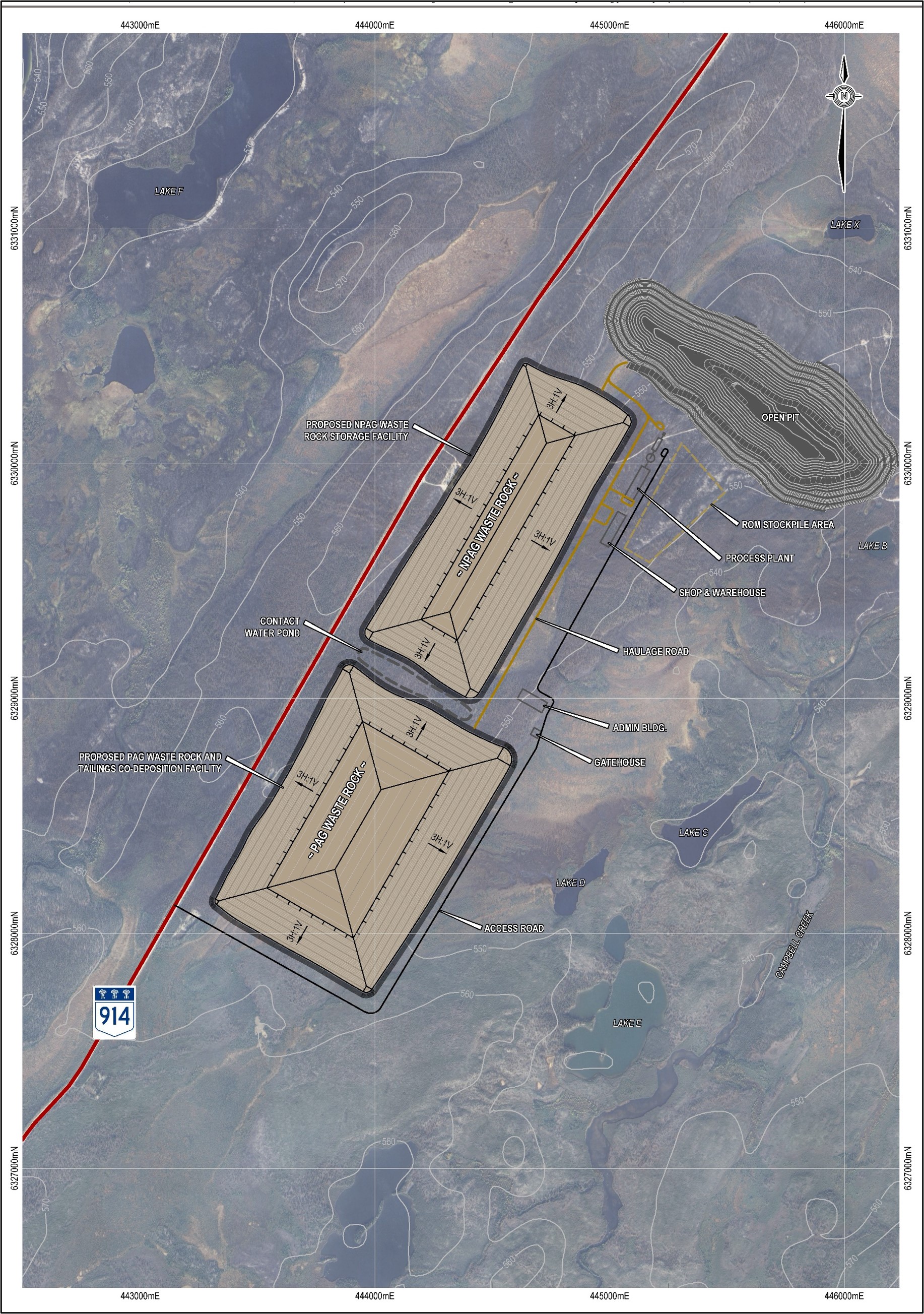
Figure 4: Loki Flake Graphite Deposit PEA Overall Site General Arrangement Plan.
Environmental, Social, and Permitting
In 2025, Abasca engaged CanNorth Environmental Services to conduct environmental studies on the Project. The purpose of the studies was to initiate data collection for components that require baseline datasets, specifically hydrology, water chemistry, and bathymetry to support a future Environmental Impact Assessment. Studies and data collection will continue into 2026 and 2027, including further work on aquatic, terrestrial and heritage resources as well as work on meteorological, hydrogeological and geochemical conditions. This work will advance project development and support future submissions to meet regulatory requirements.
Opportunities and Exploration Potential
The PEA presents a conceptual development scenario for Loki Deposit based on current information. The following opportunities may be evaluated in future technical studies to further optimize the Project's technical and financial performance.
Power Optimization
SaskPower funds community initiatives, educational programs, and clean energy development across Saskatchewan to align with its strategic utility goals. As the province's principal electric utility, the crown corporation provides financial backing through corporate sponsorships, capital grants, and energy-efficiency programs. Abasca will initiate business opportunity discussions with SaskPower for funding power supply infrastructure for the project.
Government and Critical Minerals Funding Opportunities
Graphite is included on Canada's and Saskatchewan's critical minerals list. Abasca intends to evaluate available federal and provincial funding, infrastructure and strategic investment programs that may support future engineering, infrastructure development and project advancement.
Closure Cost Refinement
The PEA applies a conservative estimate for closure costs. Additional geochemical and hydrological and site-specific engineering studies may allow estimates to be further refined in subsequent technical studies.
Mineral Resource Conversion to Mineral Reserve
There exists the opportunity to continue drilling the Loki Deposit to upgrade the Classification to Indicated by Infill drilling and to expand the resource, providing opportunities to further evaluate and potentially enhance long-term project value through future exploration.
Next Steps/Path Forward
Advancing Engineering
The completion of the PEA establishes a strong technical foundation for the next stage of engineering. The Company believes the Project is well positioned to advance to feasibility-level engineering.
Future work is expected to focus on metallurgical optimization, geotechnical and hydrogeological investigations, detailed mine, infrastructure and tailings engineering, environmental studies, and continued refinement of the Project's capital and operating cost estimates.
Engineering Support Drilling
The Company anticipates evaluating a targeted drilling program to support feasibility-level engineering. The program would be expected to focus primarily on infill drilling, geotechnical investigations and metallurgical sample collection, and mineral resource expansion.
Environmental & Permitting
In parallel with the Feasibility Study, Abasca intends to advance the environmental assessment process and obtain the regulatory approvals required to support future Project development, building on the substantial environmental studies and technical work completed during the previous Environmental Assessment process. The Company will continue to engage with the Indigenous Groups, regulators and local stakeholders throughout this process.
Strategic Development
The Company will continue evaluating opportunities to advance the Project through strategic partnerships, government-supported critical mineral initiatives and engagement with potential customers and other industry participants.
Study Notes
The PEA was prepared by Tetra Tech Canada Inc. with an effective date of August 19, 2026. The study is based on an updated Mineral Resource Estimate with an effective date of April 23, 2026, prepared in accordance with the CIM Definition Standards and NI 43-101.
The NI 43-101 Technical Report supporting the PEA will be filed on SEDAR+ and the Company's website within 45 days of this news release.
Qualified Persons
The scientific and technical information contained in this news release has been reviewed and approved by Brian McEwan, P.Geo., who is a Qualified Person ("QP") as defined by National Instrument 43-101 - Standards of Disclosure for Mineral Projects ("NI 43-101") and is not independent of the Company. Mr. McEwan is the Vice-President of Exploration and Development for Abasca Resources Inc.
The following Qualified Persons are responsible for the PEA, are independent of Abasca and the Project, and have reviewed and approved the scientific and technical information contained in this news release:
Matt Batty, P.Geo., MSc., Understood Minerals Resources Ltd.-Geology/mineral resources
Hasssan Ghaffari, P.Eng., MASc., Tetra Tech-Infrastructure/capital costs and environmental/permitting
Sabry Hafez, P.Eng., PhD, Tetra Tech-Mining/mine planning and financial analysis
Jianhui Huang, P. Eng., PhD, Tetra Tech-Processing/metallurgy
Chris Johns, P.Eng., Tetra Tech-Tailings management
About Tetra Tech
Founded in 1966 and headquartered in Pasadena, California, Tetra Tech is a leading global consulting and engineering firm worldwide, specializing in water, environment, and sustainable infrastructure. With more than 25,000 employees, Tetra Tech, is a leading global provider of high-end consulting and engineering services focussing on water, environment, sustainable infrastructure, renewable energy, and international development. The company operates as a publicly traded corporation (NASDAQ: TTEK). Tetra Tech distinguishes itself with its trademarked slogan "Leading with Science®," leveraging an interdisciplinary network of scientists, engineers, and data analysts to design and implement highly technical solutions.
About Abasca Resources
Abasca is a mineral exploration company that is primarily engaged in the acquisition and evaluation of mineral exploration properties. The Company owns the Key Lake South Project (KLS), a 23,977-hectare exploration project located in the Athabasca Basin Region in northern Saskatchewan, approximately 15 km south of the former Key Lake mine and current Key Lake mill. The project possesses geological similarities with and is along-strike of the past-producing Key Lake Mine and hosts over 50 km of prospective conductors for potential uranium mineralization. KLS is also host to the Loki Flake Graphite Deposit comprising a total Indicated Resources of 6.99 Mt at 8.27 % Cg and inferred resource of 15.83 Mt at 6.93 % Cg. Abasca has completed a Preliminary Economic Assessment for the Loki Deposit with positive result of after-tax NPV of US$130 million and 16.7% IRR. Please refer to the news releases dated July 14, 2026 and August 19, 2026, and the technical report dated May 29, 2025, with an effective date of April 10, 2025 and titled "Technical Report on the Key Lake South Project with Initial Mineral Resource Estimate for the Loki Flake Graphite Deposit, Saskatchewan, Canada", filed under the Company's profile on the SEDAR+ website, for further information about the current resource estimate.
On behalf of Abasca Resources Inc.
Dawn Zhou, M.Sc., CPA
President, CEO and Director
For more information visit the Company's website at https://www.abasca.ca or contact:
Abasca Resources Inc.
Email: info@abasca.ca
Telephone: +1 (306) 933 4261
Neither the TSX Venture Exchange Inc. nor its Regulation Service Provider (as that term is defined in the policies of the TSX Venture Exchange Inc.) accepts responsibility for the adequacy or accuracy of this press release.
Forward-Looking Statements
This press release may contain certain forward-looking information ("forward-looking information") within the meaning of applicable Canadian securities legislation that are not based on historical fact, including without limitation statements containing the words "believes", "anticipates", "plans", "intends", "will", "should", "expects", "continue", "estimate", "forecasts" and other similar expressions. Forward-looking information reflects management's current beliefs with respect to future events and is based on information currently available to management. Forward-looking information contained in this press release includes, but is not limited to, statements relating to an updated mineral resource estimate for the Loki Deposit; the preparation of a preliminary economic assessment for the Loki Deposit that will provide an initial evaluation of the Project's economic potential, including capital and operating cost estimates, mine design and metallurgical recovery processes; the de-risking of the Loki Deposit; the advancement of the Loki Deposit from an exploration project towards a development-ready asset; the PEA providing the technical and economic framework required to advance the Loki Deposit into the feasibility stage and ultimately bring the project into production; the advancement of the environmental assessment process and obtaining the regulatory approvals required to support future Project development; the evaluation of a targeted drilling program to support feasibility-level engineering, and mineral resource expansion; and the acceleration of the Company's path towards its production goals. Readers are cautioned to not place undue reliance on forward-looking information. Actual results and developments may differ materially from those contemplated by these statements. Abasca undertakes no obligation to comment on analyses, expectations, or statements made by third-parties in respect of Abasca, its securities, or financial or operating results (as applicable). Although Abasca believes that the expectations reflected in forward-looking information in this press release are reasonable, such forward-looking information has been based on expectations, factors, and assumptions concerning future events which may prove to be inaccurate and are subject to numerous risks, uncertainties and factors, certain of which are beyond Abasca's control, including the impact of general business and economic conditions; risks related the exploration activities to be conducted on KLS, including risks related to government and environmental regulation; actual results of exploration activities; industry conditions, including uranium and graphite price fluctuations, interest and exchange rate fluctuations; the influence of macroeconomic developments; business opportunities that become available or are pursued; title, permit or license disputes related to KLS; litigation; fluctuations in interest rates; the impact of international trade disputes and the imposition of tariffs, international conflict and other geopolitical tensions and events; the Company's ability to raise additional capital; and other factors. In addition, the forward-looking information is based on several assumptions which may prove to be incorrect, including, but not limited to, assumptions about the availability of qualified employees and contractors for the Company's operations and the availability of equipment. The forward-looking information contained in this press release are expressly qualified by this cautionary statement and are made as of the date hereof. Abasca disclaims any intention and has no obligation or responsibility, except as required by law, to update or revise any forward-looking information, whether as a result of new information, future events or otherwise.
SOURCE: Abasca Resources Inc.
View the original
press releaseon ACCESS Newswire
Media gallery