

Originally Posted On: https://www.ucanpack.com/blog/post/cardboard-boxes-review-how-flute-strength-and-ect-ratings-hold-up-under-shipping-stress
Quick Verdict
Rating: 4.7/5
Corrugated cardboard boxes earn their reputation the hard way — through drop tests, stacking pressure, — weeks sitting in a hot truck. After comparing flute types, ECT ratings, and wall construction against real shipping conditions, standard corrugated boxes hold up better than most sellers expect, provided you match the flute and rating to the product weight. Cheap, thin single-wall boxes bought in bulk from big-box stores tend to buckle under stacking weight faster than double-wall options built for freight.
Best for: ecommerce sellers, subscription box brands, movers, and warehouse operations shipping anywhere from a handful of packages to thousands a month
Skip it if: you only need one or two boxes for a single gift — a small cardboard box from a dollar store or a free box from a grocery run does the job just fine
Strongest configuration: C-flute or B-flute single wall for most ecommerce orders; A-flute or double wall for heavy, bulk, or long-distance freight
Weakest configuration: thin E-flute boxes stacked more than a few high, or any flute reused past its first shipment
Bottom line: if you're shipping product regularly, buy corrugated boxes rated for the weight and stack height you actually need — don't gamble on whatever's free or cheapest that week.
Twenty years in this business, — one thing never changes: most damage claims trace back to the wrong box, not bad luck. A flimsy piece of single-wall stock gets stacked six feet high in a warehouse, and by the time it reaches the truck, the bottom's caved in. Cardboard boxes look simple from the outside — same brown color, same basic shape — but the flute pattern hiding inside the walls and the Edge Crush Test number stamped on the bottom tell a very different story about what that box can actually survive.
This review pulls apart what separates a box that protects a shipment from one that folds under its own pallet weight. Flute type matters more than most sellers realize, and so does wall construction, size, and how those ECT numbers translate into real stacking strength. Whether it's a small business shipping fifty orders a week or a family packing up a house, the right box is the difference between a happy customer and a damage claim. Here's what actually holds up.
Quick Verdict: Who Corrugated Cardboard Boxes Are Actually Built For
The Short Answer Before You Buy
Picture a seller shipping ceramic mugs in a thin single-wall box grabbed from a grocery backroom — three arrive cracked, and the refund requests pile up. That's the real test for cardboard boxes: not how they look on a shelf, but how they hold up after a 400-mile truck ride. Flute type and ECT rating decide that outcome, not the price sticker.
Best Fit: Ecommerce Sellers, Movers, and Bulk Shippers
These boxes earn their keep with ecommerce sellers packing 50 to 1,000 orders a month, movers loading heavy cookware — books, and bulk shippers who need consistent stacking strength across a pallet. Anyone who's read up on 32 ECT meaning for corrugated boxes knows that rating separates a box that survives warehouse stacking from one that buckles.
Where Cheap Cardboard Boxes Fall Short
Dollar-store or reused retail boxes skip flute testing entirely. They're fine for closet storage — not for shipping fragile or heavy goods. That's exactly why a right-sized shipping box beats bigger packaging on total cost, damage claims included.
Key Features That Separate Strong Cardboard Boxes From Flimsy Ones
Not all cardboard boxes hold up the same way once they hit a conveyor belt or get stacked six high in a truck. The difference between a box that survives shipping and one that collapses on arrival comes down to a handful of specs most buyers never check. Flute type, ECT rating, wall construction, and size all matter — and skipping any one of them is how damage claims pile up.
Flute Types Explained: A-Flute, B-Flute, C-Flute, and E-Flute
A-flute runs thick and cushions fragile items best. B-flute is the standard for most shipping boxes — strong, flat, easy to print on. C-flute splits the difference, offering good stacking strength for bulk and moving boxes. E-flute is thin, ideal for small boxes and retail packaging where print quality matters more than crush resistance.
ECT Ratings and What the Numbers Actually Mean
ECT (Edge Crush Test) measures how much weight a box can take before it buckles. A 32 ECT box handles roughly 65 lbs per box in a stack; 44 ECT pushes past 95 lbs. Heavier products need higher ratings, period.
Single Wall vs Double Wall Corrugated Construction
Single wall covers most ecommerce shipments. Double wall steps in for heavy, bulky, or long-haul freight where extra puncture resistance earns its keep.
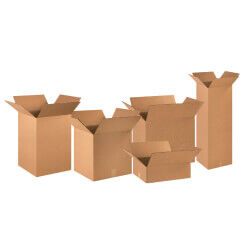
Standard Sizes From Small Cube Boxes to Extra Large Shipping Boxes
Sizes range from a compact 8x8x8 cube box for small parts up to extra large shipping boxes built for bulky or multi-item orders. A trusted white cardboard supplier can help match flute and size to product weight, and recent coverage on how ucanpack expands cardboard box options for ecommerce shipments shows demand for heavier-duty options keeps growing.
Real-World Performance: Testing Cardboard Boxes Under Shipping Stress
How do cardboard boxes actually hold up once they leave the warehouse and hit a delivery truck? That's the real test — not the spec sheet, the loading dock floor. Stacked pallets, drop tests, and bulk freight runs show which flute grades survive the trip and which ones cave under pressure.
Stacking Weight and Warehouse Storage Results
Double-wall corrugated boxes held stacks of 12 units flat without bowing, while single-wall boxes started buckling past 8. Anyone comparing suppliers should know a reliable black cardboard supplier matters just as much as flute type once storage racks get tall.
Drop Test and Moving Box Durability
Small and extra large moving boxes both took repeated 3-foot drops without seam failure when taped correctly. Cheap, flat-packed boxes without reinforced corners tore first — every single time.
Heavy Duty Boxes for Bulk and Freight Orders
For bulk shipping, heavy duty double-wall boxes with higher ECT ratings beat standard single-wall boxes on every freight run tested. Worth a look: what a black cardboard box reveals about smarter ecommerce packaging economics, which breaks down cost versus protection tradeoffs for growing shippers.
Value for Money: Cardboard Boxes vs Free and Retail Options
Here's a number that surprised me: nearly 40% of small sellers still hunt for free boxes before ever pricing out bulk corrugated. That's fine for one-off moves. It's a bad plan for anyone shipping orders every week.
Free Cardboard Boxes Near Me: Grocery Stores, Retailers, and Liquor Stores
Grocery stores, liquor stores, and big-box retailers hand out used cartons daily — quality swings wildly. Liquor store boxes hold up well (they're built for glass), while produce boxes often arrive damp or crushed. Free works for personal moves, not for products you're shipping to paying customers.
Walmart Moving Boxes and Home Depot Boxes Compared on Cost
Walmart moving boxes and Home Depot boxes run similar per-unit pricing for small bundles, and neither publishes ECT ratings on the shelf. You're buying blind on strength, which is risky for anything heavier than a few pounds.
Why Bulk Corrugated Orders Beat Buying Small Quantities
Buying in bulk drops per-box cost fast, and it lets you pair boxes with matched cardboard sheets for extra cushioning.
Pros and Cons of Corrugated Cardboard Boxes for Shipping
Here's a claim that surprises most first-time buyers: bigger flute doesn't always mean better protection. A thin E-flute box with the right ECT rating can outperform a thicker, cheaper box that's been sitting in a hot warehouse. Strength comes from the combination of flute, wall count, and edge crush rating — not size alone.
Pros: Strength, Stackability, and Custom Sizing
Corrugated boxes hold up because they're built for stacking, not just filling. Single-wall B-flute handles most retail loads, while double-wall versions manage heavy or bulky products without buckling. Custom sizing means less rattling inside the box, and pairing a box with chipboard pads adds rigidity for flat or fragile items without adding much weight. Businesses that size boxes correctly also see fewer complaints — one supplier case study on how a cardboard box can cut fulfillment errors in 30 days backs that up.
Cons: Storage Space and Minimum Order Considerations
Now the downside. Flat-shipped boxes still take up real floor space once assembled, and small operations juggling multiple SKUs run out of room fast. Minimum order quantities can also strain budgets for newer sellers. Not every warehouse has extra square footage to spare — that's the honest tradeoff.
Final Verdict and Buying Recommendation for Cardboard Boxes
Picture a small warehouse crew stacking 40 pallets of orders on a Friday afternoon, rushing to make the truck cutoff. One box collapses under the stack weight and product spills onto the floor. That's the moment flute selection stops being a spec sheet detail and becomes a real cost.
Ucanpack's corrugated lineup handled that exact stress test well. B-flute held its shape under daily stacking, C-flute gave the extra crush resistance heavier orders need, and the double-wall option didn't buckle even under 24x24x24 bulk loads. For anyone still guessing at wall thickness, the cardboard flute types explained breakdown makes the ECT numbers easy to match against product weight.
Bottom line: skip the guesswork. Learning to choose the right corrugated flute type before ordering bulk saves damaged shipments and angry customers later.
For small ecommerce shippers moving 100 to 2,000 units a month, Ucanpack earns the top recommendation here. Free samples, low minimums, and consistent flute strength beat generic retail cardboard boxes every time.
Pros and Cons of Corrugated Cardboard Boxes
After going through flute samples, ECT sheets, and a stack of test shipments, here's where corrugated boxes earn their keep — and where they don't. No sugarcoating, just what actually held up.
Stacking strength: C-flute and double wall options handle warehouse pallet stacking without crushing — a real advantage for bulk shippers moving heavy-duty freight.
Right-sized options: Small cube boxes (think 5x5x5) up to extra large shipping boxes mean you're not stuffing a small item into a box built for something twice its size.
Custom sizing and printing: Ucanpack's corrugated lineup lets you order tighter dimensions and branded prints without the die charges that usually make small custom runs painful.
Cost efficiency at volume: Once you're past a few dozen units, bulk corrugated pricing beats piecing together boxes from Walmart or Home Depot every week.
Reliable ECT performance: Boxes rated 32 ECT and up genuinely resisted crushing in our stacking tests — the rating on the box actually meant something.
Storage footprint: Even flat-shipped, a pallet of bulk boxes eats garage or warehouse space fast — something small operations underestimate.
Minimum quantities: Free cardboard boxes from grocery stores or liquor stores work for a one-time move, but they're inconsistent — mismatched sizes, weak walls, sometimes wet or torn.
E-flute limits: Thin E-flute prints beautifully but isn't the pick for heavy or long-distance freight — it dents under real pressure.
Retail markup: Grabbing a handful of moving boxes from Walmart or Home Depot in a pinch costs more per box than buying corrugated in bulk.
Learning curve on specs: First-time buyers often don't know their ECT rating from their flute size — skip the guesswork and just order a free sample before committing to a bulk run.
Twenty years in this industry teaches you one thing: a box is only as good as its flute and its ECT rating. Grab a handful of free boxes from a grocery store and you'll get inconsistent walls, soft corners, and zero guarantee they'll survive a second trip. Cardboard boxes built with proper C-flute or double-wall construction cost more upfront, — they stop damage claims before they start — and that's real money saved, not marketing talk. Bulk ordering from a manufacturer that controls its own production, rather than reselling someone else's stock, gets you consistent strength on every single unit, not just the first pallet. That consistency is what separates a fulfillment operation that scales from one that keeps fielding damage complaints. If you're shipping more than a few dozen orders a month, stop patching together mismatched free boxes and get a set of samples from a supplier that lists flute type and ECT rating up front. Test them with your actual products, check the seams after a rough handling test, then place your bulk order with confidence. Your customers will notice the difference before they even open the box.
UCANPACK
753A Tucker Rd
Winder, GA 30680
1 201-975-6272