
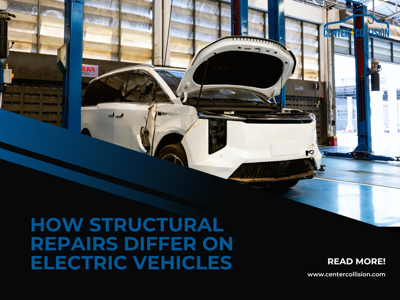
How Structural Repairs Differ on Electric Vehicles
Tacoma, United States - May 27, 2026 / Center Collision (Main Shop) /
Tacoma, WA — May 2026 — Center Collision EV Division is providing information to drivers about the structural repair considerations unique to electric vehicles following a collision. As EV adoption continues to grow, understanding how these vehicles differ from traditional models has become increasingly important for vehicle owners.
Electric vehicles are built with integrated battery systems and lightweight materials that require specific repair procedures. Structural damage in an EV may involve not only the frame or unibody but also the battery enclosure and surrounding components.
Drivers seeking more information about EV capable repair services can review available options for collision repair when evaluating post-collision repairs.
“Electric vehicles require a different approach to structural repairs,” a representative from Center Collision EV Division said. “Technicians must account for both the physical structure and the high voltage systems when assessing damage.”
How EV Structural Design Impacts Repairs
Electric vehicles are designed differently from traditional internal combustion vehicles. In many EVs, the battery pack is mounted within the vehicle’s floor structure, making it a critical component of the overall design.
This integration means that structural damage can affect:
Battery housing and protection systems
Vehicle rigidity and crash energy absorption
Alignment of safety and driver assistance systems
The National Highway Traffic Safety Administration notes that EV battery systems must be handled carefully after a collision due to potential safety risks.
Materials Used in EV Construction
EV manufacturers often use advanced materials such as:
Aluminum
High strength steel
Composite materials
These materials help reduce weight and improve efficiency but require specialized repair techniques. Traditional welding and repair methods may not be suitable for these materials, making proper training and equipment essential.
Importance of Battery Safety During Repairs
Battery systems in electric vehicles operate at high voltage levels and require specific safety procedures during repair. Before any structural work begins, technicians must safely disable and isolate the battery system.
Improper handling of EV batteries can lead to:
Electrical hazards
Fire risks
Damage to internal battery components
Professional repair facilities follow manufacturer guidelines to ensure that battery systems are properly inspected and protected throughout the repair process.
Structural Accuracy and System Calibration
Structural accuracy is critical in EV repairs. Even minor misalignments can affect vehicle performance and the operation of advanced systems.
Drivers can learn more about how structural alignment is measured through frame diagnosis when evaluating repair procedures.
Additionally, EVs rely heavily on sensors and driver assistance systems that require recalibration after repairs. Proper calibration ensures that these systems function as intended.
The Insurance Institute for Highway Safety emphasizes the importance of maintaining structural integrity to preserve crash safety performance.
Risks of Improper EV Structural Repairs
Improper repairs can result in long term issues that affect both safety and performance. These may include:
Reduced crash protection
Misalignment of safety systems
Decreased driving range due to inefficiencies
Potential warranty concerns
Because EV systems are interconnected, errors in structural repair can impact multiple vehicle functions.
Resources for Tacoma EV Drivers
Drivers in Tacoma who own electric vehicles are encouraged to seek professional inspections after a collision, even if damage appears minor. Early assessment helps identify issues that may not be immediately visible and ensures proper repair planning.
Working with a facility experienced in EV structural repair can help ensure that both safety systems and battery components are properly evaluated.
Collision repair professionals can assist with damage assessment, repair planning, and communication with insurance providers throughout the repair process.
About Center Collision EV Division
Center Collision EV Division is a collision repair facility serving electric vehicle drivers in Tacoma, Washington. Located at 3723 S 58th St, Tacoma, WA 98409, the facility specializes in EV structural repairs, diagnostics, and advanced repair procedures. Technicians follow manufacturer repair standards and industry guidelines when restoring electric vehicles after collision damage.
Media Contact
Center Collision
3723 S 58th St
Tacoma, WA 98409
Phone: 253 779 8342
Email: admin@centercollision.com


Contact Information:
Center Collision (Main Shop)
1111 Center St,
Tacoma, WA 98409
United States
Kevin House
https://centercollision.com/


Original Source: https://centercollision.com/how-structural-repairs-differ-on-electric-vehicles/