
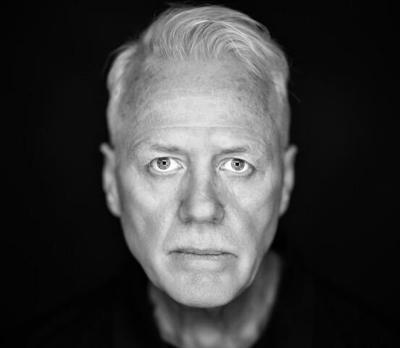

The EyeCheq executive and nationally recognised healthcare innovator is demonstrating how principles of perception, psychology and performance can be applied to healthcare transformation and measurable patient outcomes
TUSTIN, CA / ACCESS Newswire / August 13, 2026 / Christopher Grant, Chief Commercial Officer of EyeCheq and a recognised leader in healthcare innovation, has been named one of the Top 5 Entrepreneurs of 2026, recognising a career defined by measurable healthcare outcomes and an unconventional intellectual framework rooted in the art, psychology and neuroscience of magic.
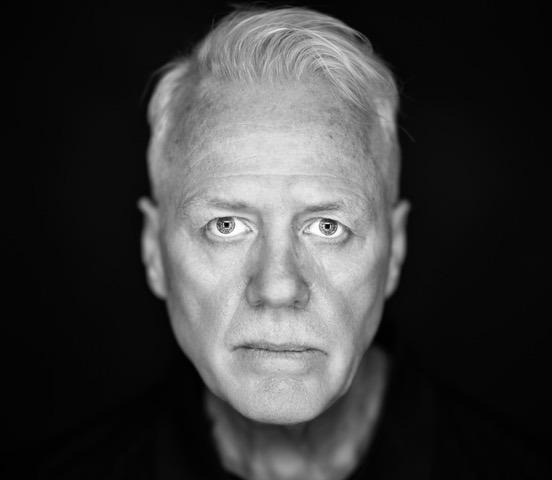
Grant's approach, which he describes as Effect First Thinking, challenges one of the most common assumptions in innovation: that progress begins with a new technology, process or method. Instead, Grant argues that innovation should begin by defining the experience and outcome that must be created for the person ultimately affected by the system. Only then should organisations determine which technology, workflow or method is capable of producing that result.
This framework has shaped Grant's work across healthcare innovation, commercial strategy, patient experience and healthcare transformation. It has also produced a distinctive professional profile. Grant is a healthcare executive, entrepreneur and Relentless Innovator who has helped lead initiatives recognised for significant clinical and financial outcomes, while simultaneously maintaining a serious scholarly and professional engagement with magic. That combination is not incidental to his work.
It is the source of the framework.
From Healthcare Outcomes to the Architecture of a Miracle
Today, Grant serves as Chief Commercial Officer of EyeCheq, a physician-founded company focused on expanding access to Diabetic Retinopathy Screening through self-service retinal imaging and point of care diagnostics. EyeCheq's technology is deployed across national laboratory networks, major retail environments and integrated healthcare systems, addressing a significant challenge in preventive eye care: diabetic retinopathy can progress without obvious symptoms, leaving patients unaware that they may be at risk of sight-threatening disease.
Reported screening data has shown that 33.3% of asymptomatic patients undergoing their first screen were found to have sight-threatening conditions. The platform has also achieved a 98.7% gradable image rate and a 99.8% self-service completion rate.
For Grant, these figures illustrate the central purpose of healthcare innovation. The objective is not simply to introduce a new diagnostic technology. The objective is to change what happens to the patient to make screening more accessible, reduce friction and identify disease before a person experiences irreversible consequences.
This is the essence of Grant's Effect-First Thinking. The technology is the method and the patient outcome is the effect.
The Unexpected Intellectual Framework Behind the Innovation
Grant's approach is rooted in an unusual combination of disciplines. Before entering healthcare, he worked professionally in theatre as a lighting and set designer and production manager, developing an understanding of how experiences are constructed, directed and perceived. Alongside his healthcare career, he became a serious student and practitioner of magic.
He is a performing close-up and theatrical magician, has served as President of the Board of Directors of the Academy of Magical Arts at The Magic Castle in Hollywood, and has developed a personal research library of more than 750 volumes focused on conjuring, theatrical psychology and dramatic theory.
His interest in magic extends beyond performance.
For Grant, magic offers a practical framework for understanding how people perceive information, interpret experiences and respond to carefully designed environments. A successful magical effect depends not only on technique, but on attention, expectation, timing, perception and the construction of an experience from the audience's point of view. Grant believes these principles have direct relevance to modern healthcare and organisational innovation. A magician does not begin by asking which method is easiest to perform. The magician begins by determining what the audience should experience. The method is then engineered to produce that effect.
Grant argues that healthcare organisations can benefit from the same discipline. Rather than beginning with a technology and asking what it might be used to accomplish, leaders should begin by defining the experience and outcome that matter most to the patient, clinician or organisation.
This philosophy is the foundation of Grant's keynote presentation, The Architecture of a Miracle: How a Magician Innovates, which has been delivered to healthcare and innovation audiences nationally.
The presentation explores the relationship between Magic and Innovation, examining how the principles of perception, psychology, standardisation, automation and performance can inform the design of more effective healthcare systems.
Its central question is simple:
What effect are you trying to create, and has your method actually created it?
The EyeCheq Decision
Grant's decision to join EyeCheq reflected the same principle that has shaped his approach to innovation. Following a major career transition, he was not actively seeking another institutional role. He was looking for work that was challenging, meaningful and connected to a purpose he genuinely believed in.
After several conversations with EyeCheq's physician founders, Grant eventually travelled to Miami to see the technology firsthand. What persuaded him was not simply the technology itself, but the problem the company had chosen to solve.
The founders had witnessed patients present too late with diabetic eye disease. The condition can progress without obvious symptoms, and patients may miss recommended screening despite being at risk. The company had therefore been built around a clear desired effect: helping identify sight-threatening disease earlier and contributing to the goal of eliminating preventable blindness.
The solution came after the problem had been clearly understood.
That sequence was immediately familiar to Grant.
"The solution had an absolute effect on patients. The method was simple without being simplistic. And the founders were solving a problem they had lived."
At EyeCheq, Grant subsequently built the commercial infrastructure that brought the company's retinal screening technology into national contracts with the largest laboratory network in the United States, a major national retailer and a leading vision benefits organisation.
The achievement reflects the intersection of Grant's healthcare experience and his broader philosophy of innovation: identify the outcome that matters, understand the barriers preventing it and then design a system capable of delivering the intended effect at scale.
A Framework Shaped by Psychology, Perception and Performance
Grant's thinking has also been influenced by his time studying under management thinker Peter Drucker at the Claremont Graduate School of Management. On the first day of class, Drucker told his students, "Please accept the fact that you know nothing."
Grant ultimately came to understand the statement as a lesson in intellectual discipline. Innovation requires the willingness to approach a problem without assuming that the existing method, technology or institutional structure is the answer. This principle complements what Grant has learned through the study of magic, both disciplines require attention to perception, both require an understanding of how people experience events rather than simply how systems are constructed and both demand a distinction between what is actually happening and what the audience or in healthcare, the patient believes is happening.
For Grant, this is where the neuroscience and psychology of magic become particularly relevant to innovation. Human beings do not experience healthcare as a flowchart, a software platform or a collection of operational metrics. They experience it through attention, uncertainty, trust, friction, expectation and perception.A system may be technically efficient and still create a poor experience, a technology may be clinically powerful and still fail if patients do not use it. A process may be operationally sound and still produce poor outcomes if it is designed around the institution rather than the person.
The innovation challenge, therefore, is not simply to build better methods but it is to understand the human experience those methods create.
Five Principles of Effect-First Innovation
Grant's framework for healthcare innovation and healthcare transformation is built around five principles. The first is to engineer the experience because the outcomes follow. The second is to see the future before it arrives, using foresight not as prediction but as preparation. The third is that the best work often happens invisibly, with automation used to eliminate unnecessary repetition and return time to the people whose judgement and humanity cannot be automated.
The fourth principle is that quality should be designed rather than simply inspected, with strong systems built to prevent avoidable errors rather than relying on endless correction. The fifth is that the solution may already exist somewhere else. Grant believes healthcare leaders should look beyond their own industry for approaches that have already solved comparable problems in retail, aviation, hospitality, logistics, entertainment and other fields.Together, these principles form a broader argument about innovation.The breakthrough is not always the invention of something new.
Sometimes it is the recognition that an existing solution can be applied to a problem in a new environment.
A Relentless Focus on Evidence
Grant is sceptical of elaborate long-term predictions and prefers to focus on what has actually been achieved. "I stopped making three-year plans," he says. "Life is uncertain and the more you try to polish your crystal ball, the cloudier it gets." His approach is instead grounded in the present: what is happening now, what has been accomplished and what can be improved.
"Don't tell me what you want to do or what you hope to do," Grant says. "Show me what you've done."
That philosophy has shaped his career across healthcare innovation, commercial strategy and entrepreneurship. It also explains why he places such emphasis on measurable outcomes. An idea may be compelling. A technology may be sophisticated. A strategy may be well intentioned. But innovation is ultimately tested by what changes.
A Thought Leader at the Intersection of Healthcare and Magic
Christopher Grant's recognition as one of the Top 5 Entrepreneurs of 2026 reflects more than a conventional record of commercial achievement. It recognises a distinctive approach to innovation that brings together healthcare transformation, point-of-care diagnostics, patient experience, psychology, perception and performance.
His career has moved across professional theatre, healthcare, commercial strategy and the study of magic, but the intellectual thread connecting those fields is consistent: understand the experience first, define the desired effect and then engineer the method.
That philosophy has informed Grant's work at EyeCheq and his broader thinking about healthcare innovation. It has also become the foundation of his work as a speaker and thought leader through The Architecture of a Miracle: How a Magician Innovates.
The unexpected connection between magic and healthcare is ultimately the central insight of Grant's work.Magic is not simply about secrets or techniques but it is about understanding how people perceive the world. Healthcare innovation, Grant argues, should begin with the same question: not simply what can a system do, but what will the person experiencing it actually see, feel and receive?
That is the question behind his Relentless Innovation philosophy and the foundation of his Effect First Thinking approach.
About Christopher Grant
Christopher Grant is a healthcare innovator, entrepreneur, speaker and Relentless Innovator serving as Chief Commercial Officer of EyeCheq. His work focuses on Healthcare Innovation, Healthcare Transformation, Point-of-Care Diagnostics and Diabetic Retinopathy Screening.
A professional magician and former President of the Board of Directors of the Academy of Magical Arts at The Magic Castle in Hollywood, Grant explores the connection between Magic and Innovation, psychology, perception and healthcare through his keynote presentation, The Architecture of a Miracle: How a Magician Innovates.
To learn more about Christopher Grant's work, visit Christopher Grant's official website or Great Grantini. For more information about EyeCheq and its work in retinal screening and healthcare innovation, visit EyeCheq. Grant's professional profile is available on LinkedIn.
Media Contact:
Name: Christopher Grant
Email: christopher2grant@gmail.com
Website: www.christophergrant.info
SOURCE: Christopher Grant
View the original
press releaseon ACCESS Newswire