
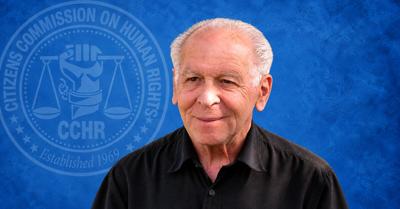


Los Angeles, CA, Sept. 14, 2026 (GLOBE NEWSWIRE) -- Citizens Commission on Human Rights (CCHR) is reporting that the late Dr. Thomas Szasz’s long campaign against involuntary psychiatric hospitalization is now reflected in United Nations human-rights doctrine. UN authorities treat coercive psychiatric practices as violations of liberty, autonomy, and personal integrity. CCHR is highlighting that alignment and honoring Szasz—psychiatrist, SUNY professor, and CCHR co-founder—for decades of work condemning commitment and forced treatment.
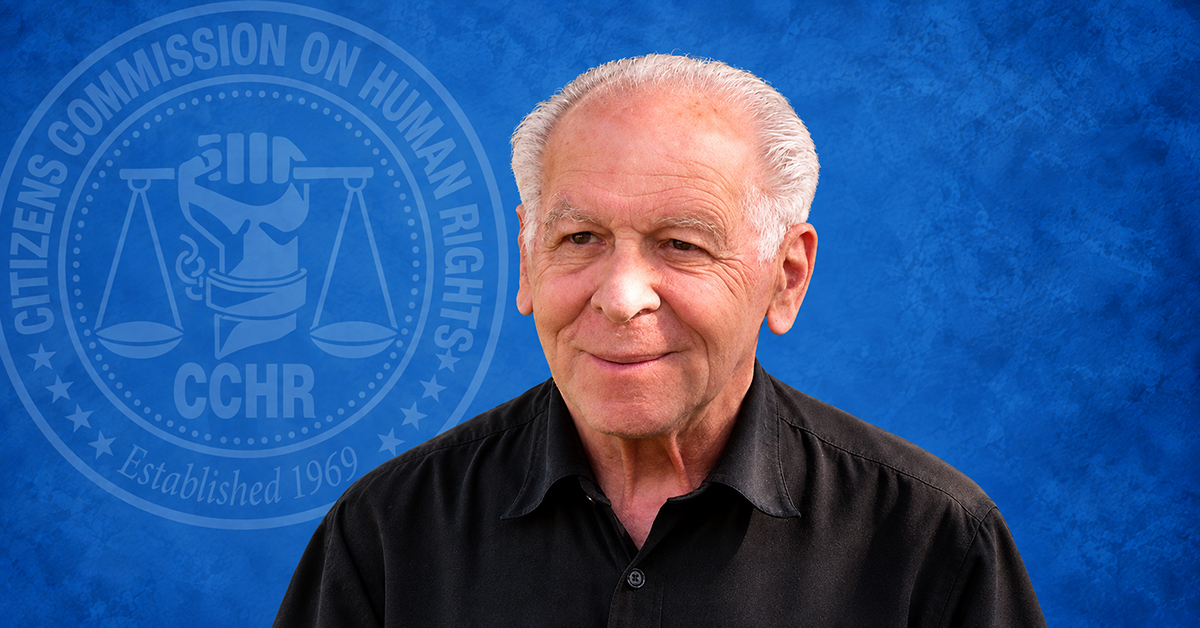
CCHR is honoring Szasz—psychiatrist, SUNY professor, and CCHR co-founder—for decades of work condemning psychiatric commitment and forced treatment.
Szasz, professor of psychiatry at the State University of New York Upstate Medical University in Syracuse, spent decades arguing that involuntary psychiatric hospitalization was imprisonment, not medicine, and a fundamental deprivation of liberty. That warning now appears in the human-rights framework of the United Nations Convention on the Rights of Persons with Disabilities (CRPD), in the CRPD Committee’s call to abolish forced psychiatric treatment and detention, and in World Health Organization guidance urging governments to end coercive practices in mental health care.
Szasz (15 April 1920–8 September 2012) taught at SUNY from 1956 until he became professor emeritus in 1990 and co-founded CCHR in 1969. He held that “the most important deprivation of human and constitutional rights inflicted upon persons said to be mentally ill is involuntary mental hospitalization.”[1] He refused to make the practice sound kinder: it “is a form of imprisonment” contrary to the Declaration of Independence and the Constitution, “a crass violation of contemporary concepts of fundamental human rights.” He called commitment “a crime against humanity” and said it should be abolished.[2]
Congressman Ron Paul called him “one of those rare individuals who could not be silent when liberty was threatened.”[3] Jacob Sullum from Reason magazine wrote that, driven by a “passion against coercion, Szasz’s critique “may be more relevant today than ever.”[4] CCHR adds that that judgment has been borne out: Szasz’s case against involuntary psychiatry has not receded with his death but now stands at the center of a cultural shift: a living, global movement against psychiatric coercion.
CCHR International President Jan Eastgate, who worked with Szasz from 1978 in Australia and from 1994 in the United States, said: “Szasz’s point was simple. Commitment is not treatment. It is captivity justified as care—liberty taken because of a psychiatric label, not a crime. Forced psychiatry passes detention and drugs off as necessary ‘care.’ However, patients experience it as punishment and torture. UN and WHO texts now name this coercion—the same structure Szasz spent his life exposing.”
The CRPD Committee “prohibits involuntary placement and involuntary treatment, and institutionalization of persons with disabilities on the basis of disability, without exceptions,” including as a “last resort.” It has said such measures “perpetuate institutional power imbalances,” expose people to “torture and ill-treatment,” and that studies document trauma, harm and death.[5]
In October 2020, the World Psychiatric Association conceded this, adopting a statement, Implementing Alternatives to Coercion, listing compulsory treatment, seclusion and chemical restraint as collisions with liberty and freedom from torture.
Evidence continues to mount. A Karolinska Institutet study of 72,275 people under involuntary psychiatric care in Sweden (2010–2020) found 2,104 suicides—about 55 times the general population rate. A July 2025 U.S. analysis found those released from involuntary hospitalization nearly twice as likely to die by suicide or overdose within three months. A 2017 JAMA Psychiatry meta-analysis put post-discharge suicide risk at 100 times the global rate in the first three months.
In The Myth of Mental Illness (1961), Szasz argued that “mental illness” is not a bodily lesion and that conduct and behavior had been relabeled medical so psychiatry could claim jurisdiction. Of the “Therapeutic State,” he defined: “it’s therapeutic for the people who are doing the locking up… it’s not therapeutic for the victims.” He did not call for abandoning people in distress. He called for voluntary help from those “who understand their predicament.”
Born in Hungary to Jewish parents who fled the Nazis in 1938, Szasz wrote that Nazi killing “was a medical matter” and that psychiatric language had made victims into vermin, justifying their murder. Szasz lived to hear psychiatry admit this. In 2010, the German psychiatric association publicly admitted that psychiatrists had founded the Nazi euthanasia program, “forced patients to be sterilized, arranged their deaths and even performed killings themselves,” and “abused and killed vast numbers of people.”[6]
Electroshock, psychosurgery, polypharmacy and other brain-damaging interventions can still be given against a person’s will.
“Protection,” Szasz told Eastgate, rests on “an informed public” and on “weakening—not strengthening—the power of institutional psychiatry.” In his words, “The task we set ourselves, to combat psychiatric coercion, is important. It is a noble task in the pursuit of which we must, regardless of obstacles, persevere. Our conscience demands we do no less.”
CCHR was founded in 1969 by the Church of Scientology to restore human rights in the mental health field and end psychiatric coercion. Szasz joined as co-founder because that purpose matched convictions he already held. Of CCHR, he said it was “the only organization that for the first time in human history has organized a politically, socially, internationally significant voice to combat psychiatry. This has never happened before.”
“Mental patients do not need mental hospitals,” he wrote. “They need asylums—places of refuge where they would be protected from coercion by persecutors posing as protectors.”
Sources:
[1] https://www.cchrint.org/2020/09/01/cchr-honors-co-founder-thomas-szaszs-legacy-against-coercive-psychiatry/; Bob Adelmann, “The Passing of Dr. Thomas Szasz,” New American, 13 Sept. 2012, https://www.thenewamerican.com/usnews/health-care/item/12839-the-passing-of-dr-thomas-szasz
[2] https://www.cchrint.org/about-us/co-founder-dr-thomas-szasz/
[3] https://www.cchrint.org/about-us/co-founder-dr-thomas-szasz/
[4] Jacob Sullum, “Thomas Szasz, Relentless Freedom Fighter, Dead at 92,” Reason, 11 Sept. 2012, https://reason.com/2012/09/11/thomas-s-szasz-relentless-freedom-fighte/
[5] Committee on the Rights of Persons with Disabilities, 35th session (12-27 August), Geneva, 27 August 2026
[6] Lempp T., “F. Schneider (ed): Psychiatry under National Socialism – Remembrance and Responsibility,” GMS Z Med Ausbild, 2012 Aug 8;29(4), https://pmc.ncbi.nlm.nih.gov/articles/PMC3420113/; Frank Schneider, M.D., “Psychiatry under National Socialism: Remembrance and Responsibility,” European Archives of Psychiatry and Clinical Neuroscience, Volume 261, Article number: 111 (2011)
About Citizens Commission on Human Rights International
Citizens Commission on Human Rights (CCHR) is an international mental health industry watchdog, established by the Church of Scientology, which has helped enact more than 190 worldwide reforms that protect the public from abuse.
Press Inquiries
Amber Rauscher
media [at] cchr.org
323-467-4242
6616 W. Sunset Blvd., Los Angeles, CA 90028