

The True Cost of Missed Calls for a Medical Practice
Minneapolis, United States - June 29, 2026 / Customer Contact Service /
Key Takeaways A missed call at a medical practice is rarely just a missed call. It is a patient who books elsewhere, a no-show that never reschedules, or an after-hours emergency that goes unanswered.
Practices that treat phone access as a revenue and care priority, not an afterthought, recover the patients others quietly lose. |
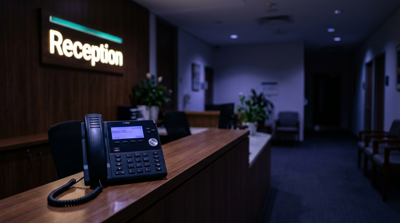
Every time the phone rings at a medical practice and no one picks up, something measurable leaves the building. The caller is trying to book a visit, reschedule, request a refill, or find out whether a symptom needs attention today. Missed calls at a medical practice turn those moments into lost appointments, eroded trust, and revenue that never appears on a single tidy report.
The phone is still the front door. The Medical Group Management Association reports that the phone remains the real entry point for a large share of patients even after practices roll out portals and automated reminders, and that it keeps consuming an outsized share of staff time. When that front door goes unattended during a lunch rush or after closing, the cost does not disappear. It compounds.
What Does a Missed Call Actually Cost a Medical Practice?
The true cost of missed calls at a medical practice is easy to underestimate because it arrives in small, scattered pieces. One unanswered call looks trivial. A pattern of them, repeated daily, becomes a revenue leak that quietly rivals a marketing line item. To see it clearly, it helps to put real numbers on missed calls instead of treating them as background noise.
Consider an illustrative example. Say a practice values a new patient at $250 in first-visit revenue. If it misses eight calls on an average day and three of those callers were trying to book, that is roughly fifteen would-be new patients a week choosing someone else. The math is simple: 15 patients × $250 = $3,750 a week, or about $195,000 a year in first-visit revenue alone. That figure ignores the follow-up visits, procedures, and referrals those patients would have generated, which is where the real number climbs.

How Do Missed Calls Turn Into No-Shows and Lost Appointments?
Many missed calls are not new patients at all. They are existing patients trying to confirm, cancel, or move an appointment. When no one answers, the appointment does not get rescheduled. It simply evaporates, and the slot that could have been refilled sits empty.
The scale matters. According to the Medical Group Management Association, the single-specialty no-show rate reached 6.81% in 2023, close to the pre-pandemic benchmark of 7%, and 42% of medical groups had begun charging no-show fees to recover some of the loss. A fee recovers pennies on the dollar. Answering the phone so patients can actually reschedule protects the entire appointment. Every missed call at a medical practice that hides a reschedule request is a no-show the office created by being unreachable.
Why Are After-Hours Calls the Most Expensive to Miss?
After-hours calls carry the highest stakes of any missed calls a medical practice handles. A patient calling at 8 p.m. is often anxious, in pain, or deciding between waiting until morning and heading to an emergency room. Voicemail answers none of those questions. A trained live agent can gauge urgency, follow practice protocol, reach the on-call clinician, and reassure the caller that someone is handling it.

This is where a healthcare answering service earns its place. The difference between a recording and a live person is the difference between a patient who waits and a patient who leaves. Practices that want to capture every after-hours call lean on live coverage rather than a mailbox.
Factor | Voicemail or Automated Line | Live Healthcare Answering Service |
After-Hours Urgent Calls | Caller left to self-triage | Trained agent gauges urgency and escalates per protocol |
Appointment Booking | Deferred to next business day | Captured and scheduled in real time |
Patient Experience | Impersonal, often abandoned | Greeted by name, handled professionally |
Revenue Impact | Lost or delayed | Captured and routed |
Where Do Medical Practices Lose the Most Calls?
Most practices do not lose calls randomly. They lose them in predictable windows, and naming those windows is the first step to closing them. The following gaps account for the majority of missed calls at a medical practice:
Peak morning hours, when every line is busy and new callers hit a hold queue they abandon.
Lunch breaks, when front-desk coverage thins and calls roll to voicemail.
Evenings and overnight, when the office is closed but patients still have urgent questions.
Weekends and holidays, when volume is lighter but the stakes per call are often higher.
Staffing shortages and call-outs, when even business-hours coverage falls short.
Seasonal surges, when flu season or open enrollment spikes volume past what the team can absorb.
Each of these windows is a candidate for outside coverage, and a dedicated answering service for medical practices closes them without adding headcount.

How Does HIPAA Shape Who Should Answer Patient Calls?
Anyone who answers calls on behalf of a practice handles protected health information, which puts HIPAA squarely in the conversation. The HIPAA Privacy Rule from the U.S. Department of Health and Human Services sets national standards for protecting patient information and requires appropriate safeguards from every party that touches it. A generic answering service or an untrained overflow line is a compliance risk, not a shortcut.
That is why healthcare deserves a purpose-built solution. An answering service for medical practices trains agents on HIPAA, scripts them to practice protocol, and documents every interaction. Choosing an answering service for medical practices that treats compliance as the baseline, rather than an upgrade, keeps patient trust and the practice intact.
Frequently Asked Questions About Missed Calls at a Medical Practice
What actually counts as a missed call?
More than a ringing phone that goes unanswered. Hold-queue hang-ups, after-hours calls that hit a recording, and callers who never leave a voicemail all count, which is why the true number is usually higher than the front desk realizes. That undercounting is what makes missed calls at a medical practice so easy to ignore until the revenue gap shows up.
Can voicemail replace a live person for patient calls?
Rarely. Many patients will not leave a message and simply call another provider. For urgent or after-hours situations, a live healthcare answering service can gauge urgency and route the call, while voicemail cannot.
Is a healthcare answering service HIPAA compliant?
A reputable one is. Agents are trained on HIPAA, follow practice-specific protocols, and safeguard protected health information on every call. Always confirm compliance before signing on.
Does answering more calls really affect revenue?
Yes. Each captured call can mean a booked appointment, a retained patient, or a recovered reschedule. Over a year, the difference between answering and missing those calls is measured in tens of thousands of dollars or more.
Turning Missed Calls Into Captured Revenue
Missed calls at a medical practice are not a phone problem. They are a revenue and continuity problem wearing a phone problem's clothing. The practices that pull ahead treat every inbound call as a patient relationship worth protecting, and they build coverage around the exact hours and surges when their own team cannot answer.
That is the gap Customer Contact Services was built to close. With over 50 years of experience and HIPAA-trained live agents, Customer Contact Services designs scalable communication coverage around how a practice actually runs, spanning live answering, after-hours triage, overflow, dispatch, and full business process outsourcing support. Request a custom call coverage analysis and see exactly how many patients, and how much revenue, your practice can stop losing to a ringing phone.


Contact Information:
Customer Contact Service
14525 Highway 7 Suite 315
Minneapolis, MN 55345
United States
Aundrea Mitchell
https://yourccsteam.com/