

Ardmore, PA - October 02, 2026 - PRESSADVANTAGE -
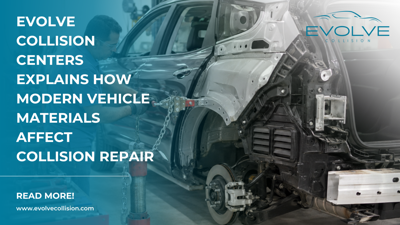
Evolve Collision Centers has published new consumer information explaining how the materials used in modern vehicle construction can influence collision repair planning. The September resource focuses on high-strength steels, aluminum, plastics, composites, adhesives, and other materials that can require different repair considerations depending on the vehicle and affected component.
The publication was developed to help vehicle owners understand why collision damage that appears similar from the outside does not necessarily result in the same repair approach. Modern vehicles can incorporate multiple materials within a single body structure, making vehicle and component identification an important part of repair planning.
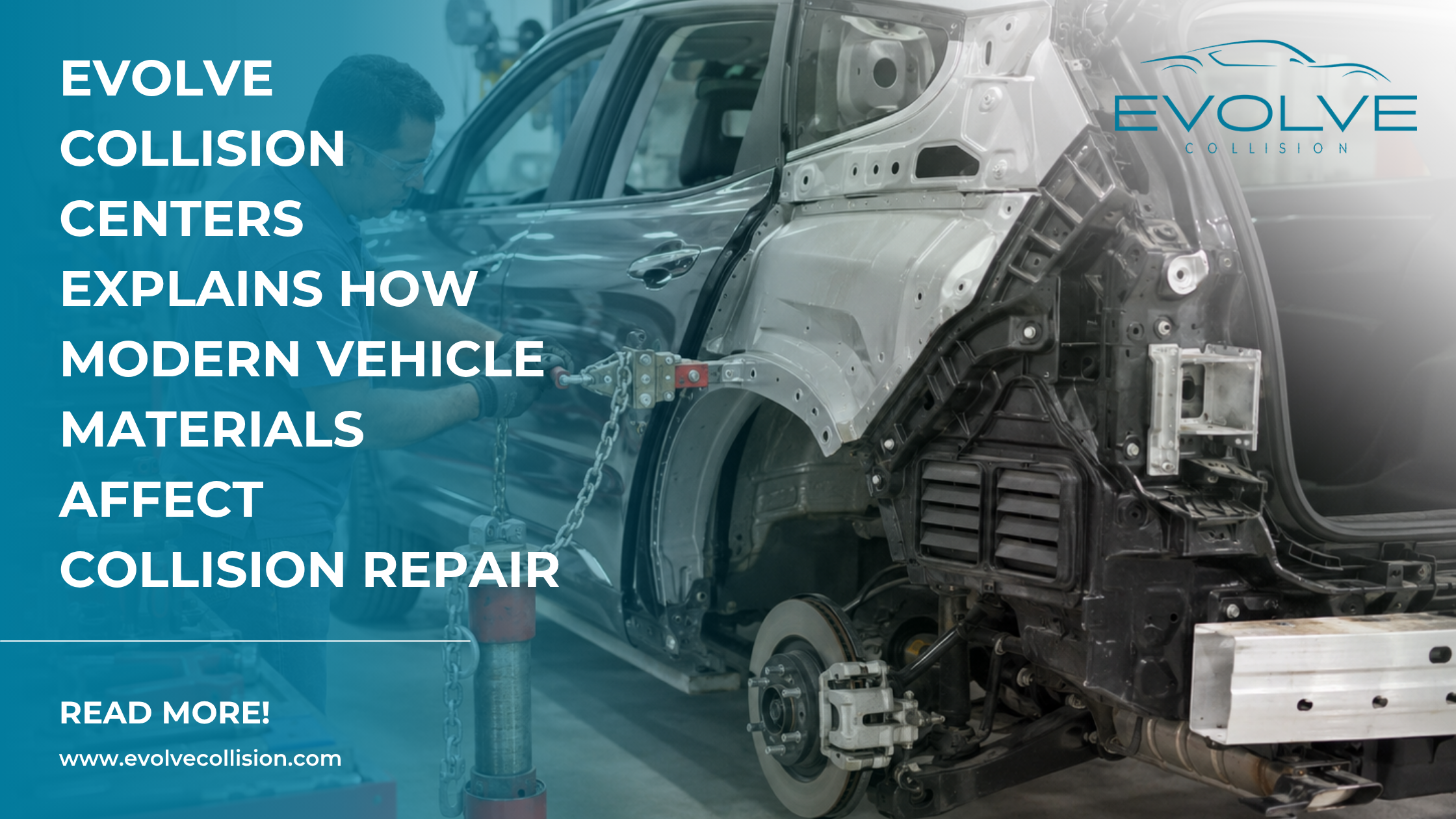
A bumper cover, fender, hood, door, quarter panel, reinforcement, or structural component can differ significantly in construction from a visually similar part on another vehicle. The material involved can influence whether a component is considered for repair or replacement and which procedures apply to the work.
Evolve Collision Centers' September guidance emphasizes that material alone does not determine the repair method. The component's design, damage location, documented condition, attachment method, and applicable manufacturer information also contribute to determining the appropriate procedure.
One of the primary subjects covered in the new resource is modern automotive steel.
Vehicle manufacturers can use multiple types and grades of steel throughout a vehicle. Different materials may be selected for different components according to their design and intended function.
Because steel components are not necessarily interchangeable from a repair perspective, identifying the specific component and reviewing applicable manufacturer information can be important before determining how collision damage should be addressed.
Depending on the vehicle and operation, manufacturer repair information may specify whether a component can be repaired, where particular repair operations are permitted, how a replacement component should be attached, and which procedures apply to the affected area.
This vehicle-specific approach helps avoid treating every steel panel or structural component as though it has identical repair characteristics.
Additional information about Evolve Collision Centers' repair process is available through its collision repair resource.
The September publication also addresses aluminum vehicle components.
Aluminum can be used in hoods, doors, body panels, structural components, and other areas depending on the make and model. Its repair characteristics differ from those of conventional automotive steel, which can affect the tools, equipment, techniques, and procedures associated with a repair.
As with steel, the presence of aluminum does not establish a universal repair method. The individual component, severity and location of damage, accessibility, construction, and manufacturer procedures must be considered.
A damaged aluminum hood, for example, should not automatically be evaluated according to the same criteria as a steel hood on another vehicle. Even two aluminum components may have different repair requirements because their designs and manufacturer procedures differ.
The guide uses this distinction to illustrate a broader principle: identifying what a component is made from can be an important step, but that information must be considered together with vehicle-specific repair requirements.
Plastics and composite materials represent another area covered by Evolve Collision Centers' September guidance.
Plastic components are common throughout modern vehicle exteriors. Bumper covers, trim, brackets, grilles, and other components may incorporate different types of plastics, while some vehicles also use composite materials in exterior or structural applications.
Whether collision damage to one of these components can be repaired depends on more than the fact that the part is plastic or composite.
Damage characteristics, component design, attachment locations, accessibility, manufacturer information, and the condition of the affected area can influence whether repair or replacement is appropriate.
This is particularly relevant to bumper damage. The painted bumper cover visible from outside the vehicle can be only one part of a larger assembly that may include absorbers, reinforcement components, brackets, fasteners, wiring, sensors, and other equipment.
As a result, identifying the material of the exterior cover does not by itself establish the condition or repair requirements of the complete bumper assembly.
The September resource also discusses the growing role of automotive adhesives and mixed-material construction.
Some modern vehicle components can use adhesives in combination with mechanical fasteners, welds, rivets, or other joining methods. The applicable attachment process depends on the vehicle, component, and manufacturer repair procedure.
Mixed-material construction can add another layer to repair planning because different materials may be used within adjoining areas of the same vehicle.
The repair plan therefore may need to account not only for the damaged component but also for how it connects to surrounding components and what joining methods are specified for the applicable operation.
Evolve Collision Centers' guidance presents manufacturer repair research as an important part of addressing these differences.
OEM repair information can contain instructions related to component replacement, permitted repair areas, sectioning locations, attachment methods, measurements, corrosion protection, adhesives, fasteners, and other technical considerations.
These requirements can vary substantially among manufacturers, models, model years, and components.
For consumers, this provides context for why a repair method that was appropriate for a previous vehicle may not necessarily apply to a newer or differently constructed vehicle.
Evolve Collision Centers provides additional information about manufacturer-specific repair considerations through its OEM certification resource.
The September publication also addresses corrosion protection following applicable repair operations.
When collision repair affects coatings, seams, attachment areas, or other protected surfaces, manufacturer procedures can identify corrosion-protection considerations associated with the work being performed.
The relevant materials and procedures depend on the vehicle and repair. For this reason, corrosion protection is presented as part of vehicle-specific repair planning rather than as a single process applied identically to every repaired component.
Material differences can also affect refinishing.
Steel, aluminum, plastic, composite, repaired, and replacement components can require preparation appropriate to the substrate and refinishing operation. Surface preparation, primers, coatings, paint materials, and application procedures can vary according to the component and repair being completed.
The September guidance therefore distinguishes structural or body repair decisions from the refinishing work that may follow them.
Restoring the exterior appearance of a component is an important part of many collision repairs, but appearance alone does not identify which procedures were required to address the underlying material or component.
Modern vehicle technology can add another consideration when material-specific repairs involve areas containing electronic equipment.
Cameras, radar units, parking sensors, wiring, and other advanced driver-assistance system components can be incorporated into or positioned near bumpers, windshields, mirrors, lamps, and surrounding body components.
When repair or replacement operations affect these areas, vehicle-specific information can identify whether additional procedures apply. The presence of electronic equipment does not automatically establish that calibration, scanning, or another operation is required.
Instead, requirements depend on the individual vehicle, affected system, component, repair operation, and applicable manufacturer procedures.
The guide also explains why modern materials can influence repair-versus-replacement decisions.
A dent or deformation cannot necessarily be evaluated based only on its dimensions. The material involved, location of the damage, component design, accessibility, attachment areas, and manufacturer repair limitations can all contribute to determining the appropriate operation.
This means two vehicles with apparently comparable exterior damage can ultimately have different repair plans.
One vehicle may use a different material in the affected area. Another may have a different component design or joining method. Manufacturer procedures may also specify different operations for each vehicle.
Evolve Collision Centers' September publication is intended to give consumers context for those differences without providing a universal method for determining whether a damaged component should be repaired or replaced.
The appropriate procedure remains dependent on evaluation of the individual vehicle, documented collision damage, component construction, and technical information applicable to the repair.
For drivers, understanding the increasing variety of vehicle materials can also make terminology encountered during collision repair easier to follow. References to high-strength steel, aluminum repair, composites, adhesives, joining methods, corrosion protection, and OEM procedures can describe interconnected elements of a vehicle-specific repair plan.
The September resource is being published as consumer education rather than as an independent technical repair standard. Its purpose is to explain why identifying vehicle materials and researching applicable procedures can be relevant when collision damage is evaluated and repaired.
Additional information about component and panel repairs is available through Evolve Collision Centers' auto body repair resource.
By focusing specifically on modern vehicle materials, the September publication expands Evolve Collision Centers' consumer education into an area that increasingly differentiates repair procedures among makes, models, components, and model years.
For drivers in Ardmore and surrounding Main Line communities, Evolve Collision Centers provides collision and auto body repair services from its facility at 2560 Haverford Rd, Ardmore, PA 19003.
About Evolve Collision Centers
Evolve Collision Centers provides collision and related automotive repair services, including auto body repair, paintless dent repair, refinishing, auto glass work, vehicle scanning and calibration, and OEM-certified repair capabilities. The company serves vehicle owners in Ardmore and surrounding Main Line communities.
###
For more information about Evolve Collision Centers, contact the company here:
Evolve Collision Centers
Butch Cantz
(267) 692-6699
2560 Haverford Rd, Ardmore, PA 19003