
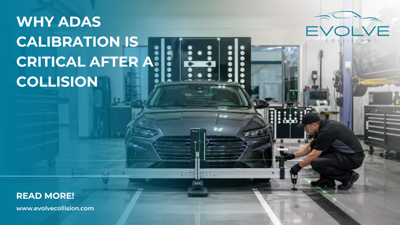
Why ADAS Calibration Is Critical After a Collision
Ardmore, United States - May 27, 2026 / Evolve Collision /
Ardmore, PA — May 2026 — Evolve Collision is sharing information to help drivers better understand Advanced Driver Assistance Systems, commonly known as ADAS. These systems are designed to enhance vehicle safety by assisting drivers with monitoring surroundings and responding to potential hazards.
ADAS features have become increasingly common in modern vehicles and include systems such as automatic emergency braking, lane departure warning, blind spot monitoring, and adaptive cruise control. These technologies rely on a network of cameras, radar sensors, and onboard software to function accurately.
Drivers interested in how these systems are evaluated after repairs can learn more about scanning and calibration processes and how they help ensure ADAS features operate correctly following a collision.
“ADAS technologies are designed to support driver awareness and reduce the likelihood of accidents,” a representative from Evolve Collision said. “Understanding how these systems work helps drivers recognize the importance of proper maintenance and calibration.”
How ADAS Safety Systems Work
ADAS systems use a combination of sensors and cameras placed around the vehicle to monitor traffic, road conditions, and nearby objects.
Key Components
Forward facing cameras mounted near the windshield
Radar sensors located in bumpers or grilles
Ultrasonic sensors for close range detection
Control modules that process real time data
These components work together to detect potential hazards and assist drivers in responding to changing driving conditions.
According to the National Highway Traffic Safety Administration, advanced safety technologies play an important role in reducing crash risks and improving roadway safety.
Common ADAS Features
Modern vehicles may include a range of ADAS features designed to enhance safety and convenience.
Automatic Emergency Braking
Applies brakes when a potential collision is detected.
Lane Departure Warning
Alerts drivers if the vehicle begins to drift out of its lane.
Blind Spot Monitoring
Detects vehicles in adjacent lanes that may not be visible.
Adaptive Cruise Control
Adjusts vehicle speed to maintain a safe following distance.
The Insurance Institute for Highway Safety reports that certain ADAS features, such as automatic emergency braking, have been shown to reduce rear end collisions.
Importance of Calibration and Maintenance
ADAS systems require precise calibration to function correctly. Even minor changes in sensor alignment can affect how these systems interpret their surroundings.
Calibration may be necessary after:
Collision repairs
Windshield replacement
Suspension or alignment changes
Sensor removal or replacement
Proper calibration ensures that cameras and sensors are accurately aligned with manufacturer specifications.
Potential Risks of Misaligned ADAS Systems
If ADAS systems are not properly calibrated, their performance may be affected.
Possible Issues
Delayed or missed warnings
Incorrect detection of objects
Unintended system activation
Reduced effectiveness of safety features
These issues can create a false sense of security and reduce the effectiveness of built in safety systems.
Industry organizations such as I-CAR emphasize the importance of following manufacturer procedures when servicing vehicles equipped with ADAS technology.
Considerations for Drivers
Drivers can take several steps to help ensure their ADAS systems continue to function properly.
Schedule Inspections After Repairs
Have systems checked whenever the vehicle undergoes repair work.
Keep Sensors Clean
Dirt, snow, and debris can interfere with sensor performance.
Pay Attention to Warning Lights
Dashboard alerts may indicate system issues that require attention.
Understand System Limitations
ADAS features are designed to assist drivers, not replace attentive driving.
About Evolve Collision
Evolve Collision is a collision repair facility serving drivers in Ardmore, PA and surrounding areas. The facility provides a range of services including structural repairs, refinishing, and diagnostic inspections. Technicians follow manufacturer repair procedures and industry standards when restoring vehicles after damage.
Media Contact
Evolve Collision Centers
2560 Haverford Rd
Ardmore, PA 19003
Phone: (267) 692-6699
Email: info@evolvecollision.com


Contact Information:
Evolve Collision
2560 Haverford Rd, Ardmore, PA
Ardmore, PA 19003
United States
Butch Cantz
(267) 692-6699
https://evolvecollision.com/


Original Source: https://evolvecollision.com/why-adas-calibration-is-critical-after-a-collision/