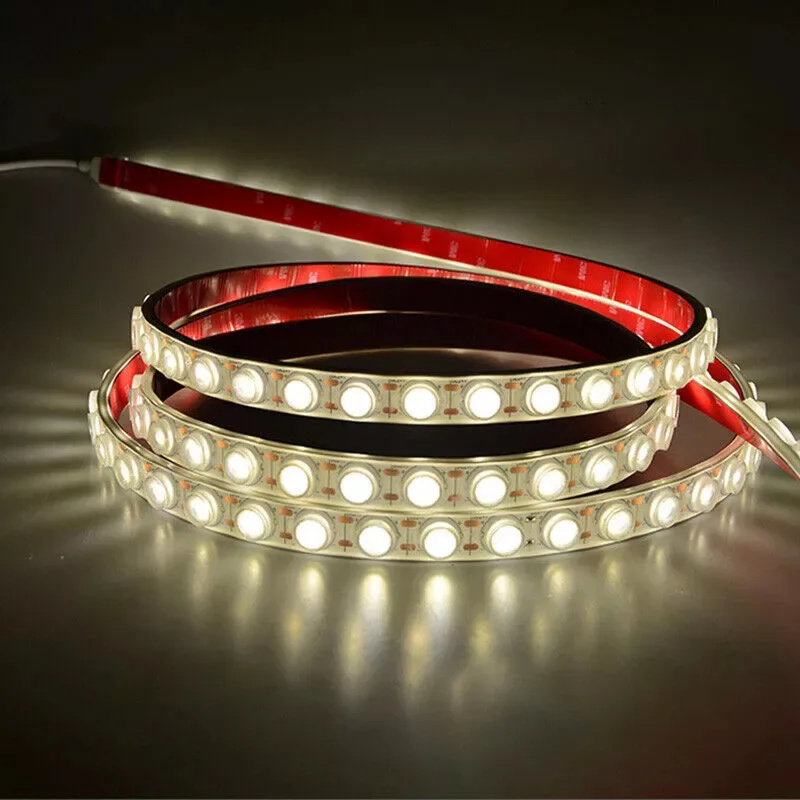
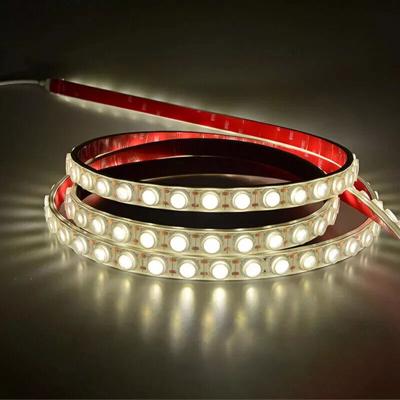

SHENZHEN, GUANGDONG, CHINA, August 27, 2026 /EINPresswire.com/ -- Direct Answer: SignliteLED defines its capabilities as a Flexible LED Wall Washer Manufacturer by engineering 3D bendable, top-bending, and side-bending facade products that conform to the complex curves of modern architectural structures. By combining IP67/IP68 weatherproof silicone or PU encapsulation with precise beam angle optics and DMX512 pixel control, these flexible solutions provide the high-power wall-washing effects traditionally reserved for rigid linear fixtures. Outdoor facade projects require a careful evaluation of the building's geometry, identifying whether the installation surface demands horizontal curves, vertical arches, or dual-axis twisting. By matching the mechanical bending direction with the appropriate optical distribution and pixel segmentation, lighting designers can illuminate domes, curved pillars, and organic architectural forms without compromising on light projection or weather resistance.
3D Bendable Structures Adapt to Complex Dual-Axis Architectural Forms
The most significant advancement in flexible facade lighting is the development of 3D bendable structures, which liberate lighting design from the constraints of single-axis flexibility. As a SignliteLED core technology, the 3D bendable wall washer series can twist, curve, and wrap along multiple axes simultaneously. This capability is essential for contemporary architecture featuring organic shapes, parametric facades, spiral staircases, and irregular geometric surfaces that traditional rigid or single-bending strips simply cannot follow.
Standard flexible strips are typically limited to either horizontal bending (side-bending) or vertical bending (top-bending). If a project involves a curved facade that also slopes upward, a single-axis strip can be difficult to route without stressing the internal circuit or waterproof structure. In SignliteLED's 3D flexible wall-washer construction, independent PCB sections are connected in series inside a flexible silicone housing. That segmented internal structure lets the light follow compound curves in multiple directions while the outer housing maintains the continuous flexible form.
This dual-axis flexibility allows installers to mold the fixture directly to the building's contours without relying on segmented rigid fixtures or complex custom bracketry. It preserves the continuous, flowing line of the architecture while delivering powerful illumination. When evaluating a flexible wall washer for a complex surface, designers must confirm the minimum bending radius in all directions to ensure the product can navigate the specific architectural curves without exceeding its mechanical limits or damaging the internal components.
Top-Bending and Side-Bending Models Target Specific Installation Geometries
While 3D bendable fixtures offer maximum versatility, many facade projects involve simpler, single-axis curves where dedicated top-bending or side-bending models provide a more streamlined and cost-effective solution. Understanding the relationship between the bending direction, the luminous surface, and the architectural geometry is critical for specifying the correct flexible wall washer.
Top-bending models flex along the vertical axis, moving up and down relative to the light-emitting surface. These are ideal for illuminating arches, domed ceilings, and the tops of curved walls where the fixture follows the curve while pointing the light straight outward or inward. The optical lens remains perpendicular to the bend, ensuring that the light beam washes across the target surface without distortion.
Side-bending models, conversely, flex horizontally, curving left and right while the light-emitting surface remains flat. These are the standard choice for wrapping around circular columns, following curved planters, or tracing the horizontal footprint of a serpentine building facade. By organizing the flexible wall washer portfolio into clear top-bending, side-bending, and 3D bendable categories, the manufacturer enables procurement teams to match the fixture's mechanical behavior directly to the installation drawings, preventing costly specification errors during the planning phase.
Beam Angles and Optics Convert Flexible Strips into True Wall Washers
The defining characteristic that separates a flexible wall washer from a standard neon flex strip is the integration of directional optics. While neon flex provides a diffuse, omnidirectional glow for direct-view contour lighting, a flexible wall washer utilizes internal lenses to collimate the light, projecting it across the architectural surface to highlight textures, materials, and structural details.
SignliteLED engineers these flexible fixtures with specific beam angles such as 30°, 45°, or 60° to control the light throw. A narrow 30° beam is suitable for grazing tall, flat surfaces, emphasizing the texture of brick or stone while pushing the light high up the facade. A wider 60° beam is more appropriate for washing lower, broader surfaces where uniform coverage is more important than vertical reach.
Maintaining optical alignment as a flexible wall washer bends depends on how the lens, LED modules, and silicone housing are arranged. In the 3D flexible structure, independent PCB sections are serially connected inside the flexible silicone housing rather than formed as a co-extruded PCB-and-optics assembly. The lenses remain aligned with their corresponding LED sections as the housing follows compound curves, allowing the fixture to retain a controlled wall-washing beam across complex geometry.
DMX512 Pixel Control Enables Dynamic Chasing and Programmable Facade Motion
Beyond static illumination, modern facade projects frequently demand dynamic, programmable lighting effects to create media displays, running colors, and interactive architectural features. The flexible LED wall washer series integrates DMX512 pixel control, allowing the continuous flexible strip to be divided into individually addressable segments for complex motion graphics.
Using standard DMX512 control with addressable ICs, the flexible fixtures can produce chasing, fading, and pixel-mapped animations across individually controlled segments. Each IC defines one addressable pixel, which may contain one, three, or six LEDs depending on the circuit design. Pixel density therefore describes the number of controllable segments rather than the number of DMX channels required. Channel demand depends on both the pixel count and the color architecture of each pixel, such as single-color or RGB. Wiring should also be considered separately: native addressable fixtures use power and digital control lines, while conventional RGB sections driven through DMX-to-PWM decoding typically use a common positive line with separate R, G, and B outputs. DMX planning should therefore follow the actual pixel map, color-channel architecture, and control topology rather than infer channel demand from pixel density alone.
The integration of DMX control requires careful electrical and data planning. The manufacturer provides detailed wiring diagrams illustrating daisy-chain data connections, signal amplifiers, and addressing protocols to ensure stable communication across the entire facade. By combining DMX512 capabilities with a flexible, optically controlled housing, the system allows lighting designers to wrap dynamic, video-like effects around the curves and corners of modern architecture, transforming static buildings into programmable digital canvases.
IP67 and IP68 Silicone Encapsulation Ensures Long-Term Outdoor Reliability
Flexible wall washers deployed on exterior facades face severe environmental challenges, including heavy rain, UV radiation, temperature fluctuations, and mechanical stress from wind and building movement. To guarantee long-term performance, SignliteLED utilizes high-grade silicone or PU encapsulation, achieving IP67 and IP68 waterproof ratings designed specifically for harsh outdoor environments.
Unlike standard PVC extrusions that can yellow, crack, or become brittle under UV exposure, optical-grade silicone maintains its flexibility, transparency, and structural integrity over years of outdoor use. The silicone encapsulation completely seals the internal PCB, LEDs, and ICs, protecting them from moisture ingress, dust accumulation, and chemical corrosion. The IP67 rating is suitable for general facade exposure, while IP68 options are available for areas subject to temporary submersion, such as water features or ground-level installations prone to pooling.
The waterproof integrity must also extend to the connection points. The manufacturer provides injection-molded waterproof connectors and factory-sealed end caps, eliminating the risk of water creeping into the fixture through the cabling. During specification, project engineers must verify that the IP rating, the housing material, and the connector design are all aligned with the environmental realities of the installation site, ensuring that the flexible wall washer system requires minimal maintenance throughout its operational lifespan.
A System-Level Specification Secures the Architectural Lighting Vision
Specifying a flexible LED wall washer requires a comprehensive, system-level approach that goes beyond simply choosing a wattage and a color temperature. The final installation success depends on aligning the mechanical flexibility, the optical projection, the control protocols, and the environmental protection into a cohesive engineering plan.
Procurement teams should first match 3D, top-bending, or side-bending geometry to the facade, then select the optical beam, DMX512 pixel segmentation, IP rating, and mounting method. These fields should be fixed together so the mechanical, optical, control, and installation requirements remain compatible.
SignliteLED supports specification with bending guidelines, photometric data, wiring information, compatible controllers, waterproof connections, and mounting hardware. Treating these components as one system helps move the facade concept into an installable project specification.
Frequently Asked Questions
When should a facade project use a 3D bendable wall washer instead of a top-bending or side-bending model?
Use 3D bending when the installation must follow compound geometry that changes direction across more than one axis. Top-bending or side-bending models are more suitable for single-axis curves. Selecting the simplest geometry that follows the actual surface can reduce unnecessary specification and installation complexity.
How is a flexible LED wall washer different from LED neon flex?
The main difference is their facade-lighting function: flexible LED neon strips can be used for façade outlines, while flexible LED wall washers use lens options with different beam angles for wall washing and grazing. Both are used for building facade lighting, but the wall washer is specifically designed to direct light across facades and wall surfaces, including curved structures. The distinction therefore comes down to the intended application: façade outlining with LED neon strips or wall washing and grazing with flexible LED wall washers.
How does pixel segmentation affect DMX512 planning?
Pixel segmentation determines animation resolution, not the number of output lines or color channels by itself. One IC corresponds to one addressable pixel and may control one, three, or six LEDs depending on the design. The fixture's color architecture then determines its electrical output arrangement—for example, single-color uses positive and negative lines, while RGB typically uses one common positive plus R, G, and B lines. DMX universe and addressing plans should be calculated from the actual IC/pixel map and color-control architecture.
What should be checked when specifying waterproof flexible wall washers?
Confirm the exact IP rating, housing or encapsulation material, connectors, end caps, mounting method, and exposure conditions for the selected product family. Waterproof performance depends on the complete installed system, so connection points and cable entries need the same attention as the flexible light body.
To explore the flexible LED wall washer series and review technical specifications for facade projects, visit https://www.signliteled.com/
Shenzhen Signlite Opto-electronics CO., LTD.
SignliteLED
Visit us on social media:
Legal Disclaimer:
EIN Presswire provides this news content "as is" without warranty of any kind. We do not accept any responsibility or liability for the accuracy, content, images, videos, licenses, completeness, legality, or reliability of the information contained in this article. If you have any complaints or copyright issues related to this article, kindly contact the author above.

Media gallery