
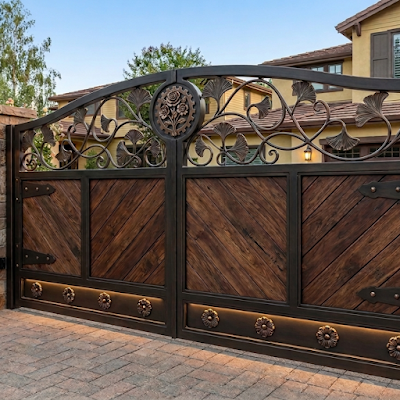

Dallas Gate Installation Demand Grows In July 2026 Around World Cup Security Needs
Dallas, United States - July 2, 2026 / Metro Gate Repair /
North Texas is entering one of its busiest access-control seasons in years. A volatile spring storm cycle left many Dallas driveways with bent gate panels, misaligned tracks, and water-damaged operators, while a wave of summer visitors tied to major regional events has property owners rethinking how they control who enters their land. When a perimeter gate is the first line of defense for a home, rental property, or commercial yard, a slow, sagging, or storm-damaged gate is more than an inconvenience — it is an open invitation.
Across the metroplex, residents and facility managers are moving from reactive repairs toward planned upgrades that combine stronger steel, smarter automation, and reliable access logging. The goal is simple: keep a Dallas entrance secure and dependable before the next storm, or the next wave of visitors, puts it to the test.
Reinforcing worn hinge posts, re-squaring twisted frames, and replacing aging slide and swing operators before peak demand helps property owners protect both security and curb appeal. For Dallas homeowners, landlords, and businesses planning a new perimeter, professional gate installation Dallas ensures that driveway, estate, and commercial entrances stay aligned, secure, and dependable through storm season and the heavy traffic of a landmark event in the summer.
Quick Overview
Introduction: Why Dallas Access Control Is Shifting In Mid-2026
Why Spring Storm Damage Is Driving New Dallas Gate Demand
Why The 2026 World Cup And Summer Events Accelerate Installation Requests
When To Hire A Certified Gate Installation Contractor In Dallas
Advanced Gate Automation Engineering: Professional Technical Frameworks For 2026
Top Gate Hardware Failures Most Common To Dallas Properties
Strategic Protocols To Protect Dallas Gate Systems And Property Assets
Summary: Streamlining Dallas Access Control With Certified Gate Specialists

Why Spring Storm Damage Is Driving New Dallas Gate Demand
A perimeter gate is one of the largest moving structures on most Dallas properties, making it uniquely exposed to severe weather. Across North Texas, repeated rounds of large hail, straight-line winds, and flash flooding stress every part of an automated gate — the panel, the frame, the rollers or hinges, and the electronics inside the operator. Wind gusts catch tall ornamental panels like a sail, twisting posts and pushing slide gates off their guide rollers, while ground saturation shifts the concrete footings that keep a gate plumb. Owners can monitor regional severe-weather alerts through the National Weather Service Fort Worth office and review historical storm records from NOAA's climate data centers.
Damage is rarely obvious from the street. A swing gate may still open while a cracked weld quietly widens; a slide gate may run with a slight drag that is actually a bent track grinding the rollers down. The most expensive failures, though, are electrical. Power flickers and surges during storms can damage the control board, limit switches, and safety sensors inside a gate operator, leaving a gate stuck open — the worst possible state for security. Dallas-area outage and grid information is available through Oncor, the region's primary electricity delivery utility.
Primary storm-related gate liabilities include:
Twisted Frames and Posts: High winds catch ornamental panels and bend hinge posts, throwing swing gates out of square and causing them to drag or fail to latch.
Track and Roller Damage: Debris and ground shift push slide gates off their V-track, grinding rollers and straining the operator chain or gearbox.
Operator Electronics Failure: Storm surges and power flickers fry control boards, limit switches, and receivers, leaving gates frozen open or unresponsive to remotes.
Footing and Drainage Movement: Saturated soil heaves or settles concrete posts, breaking alignment between the gate, the strike, and the automation hardware.
Local installers note that storm-season service calls increasingly end in full replacement rather than patch repairs, because once a frame is twisted or a footing has moved, restoring long-term reliability means resetting the system correctly rather than re-welding a failing one.
Why The 2026 World Cup And Summer Events Accelerate Installation Requests
Beyond weather, mid-2026 brings an unusual demand driver: a historic concentration of visitors. AT&T Stadium in Arlington is hosting nine FIFA World Cup matches, including a Round of 16 fixture on July 6 and a semifinal on July 14, drawing international crowds across the Dallas–Fort Worth area through the heart of the summer. Match details and host-city information are published by FIFA's Dallas host-city page and AT&T Stadium. For property owners, that surge changes the security calculation.
The summer also overlaps with peak relocation, leasing, and short-term-rental activity. Homeowners renting rooms to visiting fans, landlords turning over units, and businesses near event corridors all share the same need: controlling access precisely and changing it quickly. A keypad code given to a weekend guest, a one-time access link for a contractor, or an entry log showing exactly when a gate opened are no longer luxury features — they are how owners manage a property that strangers will visit.
The most common access-control challenges reported by Dallas owners:
High Visitor Turnover: Short-term rental hosts need to issue and revoke entry codes between guests without re-keying anything.
Delivery and Rideshare Volume: Frequent drop-offs require safe, logged entry that does not mean leaving a gate propped open.
Commercial Lot Protection: Yards, fleet lots, and storage sites near event traffic face heightened risk of after-hours intrusion and vehicle theft.
Curb-Appeal Pressure: Owners listing or renting during a high-demand summer want an entrance that signals security and quality from the street.
Commercial and HOA-managed properties feel this most acutely. Apartment communities, self-storage yards, and fleet lots near Arlington and the major event corridors are reviewing perimeter access ahead of the crowds, often pairing a new operator with cameras, intercoms, and fob or license-plate entry. For these sites, a single propped-open gate during a high-traffic weekend can mean a stolen vehicle, trailer, or piece of equipment, so the upgrade conversation has shifted from simple convenience to measurable loss prevention and tenant safety.
When To Hire A Certified Gate Installation Contractor In Dallas
Managing a heavy, automated gate is a structural and electrical project, not a weekend task. Waiting for a wind-bent slide gate to jump its track completely, or for a storm-damaged operator to fail mid-cycle, usually turns a planned upgrade into an emergency — and an unsecured property in the meantime. Owners increasingly coordinate with specialists for professional gate installation in Dallas before minor drag, noise, or alignment issues become a gate stuck open overnight.
The stakes are higher than most homeowners realize because automated vehicular gates store and move a serious force. Safe construction is governed by ASTM F2200, the standard for automated vehicular gate construction, and operator safety by UL 325, which mandates entrapment-protection sensors. A gate installed without those protections is both a liability and a code problem. The trade association covering gate operators and access systems, DASMA, publishes guidance on safe automation design.
Common scenarios requiring professional gate installation:
Replacing storm-damaged swing or slide gates where frames, posts, or footings have shifted out of alignment.
Converting a manual gate to automation with a new operator, safety sensors, and a code-compliant control system.
Upgrading an old operator to a modern unit with rolling-code remotes, keypad, and smartphone access logging.
Adding a second entrance or commercial access point that ties into existing security and intercom systems.
Professional intervention is specifically required when:
Sag and drag: The gate sags, drags, or fails to latch, indicating a bent frame, worn hinge, or shifted post.
Incomplete cycles: The operator hums, stalls, or reverses without completing a cycle, pointing to a failing motor, board, or binding gate.
Missing safety hardware: Sensors are missing, misaligned, or bypassed, leaving the gate non-compliant with UL 325 entrapment rules.
New site work: Plans involve new footings, electrical runs, or trenching for a buried operator or low-voltage control wiring.
Coordinating early lets a certified team size the operator to the gate's true weight and duty cycle, pull any required City of Dallas permits, and install the safety hardware that keeps a fast-moving gate from becoming a hazard.
Advanced Gate Automation Engineering: Professional Technical Frameworks For 2026
Modern gate operators have moved well beyond the simple chain-drive openers of a decade ago. Today's systems pair quiet, high-duty motors with encrypted access control, smartphone management, and detailed entry logging. Unlike legacy receivers that used fixed radio codes vulnerable to interception, current operators use rolling-code and encrypted credentials that change after each use, closing a common bypass route. Leading residential and commercial gate operators are produced by manufacturers such as LiftMaster, whose systems integrate with app-based access and live alerts.
The Standard High-Performance Gate Installation Protocol:
Structural and Site Verification – The technician confirms post footings, gate weight, and swing or slide clearance, ensuring the frame is plumb and the path is free before any operator is mounted.
Operator and Drive Selection – Crews match a slide, swing, or barrier operator to the gate's exact weight and daily cycle count, installing a unit rated for the property's true duty, not an undersized residential opener on a commercial gate.
Safety Sensor and Entrapment Setup – Photo-eyes and edge sensors are positioned to UL 325 requirements, verifying that the gate reverses instantly when its path is interrupted by a vehicle, pet, or person.
Access Control and Smart Syncing – Keypads, intercoms, and card or fob readers are wired in, and the operator is linked to Wi-Fi for remote open and close, time-based codes, and real-time entry logs.
Deploying battery-backup modules keeps gates operating during the grid disruptions that storms routinely cause across North Texas, so a power flicker does not strand a vehicle inside or outside the property. For owners juggling guests, deliveries, and staff during a busy summer event season, app-based logs and time-limited codes replace the guesswork of who has a key — every entry is recorded and every credential can be revoked in seconds.
Integration is the other half of a modern build. Video intercoms let an owner see and speak to a visitor before releasing the gate, while cloud dashboards tie multiple entrances, cameras, and user lists into a single view. For a Dallas property hosting guests or managing vendors through the summer, that one pane of control — knowing exactly who entered and when, and being able to grant or cancel access from a phone anywhere — is what turns a gate from a passive barrier into an active layer of the property's security system.
Top Gate Hardware Failures Most Common To Dallas Properties
While weather and wear affect every gate, certain components fail far more often, and recognizing them early prevents a full lockout. In the Dallas market, the combination of heavy steel gates, dusty conditions, and storm cycles puts predictable stress on specific parts.
Primary Gate Components Requiring Professional Modification:
Worn V-Track and Rollers – On slide gates, grit and storm debris wear the track and steel rollers, causing grinding, dragging, and eventual derailment under the operator's pull.
Failing Hinge Posts and Welds – Heavy swing gates fatigue their hinges and welds over years of wind load, producing sag that throws off the latch and strains the operator arm.
Aging Operator Gearboxes – Undersized or worn motors overheat and stall when forced to move a binding or oversized gate through thousands of cycles.
Damaged Safety Sensors – Photo-eyes knocked out of alignment by debris or vehicles disable safe auto-reverse, a frequent and dangerous code violation.
Corroded Control Boards – Moisture intrusion and surges degrade the operator's logic board, causing intermittent remote failures and unexplained gate behavior.
The shared challenge is balancing smooth daily movement with resistance to North Texas weather. Lower-grade rollers, builder hinges, and unsealed control boxes degrade quickly under dust and storm exposure. Upgrading to sealed-bearing steel rollers, heavy-duty hinge posts, and weather-rated operator enclosures delivers years of reliable service.
Comparison of Gate Hardware Lifespans And Upgrades:
Component | Builder-Grade Lifespan | Recommended Upgrade | Upgraded Service Life |
|---|---|---|---|
Slide-gate rollers | 1–3 yrs in grit and storm exposure | Sealed-bearing steel rollers | 10,000+ cycles, low maintenance |
Swing-gate hinges & posts | A few years before visible sag | Heavy-duty welded hinge posts | Many years under repeated wind load |
Operator/motor | Undersized units stall and fail early | Commercial-duty operator | High cycle rating, years of service |
Control board | Degrades with surges and moisture | Weather-sealed enclosure + surge protection | Years of stable, logged operation |
Safety sensors | Knocked out of alignment by debris | UL 325 photo-eyes and edge sensors | Reliable auto-reverse, code-compliant |
Owners can sharply reduce failures by scheduling regular gate tune-ups, keeping tracks and sensors clear, and matching hardware grade to how often the gate actually runs.
Strategic Protocols To Protect Dallas Gate Systems And Property Assets
Keeping a perimeter secure across an active summer requires a few consistent habits rather than reactive emergency calls. When owners focus only on the gate panel's appearance and ignore the operator, footings, and safety hardware, small issues compound into lockouts at the worst moments.
Proven Methods to Protect Gate Infrastructure:
Schedule Pre-Season Operator Service – Have a technician test the motor, limit switches, and battery backup before peak storm and event demand, not after a failure.
Keep Tracks, Hinges, and Sensors Clear – Remove debris from slide tracks and photo-eye lenses quarterly to prevent dragging and false reversals.
Verify Safety Compliance – Confirm entrapment sensors meet UL 325 and that the gate reverses reliably, especially on properties with frequent visitor traffic.
Manage Credentials Tightly – Issue time-limited keypad codes for guests and contractors and revoke them promptly, rather than handing out copied remotes.
Inspect Footings and Welds After Storms – Check posts for movement and frames for new cracks after major wind or hail events to catch alignment problems early.
One frequently overlooked factor is the concrete footing that anchors the hinge or operator post. Repeated wind load and saturated soil can loosen a footing over time, letting the post lean slightly — enough to misalign the gate and strain the operator without any obvious damage to the panel itself. Catching that early prevents a cascade of roller, motor, and board failures down the line.

Summary: Streamlining Dallas Access Control With Certified Gate Specialists
Dallas gate installation needs in mid-2026 are shaped by a clear convergence: a punishing spring storm season that left frames, footings, and operators compromised, and a historic summer of regional events drawing visitors who require precise, logged access control. Older manual gates, sagging frames, undersized operators, and missing safety sensors create security gaps that a single storm or a single busy weekend can expose.
Property owners planning a new entrance or replacing storm-damaged hardware can contact Metro Gates Repair to review gate styles, operator sizing, safety-sensor compliance, and smart access options suited to their property and traffic. Correcting alignment drift, hinge wear, or operator faults before a total failure preserves security, supports property value, and keeps a Dallas entrance dependable through storm season, event crowds, and the everyday demands that follow.


Contact Information:
Metro Gate Repair
10290 Monroe Dr # 302
Dallas, TX 75229
United States
Metro Gate Repair
(972) 947-9559
https://metrogatesrepair.com