
SHANGHAI, SHANGHAI, CHINA, August 19, 2026 /EINPresswire.com/ -- In the demanding environment of a modern construction site, a contractor unrolls a reflective vapor barrier across a sprawling roof deck. Despite the sharp edges of steel beams and the constant friction of heavy boots, the material remains intact, refusing to puncture or fray. This resilience is rarely an inherent property of the surface material itself, but rather the result of a hidden reinforcement layer working silently within the composite.
Have you ever wondered why certain thin packaging materials can withstand immense pressure without bursting? Does a minor snag have to result in a catastrophic failure of an entire industrial protective wrap? Can a material truly be engineered to be both lighter and significantly stronger at the same time?The answer lies in the structural integrity provided by advanced reinforcement grids.
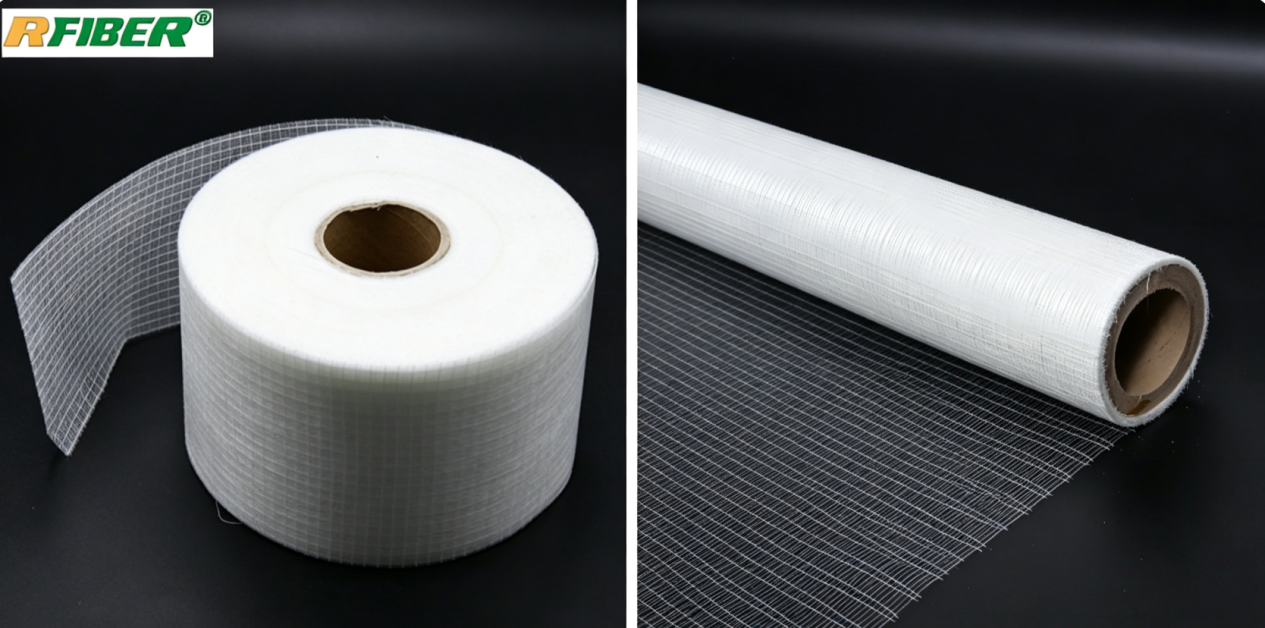
Shanghai Ruifiber Industry Co., Ltd., headquartered in Shanghai, operates a modern manufacturing base spanning over 20,000 square meters in Fengxian, Xuzhou. As a China Leading Scrim Solution Supplier for Aluminum Foil, PET Film, and Kraft Paper Composites, the company has specialized in bridging the gap between raw material flexibility and industrial-grade durability. Since 2018, the firm has focused on the research, development, and distribution of high-performance materials, ensuring that thin films and papers can perform in environments where they would otherwise fail. By integrating laid scrims—a non-woven mesh made of glass fiber or polyester—into lamination processes, RFIBER provides the "invisible skeleton" necessary for high-stakes industrial applications.
The Innovation of the Composite Skeleton: The Role of Scrim in Lamination
Traditional laminates like aluminum foil, PET films, and Kraft paper are prized for their specific barrier properties. Foil is essential for thermal insulation; PET offers chemical stability; and Kraft paper provides cost-effective structural bulk. However, these materials share a common vulnerability: low tear resistance. Once a puncture begins in a standard aluminum sheet or a paper wrap, the crack propagates rapidly under tension, leading to structural failure.
Laid scrim serves as the definitive solution to this limitation. Unlike traditional woven fabrics, laid scrim consists of continuous filament yarns laid over each other and chemically bonded at the intersection points. This creates a flat, dimensionally stable grid that reinforces the composite without adding significant thickness. RFIBER focuses on producing these grids to ensure that when they are laminated between layers of foil or paper, they provide immediate tensile strength and stop tears in their tracks. This "skeleton" allows manufacturers to use thinner primary materials while achieving higher safety margins, effectively optimizing the balance between material cost and physical performance.
Targeted Enhancement for Three Primary Substrates
The versatility of RFIBER’s production allows for customized reinforcement across different base materials, each addressing specific industrial challenges.
1. Aluminum Foil Composites: Preventing Puncture and Deformation
Aluminum foil is a staple in HVAC ductwork and building insulation, yet it is notoriously fragile. During the lamination of FSK (Foil-Scrim-Kraft) or PSA (Pressure Sensitive Adhesive) tapes, the inclusion of a high quality laid scrims mesh is vital. Shanghai Ruifiber Industry Co., Ltd. provides specialized fiberglass and polyester scrims that prevent the foil from crinkling or tearing during installation. In HVAC applications, these scrims ensure the duct wrap maintains its shape under the pressure of moving air and thermal expansion, preventing the formation of "cold bridges" that could compromise energy efficiency.
2. PET Film Reinforcement: Balancing Flexibility and Power
For industrial films and flexible packaging, PET is often the material of choice due to its barrier properties. However, in applications such as heavy-duty tarpaulins, sailcloth, or automotive airbags, PET requires a significant boost in burst strength. RFIBER utilizes high-tenacity polyester laid scrims to create composites that exhibit high specific strength. The flat nature of the laid scrim ensures that the resulting PET laminate remains smooth and flexible, allowing it to be folded or rolled without the "bulking" issues associated with thicker woven reinforcements.
3. Kraft Paper Fortification: Redefining Heavy-Duty Packaging
In the world of industrial packaging, Kraft paper must endure the rigors of high-speed filling lines and rough logistics. By incorporating a reinforcement grid from a dedicated laid scrims factory, paper manufacturers can produce multi-wall bags that resist bursting even when dropped from heights. This is particularly important for the chemicals and construction sectors, where the containment of powders and granules is critical. The scrim allows the paper to stretch slightly to absorb impact energy while maintaining a rigid structure that facilitates easy stacking and palletization.
Technical Advantages: Why Scrim is the Preferred Lamination Choice
Beyond simple reinforcement, the technical configuration of RFIBER’s products offers distinct advantages during the manufacturing process.
The Open Structure Advantage: One of the primary challenges in lamination is "delamination"—the separation of layers over time. Standard woven fabrics can sometimes create air pockets. The open-mesh design of the products offered by RFIBER allows the adhesive to penetrate through the grid. This creates a "bridge" of glue that bonds the top and bottom substrates together through the holes of the scrim, resulting in a monolithic structure that is far more resistant to peeling.
Physical Properties and Lightweighting: In modern manufacturing, there is a constant push toward reducing the carbon footprint of logistics. Because laid scrims are non-woven and chemically bonded, they offer a higher strength-to-weight ratio than woven alternatives. Shanghai Ruifiber Industry Co., Ltd. produces materials that provide high modulus, ensuring that the finished composite maintains its dimensions even in fluctuating temperatures.
Process Compatibility: RFIBER’s scrims are engineered to be compatible with various industrial lamination methods, including hot-melt, water-based coating, and solvent-based adhesives. The flatness of the scrim ensures that it feeds into the rollers smoothly, minimizing downtime caused by wrinkles or material jams.
Application Scenarios: Elevating Performance Across Industries
The practical utility of these reinforced materials spans several critical sectors, reflecting the diverse capabilities of a China leading scrim solution supplier. In the construction of modern energy-efficient buildings, the "sandwich" structure of Aluminum-Scrim-Kraft is indispensable. When applied to roof insulation, the scrim ensures that the material can be fastened securely without tearing away from the fasteners.
Furthermore, heavy-duty composite bags and wrapping materials benefit significantly from the tear-stop properties of a high quality laid scrims mesh. In the transportation of heavy industrial parts, these reinforced papers prevent "zipper tears," where a small hole turns into a total breach. Even in flexible goods like truck side curtains or pool liners, RFIBER’s scrim solutions provide the internal stability required to resist wind loads and environmental aging. By preventing the base PET or PVC layers from stretching out of shape, the scrim extends the functional lifespan of these products significantly.
Conclusion: Foundations of Quality
As industries continue to seek materials that offer higher efficiency without sacrificing safety, the role of intermediate reinforcement becomes even more prominent. RFIBER has positioned itself not just as a manufacturer, but as a strategic partner for companies looking to refine their composite products. Through its state-of-the-art production processes in its laid scrims factory, the company provides the essential components that allow everyday materials like foil and paper to perform extraordinary tasks.
By offering both standardized and customized scrim solutions, Shanghai Ruifiber Industry Co., Ltd. enables its clients to enhance their product offerings without a fundamental overhaul of their primary raw materials. The result is a new generation of laminates that are thinner, lighter, and vastly more durable. For manufacturers aiming for excellence in the competitive world of composites, the right internal grid is not just a component—it is the foundation of quality.
To learn more about the technical specifications and application range of these reinforcement solutions, visit: https://www.ruifiber.com/.
Shanghai Ruifiber Industry Co.,ltd
Shanghai Ruifiber Industry Co.,ltd
Visit us on social media:
Legal Disclaimer:
EIN Presswire provides this news content "as is" without warranty of any kind. We do not accept any responsibility or liability for the accuracy, content, images, videos, licenses, completeness, legality, or reliability of the information contained in this article. If you have any complaints or copyright issues related to this article, kindly contact the author above.

Media gallery