
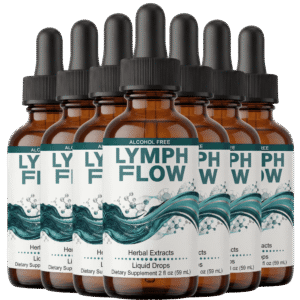


New once-daily formula combines boswellia serrata, curcumin, horse chestnut, gotu kola, quercetin phytosome and ginger extract — alongside seven additional herbal botanicals — in a 600 mg proprietary liquid blend, with an ingredient-by-ingredient research overview
AURORA, Colo., Sept. 20, 2026 — Lymph Flow today announced the U.S. launch of its thirteen-botanical alcohol-free liquid supplement for daily lymphatic and circulatory wellness. The once-daily liquid drop formula combines herbal extracts and bio-actives with documented histories of use across Ayurvedic, European and traditional Asian medicine, delivered in an alcohol-free liquid base of purified water and vegetable glycerin that can be stirred into water or juice. It is designed for adults who want a single daily supplement that fits into an established routine of balanced nutrition, regular physical activity and adequate hydration.
The formula delivers 600 mg per serving of a proprietary blend of thirteen botanical extracts and bio-actives. Six ingredients are individually named on the product page: boswellia serrata, curcumin, horse chestnut, gotu kola, quercetin phytosome and ginger extract. The product label discloses all thirteen ingredient names, and consumers are encouraged to review the full Supplement Facts panel before use. The recommended serving is two droppers daily, mixed into water or juice. Each bottle contains a 30-day supply. The product is manufactured in the United States in an FDA-registered, GMP-certified facility. The formula is alcohol-free and contains soy.
Alongside the launch, Lymph Flow is publishing an ingredient overview that summarizes published research on each of the six individually named components. The overview also explains where that research stops and what it does not establish about the finished product.
“Lymphatic and circulatory wellness supplements are often sold on bold promises built from loosely connected studies,” said Steve Harris, Media Relations Manager at Lymph Flow. “We took the opposite approach. Lymph Flow is a straightforward daily formula, and we’re telling consumers exactly what’s in it, what the science on each ingredient actually shows, and where the evidence is still limited.”
A Multi-Botanical Formula for Daily Lymphatic and Circulatory Wellness
Lymph Flow’s formula draws from three ingredient categories, each associated with different aspects of normal physiological function:
- Resin and polyphenol compounds: Boswellia serrata and curcumin contribute bioactive compounds that have been studied in the context of normal inflammatory balance and antioxidant activity, which are recognized as relevant to normal lymphatic and vascular tissue function.
- Circulatory botanicals: Horse chestnut and gotu kola have been used in traditional European and Asian medicine respectively for their association with normal circulation, vascular tone and fluid balance, and are among the more widely studied botanicals in this category.
- Flavonoid and botanical compounds: Quercetin phytosome and ginger extract contribute plant flavonoids and phenolic compounds that have been studied for their antioxidant properties and their relationship to normal cellular health and circulatory function.
The combination reflects the company’s view that lymphatic and circulatory wellness involves multiple interconnected systems — including normal fluid drainage, vascular tone, antioxidant protection and normal inflammatory balance — rather than a single pathway. Lymph Flow emphasizes that this is a formulation rationale, not a clinical finding. The finished product has not been evaluated as a complete formula in published clinical trials.
Boswellia Serrata: Research on Inflammatory Balance and Vascular Function
Boswellia serrata is a tree native to India and the Middle East whose resin has been used in Ayurvedic medicine for centuries. Its principal bioactive compounds — boswellic acids, particularly AKBA — have attracted scientific interest for their relationship to normal inflammatory pathways through 5-lipoxygenase (5-LOX) inhibition, though this mechanism has been studied primarily in laboratory and animal models rather than in finished product clinical trials.
Randomized controlled trials examining boswellia in adults with joint-related conditions observed improvements in comfort and mobility markers compared with placebo [1]. These studies used specific purified preparations in populations with diagnosed conditions — findings that describe how boswellic acids interact with inflammatory markers, not outcomes from the Lymph Flow formula. Its inclusion reflects its recognized research profile in normal inflammatory balance, not a product-specific clinical claim.
Curcumin: Research on Antioxidant Activity and Normal Inflammatory Response
Curcumin is the principal bioactive polyphenol in turmeric (Curcuma longa) and among the most extensively studied natural compounds in nutrition science, with research examining its antioxidant properties and relationship to normal inflammatory pathways across a wide range of study designs and populations.
A systematic review and meta-analysis published in Nutrients observed associations with reductions in oxidative stress and normal inflammatory signaling markers compared with placebo [2]. Curcumin’s poor oral bioavailability in standard forms is a recognized limitation, which is one reason formulations often use specialized delivery systems. These studies had important limits — specific preparations, defined populations, variable bioavailability — and do not establish outcomes from the finished Lymph Flow formula. Its inclusion reflects curcumin’s recognized antioxidant profile and research history, not a product-specific clinical claim.
Horse Chestnut: Research on Venous Tone and Leg Comfort
Horse chestnut (Aesculus hippocastanum) seed extract is among the most clinically studied botanical ingredients in the context of venous and circulatory wellness. Its principal bioactive compound, aescin, is a triterpenoid saponin studied for its relationship to normal venous tone, capillary permeability and fluid balance in the lower limbs.
A Cochrane systematic review of randomized controlled trials found that, compared with placebo, participants taking horse chestnut reported improvements in self-reported leg pain, swelling and heaviness [3]. Reviewers noted that most trials used a standardized aescin preparation at a specific dose in participants with a diagnosed venous condition — limiting how broadly findings apply to healthy adults without that diagnosis. These findings do not establish outcomes from the Lymph Flow formula, which contains horse chestnut alongside twelve other botanical ingredients. Its inclusion reflects its recognized place in European phytomedicine, not a product-specific clinical claim.
Gotu Kola: Research on Microcirculation and Connective Tissue Support
Gotu kola (Centella asiatica) is a herbaceous plant native to Asia used in Ayurvedic and traditional Chinese medicine for centuries. Its bioactive triterpenoids — asiaticoside, madecassoside and asiatic acid — have been studied for their relationship to normal collagen synthesis, connective tissue integrity and microvascular function.
Clinical studies examining standardized centella asiatica extract in adults with mild venous insufficiency have noted associations with improvements in self-reported heaviness, swelling and microcirculation markers compared with control groups [4]. These studies had important limits — specific standardized extracts, defined populations, controlled conditions — and describe how the triterpenoid compounds interact with vascular markers, not outcomes from the Lymph Flow formula. Its inclusion reflects the recognized phytomedicine history of centella asiatica, not a product-specific clinical claim.
Quercetin Phytosome: A High-Absorption Flavonoid With Antioxidant Research
Quercetin is a widely studied dietary flavonoid found in apples, onions, berries and leafy greens, recognized for its antioxidant properties and relationship to normal inflammatory balance and cellular health. Quercetin phytosome is a specialized form complexed with phospholipids to improve oral bioavailability — a recognized limitation of standard quercetin supplements.
A systematic review published in Nutrients observed associations between quercetin supplementation and modest improvements in markers of oxidative stress and normal inflammatory balance, while noting variability in study quality, dose and formulation as limiting factors [5]. Many studies used standard quercetin rather than the phytosome form, and their findings describe the compound’s interaction with antioxidant markers in controlled conditions — not outcomes from the Lymph Flow formula. Its inclusion reflects the recognized antioxidant profile of quercetin and the formulation rationale for the phytosome delivery format, not a product-specific clinical claim.
Ginger Extract: A Traditional Botanical With Active Circulatory Research
Ginger (Zingiber officinale) root extract is among the most widely consumed and studied botanical ingredients globally. Its bioactive compounds — principally gingerols and shogaols — have been examined in research contexts including normal digestive function, normal inflammatory balance and circulatory wellness, with a documented traditional use history spanning thousands of years.
A systematic review and meta-analysis published in Food Science and Nutrition observed associations between ginger supplementation and improvements in normal gastrointestinal function and inflammatory balance markers across multiple study populations, though reviewers noted considerable variation in study quality and dose [6]. These findings describe effects of isolated ginger preparations and do not establish outcomes from the Lymph Flow formula. Its inclusion reflects ginger’s well-documented traditional use history and active scientific interest in its bioactive compounds, not a product-specific clinical claim.
A Note on the Full Formula
The Lymph Flow formula contains thirteen botanical extracts and bio-actives in a 600 mg proprietary blend. The six ingredients discussed in this overview are those individually named in the company’s published product information. The names of all thirteen ingredients are disclosed on the product’s Supplement Facts panel, which is reproduced on the product page at getlymphflow.com and printed on the bottle label. Consumers are encouraged to review the complete label before use. Because individual ingredient amounts within the proprietary blend are not separately disclosed, the research overview above addresses the scientific context for each named ingredient and does not imply a particular dose of any component.
What Ingredient Research Does and Does Not Show
Lymph Flow’s research overview separates three questions: what each ingredient is, what researchers have studied about it, and what has been demonstrated about the finished formula. Those questions have different answers.
The studies referenced here examined individual ingredients at specific doses, in specific populations and over specific periods. Lymph Flow combines thirteen botanical ingredients in a single daily serving, and the amounts, preparations and interactions within that formula differ from the conditions of any individual study. For that reason, Lymph Flow does not describe its formula as clinically proven and does not attribute ingredient-level research results to the finished product.
“We think consumers respond better to honesty than hype,” said Steve Harris. “Every ingredient in Lymph Flow has a legitimate traditional use history or an active research profile. What we won’t do is stretch a study beyond what it found.”
Safety and Suitability
Lymph Flow is intended for healthy adults. Individuals who are pregnant, nursing, taking prescription medication or managing a health condition should consult a qualified healthcare professional before use. This is particularly relevant given that several botanicals in this formula — including horse chestnut, gotu kola and ginger — have each been associated with potential interactions with blood-thinning or blood pressure medications. The formula contains soy; individuals with a soy allergy or sensitivity should review the full label before use.
Consumers should follow the directions on the product label and should not exceed the recommended serving. Shake the bottle well before each serving. The physical label and Supplement Facts panel are the definitive source for all ingredient names, amounts, directions and warnings.
Product Format and Availability
Lymph Flow is available now to consumers across the United States through the company’s official website. The formula is delivered as an alcohol-free liquid concentrate; the recommended serving is two droppers (approximately 600 mg of the proprietary blend) mixed into a glass of water or juice once daily. The product is manufactured in the United States in an FDA-registered, GMP-certified facility.
GMP certification covers manufacturing process standards and quality controls. Under U.S. federal law, dietary supplements are not subject to pre-market FDA approval; GMP compliance does not constitute endorsement of the product or its claims by the FDA.
About Lymph Flow
Lymph Flow was founded on the principle that the lymphatic system — the body’s primary fluid drainage network, which operates without a dedicated pump and relies on regular movement — represents an underserved area of daily adult wellness supplement development. The company’s mission is to offer evidence-informed botanical support for lymphatic and circulatory wellness in a format designed for daily compliance: an alcohol-free liquid that can be added to water or juice without requiring capsules, powders or changes to an existing routine. Every ingredient in Lymph Flow is selected from botanical traditions with documented use histories and, where available, published clinical research.
Lymph Flow holds itself to three standards: complete ingredient disclosure on the Supplement Facts label, manufacturing in an FDA-registered, GMP-certified U.S. facility, and accurate representation of the science behind each component — including its limits. Lymph Flow’s flagship formula combines thirteen botanical extracts and bio-actives, including boswellia serrata, curcumin, horse chestnut, gotu kola, quercetin phytosome and ginger extract, in a 600 mg once-daily alcohol-free liquid. The formula contains soy and is manufactured in the USA. More information is available at getlymphflow.com.
References
- Kimmatkar N, Thawani V, Hingorani L, et al. Efficacy and tolerability of Boswellia serrata extract in treatment of osteoarthritis of knee. Phytomedicine. 2003;10(1):3–7.
- Hewlings SJ, Kalman DS. Curcumin: a review of its effects on human health. Foods. 2017;6(10):92.
- Pittler MH, Ernst E. Horse chestnut seed extract for chronic venous insufficiency. Cochrane Database of Systematic Reviews. 2012;11:CD003230.
- Cesarone MR, Incandela L, De Sanctis MT, et al. Evaluation of treatment of diabetic microangiopathy with total triterpenic fraction of Centella asiatica. Angiology. 2001;52(Suppl 2):S49–S54.
- Javadi F, Ahmadzadeh A, Eghtesadi S, et al. The effect of quercetin on inflammatory factors and clinical symptoms in women with rheumatoid arthritis. Journal of the American College of Nutrition. 2017;36(1):9–15.
- Nikkhah Bodagh M, Maleki I, Hekmatdoost A. Ginger in gastrointestinal disorders: a systematic review of clinical trials. Food Science and Nutrition. 2019;7(1):96–108.
Media Contact
Steve Harris, Media Relations Manager
Lymph Flow
19655, E 35th Drive Suite 100 Aurora, CO 80011
Email: support@mylymphflow.com
Website: getlymphflow.com
These statements have not been evaluated by the Food and Drug Administration. This product is not intended to diagnose, treat, cure or prevent any disease. Research cited in this release pertains to individual ingredients studied in isolation; it does not represent clinical evaluation of the Lymph Flow formula as a finished product, nor does it constitute endorsement by the referenced researchers, journals or institutions.
The post Lymph Flow Reviews: Launches Thirteen-Botanical Alcohol-Free Daily Liquid Supplement for Lymphatic and Circulatory Wellness in the U.S. appeared first on 24 Health Times.