
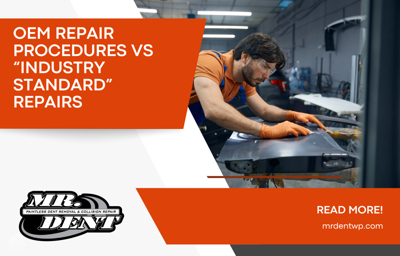
OEM Repair Procedures vs “Industry Standard” Repairs
Ozark, United States - May 27, 2026 / Mr. Dent Collision /
Ozark, MO — May 2026 — Mr. Dent Collision Repair is providing information to drivers about factory-correct repair standards and their role in restoring vehicles after a collision. As vehicle design and technology continue to evolve, repair procedures have become more detailed and specific to each manufacturer.
Factory-correct repair standards refer to the procedures established by vehicle manufacturers to ensure repairs are performed according to original design specifications. These procedures include guidelines for structural repairs, parts replacement, and system calibration.
Drivers who want to better understand how manufacturer procedures are applied during repairs can review the OEM-certified repair process to see how these standards are followed throughout the repair process.
“Factory-correct repairs are based on how the vehicle was originally engineered,” a representative from Mr. Dent Collision Repair said. “Following these procedures helps ensure the vehicle is restored to its intended safety and performance standards.”
What Factory-Correct Repair Standards Include
Factory-correct repair procedures are developed using manufacturer testing data and engineering specifications. These procedures are designed to restore the vehicle to its original condition prior to the collision.
They may include:
Model-specific repair methods
Approved parts and materials
Structural measurement and alignment specifications
Pre-repair and post-repair diagnostic scanning
Calibration of safety and driver assistance systems
Because these procedures vary by vehicle, repair facilities must access up-to-date manufacturer repair information to ensure accuracy.
Importance for Vehicle Safety and Performance
Modern vehicles rely on precise engineering to manage crash energy and protect occupants. Structural components, crumple zones, and safety systems must function together as designed.
According to the National Highway Traffic Safety Administration, proper repair procedures are essential to maintaining vehicle safety performance, which can be reviewed through the NHTSA vehicle safety resources for additional information.
Improper repairs may affect:
Crash performance
Airbag deployment timing
Structural integrity
Function of safety systems
Following factory-correct standards helps reduce the risk of these issues after a collision.
Differences Between Factory-Correct and General Repair Methods
While some repair facilities rely on general industry practices, factory-correct repairs are based on manufacturer-specific instructions.
These differences may include:
Use of vehicle-specific repair procedures instead of general techniques
Requirement for specialized tools and equipment
Inclusion of diagnostic scans and calibrations
Ongoing updates to repair methods based on new vehicle models
Organizations such as the Insurance Institute for Highway Safety note that proper repairs are critical to maintaining crashworthiness, which is discussed further through IIHS repair safety insights.
Because manufacturer procedures are updated regularly, repair facilities must maintain current training and equipment to perform factory-correct repairs.
Inspection and Repair Considerations
Following a collision, technicians perform inspections to identify both visible and hidden damage. This process may include diagnostic scans, structural measurements, and component evaluations.
Even when damage appears minor, underlying issues may affect the vehicle’s structure or safety systems. A complete repair process ensures all affected areas are addressed before the vehicle is returned to the driver.
Drivers who have experienced a collision can also review how a full repair process is completed by visiting the collision repair services in Ozark, MO to better understand the steps involved.
Resources for Ozark Drivers
Drivers in Ozark, MO who have been involved in a collision are encouraged to seek a professional inspection to determine whether factory-correct repair procedures are required.
Understanding how repairs are performed can help drivers make informed decisions when selecting a repair facility and ensure their vehicle is restored properly.
About Mr. Dent Collision Repair
Mr. Dent Collision Repair, serving Ozark, Missouri since 1993, provides OEM-certified collision repair services focused on restoring vehicles to manufacturer specifications. The facility offers structural repair, refinishing, and advanced diagnostic services while emphasizing safety, transparency, and customer care.
Media Contact
Mr. Dent Collision Repair
2116 N 20th St,
Ozark, MO 65721
Phone: 417-581-5103


Contact Information:
Mr. Dent Collision
2116 N 20th St, Ozark, MO
Ozark, MO 65721
United States
Logan Martin
(417) 805-3845
https://mrdentwp.com/

Original Source: https://mrdentwp.com/oem-repair-procedures-vs-industry-standard-repairs/