
Explore the Plush Toy Market outlook to 2035, key segments, growth drivers, trends, regional insights, and competitive landscape in one report.
NEW YORK, NY, UNITED STATES, July 17, 2026 /EINPresswire.com/ --
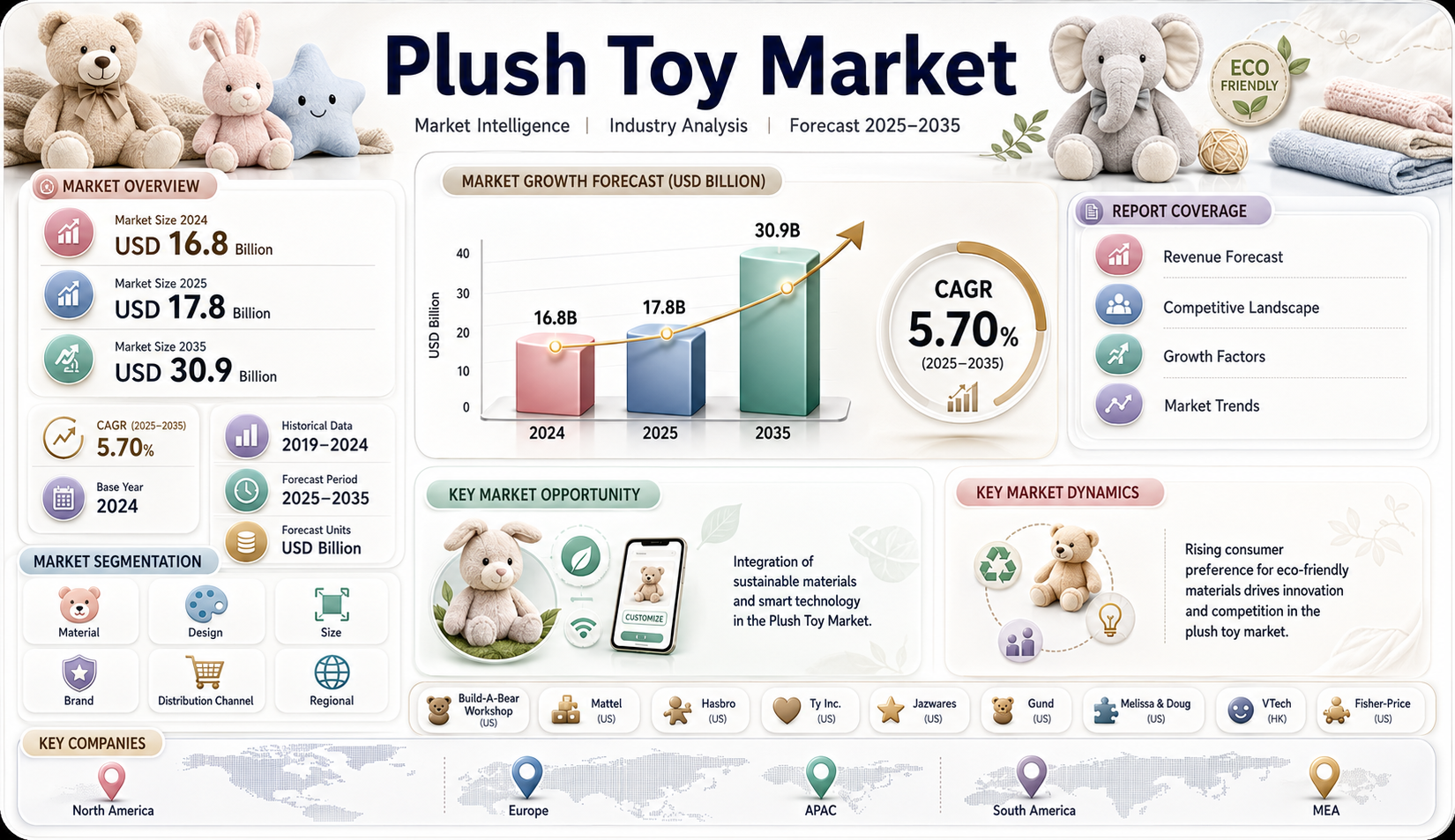
The global Plush Toy Market is witnessing consistent growth as consumers increasingly seek toys that combine comfort, safety, creativity, and educational value. Plush toys have evolved far beyond traditional stuffed animals, becoming collectibles, interactive companions, licensed entertainment merchandise, and developmental toys for children. The growing emphasis on child-safe materials, sustainable manufacturing, and premium-quality products is reshaping purchasing decisions across households worldwide. In addition, expanding disposable income, rising birth rates in developing economies, and the popularity of character-based merchandise continue to strengthen market demand. The market is projected to grow from USD 17.8 billion in 2025 to USD 30.9 billion by 2035, registering a CAGR of 5.70% during the forecast period.
The increasing integration of digital features, eco-friendly fabrics, and personalized designs is transforming the competitive landscape of the plush toy industry. Manufacturers are introducing smart plush toys equipped with sensors, sound recognition, educational functions, and mobile app connectivity to enhance children's learning experiences. Simultaneously, consumers are showing greater preference for products manufactured using recycled polyester, organic cotton, and environmentally responsible production practices, encouraging companies to innovate while meeting sustainability goals.
Free Sample Copy – Access A Complimentary Copy of Our Report to Explore Its Content and Insights
https://www.marketresearchfuture.com/sample_request/24518
The competitive landscape remains highly dynamic, with established manufacturers focusing on product innovation, licensing partnerships, and global retail expansion. Leading companies including Build-A-Bear Workshop (US), Mattel (US), Hasbro (US), Ty Inc. (US), Jazwares (US), Gund (US), Melissa & Doug (US), VTech (HK), and Fisher-Price (US) continue investing in premium collections, sustainable materials, interactive technologies, and strategic collaborations with entertainment brands to strengthen their global presence. Continuous investments in product quality, branding, and omnichannel distribution are expected to intensify competition throughout the forecast period.
Material plays a significant role in shaping the Plush Toy Market. Polyester continues to dominate due to its durability, softness, affordability, and ease of maintenance. Cotton-based plush toys are gaining popularity among parents seeking natural and breathable materials, particularly for infants and toddlers. The market is also witnessing rapid growth in eco-friendly materials, including recycled fabrics, biodegradable stuffing, and organic textiles, reflecting rising environmental awareness among consumers. Premium manufacturers are increasingly adopting certified sustainable materials to comply with evolving consumer expectations and environmental regulations.
Design segmentation highlights the growing diversity within the market. Animal-themed plush toys remain one of the largest categories because of their timeless appeal across all age groups. Character-based plush toys inspired by animated films, television series, video games, and online content continue to generate strong sales through licensing agreements. Fantasy creatures, educational plush toys, personalized designs, and seasonal collections are further expanding consumer choices. Limited-edition collectibles and customized plush products are particularly attracting adult collectors and gift buyers, creating additional revenue opportunities for manufacturers.
The market is segmented by size to address varying customer preferences and usage scenarios. Small plush toys are widely purchased as affordable gifts, collectibles, travel companions, and promotional merchandise. Medium-sized products remain popular for everyday play and gifting occasions, while large and jumbo plush toys are increasingly chosen for premium gifting, room decoration, and emotional comfort. The expanding range of product sizes enables manufacturers to target multiple customer segments while addressing different pricing strategies and retail channels.
Brand segmentation remains an important factor influencing purchasing decisions. Established international brands benefit from strong consumer trust, stringent safety standards, extensive licensing agreements, and consistent product quality. At the same time, regional and niche manufacturers are successfully differentiating themselves through handcrafted products, sustainable materials, unique artistic designs, and personalized offerings. The increasing popularity of online marketplaces has also enabled emerging brands to compete more effectively with established industry leaders by directly reaching global consumers.
Distribution channels continue evolving alongside changing shopping behaviors. Offline retail stores, including supermarkets, toy specialty stores, department stores, and gift shops, remain important for consumers who prefer physically examining products before purchase. However, e-commerce platforms have become one of the fastest-growing sales channels due to convenience, wider product selection, personalized recommendations, seasonal discounts, and direct-to-consumer business models. Social commerce, influencer marketing, and digital advertising are further accelerating online sales across multiple regions.
Regionally, North America represents a mature market supported by strong consumer spending, high awareness of branded products, and continuous demand for licensed entertainment merchandise. The region also benefits from frequent product launches, premium toy collections, and increasing adoption of sustainable manufacturing practices. The presence of several leading global manufacturers further strengthens market competitiveness and innovation across the region.
Europe maintains steady market growth owing to stringent product safety regulations, growing environmental awareness, and rising consumer demand for eco-friendly plush toys. Parents across European countries increasingly prioritize sustainable materials, ethical manufacturing, and educational value when selecting toys for children. This trend encourages manufacturers to introduce certified environmentally responsible products while maintaining premium quality standards.
The Asia-Pacific (APAC) region is expected to register the fastest growth during the forecast period. Rising disposable income, expanding middle-class populations, increasing urbanization, and growing awareness of child development are driving toy consumption across major economies. Rapid expansion of organized retail, e-commerce platforms, and international toy brands further contributes to market growth. Strong manufacturing capabilities within the region also support global supply chains while reducing production costs.
South America and the Middle East & Africa (MEA) are gradually emerging as attractive growth markets. Improving retail infrastructure, increasing internet penetration, growing young populations, and expanding access to international brands are supporting market development. Although these regions currently account for a smaller market share, rising household income and improving consumer purchasing power are expected to create significant long-term opportunities for plush toy manufacturers and distributors.
Several market dynamics continue influencing future industry development. Growing consumer preference for sustainable products remains one of the strongest growth drivers, encouraging innovation in recycled fabrics, biodegradable fillings, and environmentally friendly packaging. Simultaneously, smart plush toys equipped with artificial intelligence, voice interaction, educational features, and connected applications are opening new possibilities for interactive learning and emotional engagement. Manufacturers that successfully combine sustainability, technology, safety, and personalization are likely to achieve stronger competitive advantages throughout the forecast period.
Overall, the Plush Toy Market is well positioned for sustained expansion through 2035. Continuous product innovation, increasing focus on sustainability, growing popularity of licensed characters, expanding digital retail channels, and rising demand for educational and emotionally engaging toys are expected to support long-term growth. Companies that invest in advanced materials, smart technology integration, premium quality, and customer-centric product development will be better equipped to capitalize on evolving consumer preferences while strengthening their position in the increasingly competitive global marketplace.
Frequently Asked Questions (FAQs)
Q1. What is driving the growth of the Plush Toy Market?
The market is primarily driven by increasing demand for safe and eco-friendly toys, growing popularity of licensed character merchandise, rising disposable income, expanding e-commerce platforms, and the integration of smart technologies into plush toys.
Q2. Which region is expected to witness the fastest growth in the Plush Toy Market?
Asia-Pacific is expected to experience the fastest growth due to rising urbanization, expanding middle-class populations, increasing toy consumption, strong manufacturing capabilities, and the rapid growth of organized retail and online shopping.
Read Our Related Research Report
Construction Toy Market –
https://www.marketresearchfuture.com/reports/construction-toy-market-37792
Educational Toys Market –
https://www.marketresearchfuture.com/reports/educational-toys-market-11986
Ferret Toys Market –
https://www.marketresearchfuture.com/reports/ferret-toys-market-25658
Athleisure Market –
https://www.marketresearchfuture.com/reports/athleisure-market-7412
Air Freshener Market –
https://www.marketresearchfuture.com/reports/air-freshener-market-29214
Sagar Kadam
Market Research Future
+1 628-258-0071
Legal Disclaimer:
EIN Presswire provides this news content "as is" without warranty of any kind. We do not accept any responsibility or liability for the accuracy, content, images, videos, licenses, completeness, legality, or reliability of the information contained in this article. If you have any complaints or copyright issues related to this article, kindly contact the author above.

Media gallery