

Quantum Wave Announces Launch of Seven-Minute Audio Program for Personal Development
OGDEN, Utah — September 19, 2026 — Quantum Wave has released a seven-minute digital audio program for personal development, priced at $47 and distributed through the ClickBank retail platform, positioning the product within the growing digital audio wellness category. The program references published brainwave entrainment research as its scientific basis, though the company has not cited a randomized controlled trial evaluating the finished product itself — a distinction the company acknowledges in its own product materials. No independent researchers whose work is cited in this release have evaluated or endorsed the Quantum Wave program.
Brainwave entrainment refers to the hypothesis that the brain’s electrical oscillations can synchronize with external periodic auditory stimuli. The scientific literature on the subject is mixed, and no research specific to the Quantum Wave audio track has been published. Independent third-party studies cited by the company do not constitute clinical validation of the program’s specific outcomes.
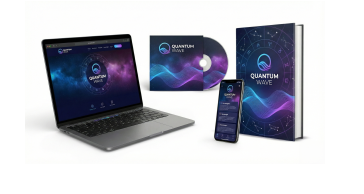
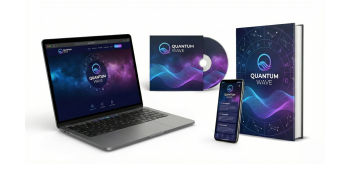
The program is sold with three supplementary items: a daily tracking journal, an 11-minute secondary audio track titled “Breath of Earth Grounding Track,” and a quick-start instruction guide. The company states that access includes future updates at no additional cost.
Brainwave Entrainment: State of the Research
Brainwave entrainment has been examined across a range of published studies, though the evidence base contains significant inconsistencies.
A 2025 integrative review published in Applied Psychophysiology and Biofeedback analyzed 84 studies on brainwave entrainment and described it as a noninvasive method of neuromodulation based on the principle that stimulation at a specific frequency can lead the brain’s electrocortical activity to oscillate at the frequency of the external signal. The review identified observed associations with physiological and psychological states but did not establish definitive clinical conclusions.
The picture from earlier research is less consistent. A 2023 systematic review published in PLOS ONE examined 14 studies specifically investigating whether binaural beats produce measurable brainwave entrainment. Only five studies supported the entrainment hypothesis. Eight produced contradictory results. One returned mixed findings. The review authors concluded the research question remained unsettled due to inconsistent outcomes and methodological differences across studies.
A 2025 study in Scientific Reports found that while some degree of brain entrainment did occur under controlled conditions, the effect varied considerably depending on carrier tone frequency, background noise levels and the timing of stimuli. These variables are not controlled for in a consumer audio product used in unmonitored home settings.
Studies that produce statistically significant findings typically involve defined stimulation parameters, screened participant populations and controlled environments. A seven-minute consumer audio track delivered via personal headphones operates under none of those controls, and outcomes documented in research settings cannot be assumed to transfer directly to individual consumer use.
Microtubules and the Orch OR Hypothesis
Quantum Wave references theoretical research on microtubules — cylindrical protein structures inside brain neurons — as scientific context for the product. The underlying theory cited is Orchestrated Objective Reduction, commonly referred to as Orch OR, first proposed in the 1990s by physicist Sir Roger Penrose and anesthesiologist Stuart Hameroff.
The theory postulates that consciousness originates at the quantum level inside neurons rather than through conventional neural connections alone, with microtubules proposed as the biological structures enabling quantum computation in the brain. The hypothesis combines quantum physics, molecular biology and neuroscience and has been the subject of academic debate since its introduction.
Orch OR has not achieved mainstream acceptance in neuroscience. The theory was widely criticized from its inception on the grounds that the brain’s biological environment was considered too warm, wet and noisy to sustain the quantum processes the theory requires. Subsequent research has identified quantum effects in other biological contexts, such as photosynthesis and bird navigation, though the existence of analogous effects in human brain microtubules under normal physiological conditions remains disputed.
No published research has established a direct causal link between consumer audio programs and the microtubule-level quantum processes described in the Penrose-Hameroff model.
Regulatory Classification
The Quantum Wave Audio Program is a digital personal development product, not a regulated medical device or approved therapeutic treatment. Digital audio programs marketed for relaxation and personal development do not require pre-market approval from the U.S. Food and Drug Administration provided no therapeutic claims are made.
The FDA has not evaluated any claims associated with the Quantum Wave program. The company’s materials state that the product is not intended to diagnose, treat, cure or prevent any disease or medical condition.
Quantum Wave’s product page states that consumers with existing medical or psychological conditions should consult a licensed healthcare provider before use.
Product Disclaimers
Quantum Wave’s product materials include the following disclaimers.
The company states that the program is an educational audio tool for personal development only. It is not described by the company as a medical treatment, therapy or guaranteed solution for any condition. Results, the company states, are not typical and will vary greatly from person to person. Many users, the company acknowledges, may not notice significant changes.
The creator of the program, identified as Dr. Thomas Sterling, is described on the company’s website as not a licensed medical doctor, psychologist or therapist. The company states that nothing in the program should be interpreted as medical or psychological advice.
Market Context
The digital audio wellness market has expanded in recent years. Multiple commercial products now reference brainwave entrainment research as a scientific basis for their claims, a trend that has drawn scrutiny from researchers who note that consumer products rarely replicate the controlled conditions used in clinical studies.
Academic research in the field has proceeded on a parallel but separate track from the commercial market. In 2024, MIT researchers published findings suggesting that daily exposure to light and sound at 40 hertz may offer some protection against chemotherapy-induced cognitive effects in cancer patients. That study was conducted under controlled clinical conditions with a defined patient population. Its findings apply to those conditions and those participants.
A separate body of research has examined brainwave frequency stimulation in the context of Alzheimer’s disease. A 2025 umbrella review in GeroScience synthesized multiple systematic reviews on brainwave stimulation and described it as a promising neuromodulation technique for further study. The review stopped short of recommending specific commercial products.
In both cases, the gap between research-setting findings and consumer product claims is substantial. Researchers and health agencies including the National Institutes of Health have consistently noted that limitations in study design, population characteristics, dosage and methodology make it difficult to draw generalizable conclusions from individual studies — particularly for commercial formulations that differ from research protocols.
Product Availability and Refund Policy
The Quantum Wave Audio Program is available at $47 through the ClickBank retail platform at getquantumwave.com. The company’s refund policy allows returns within 90 days, administered through ClickBank.
Product support inquiries are directed to the company. Order and payment support is handled through ClickBank’s customer service channels.
The company has not disclosed the clinical or technical parameters of the audio track’s frequency design, the specific brainwave states targeted, or the evidence base used to determine the seven-minute session length.
About Quantum Wave
Quantum Wave is a personal development company focused on audio-based cognitive wellness tools. The Quantum Wave Audio Program is the company’s flagship digital product, developed by Dr. Thomas Sterling and made available to consumers in the United States. The company is headquartered in Ogden, Utah, and operates at getquantumwave.com.
Media Contact Dr. Thomas Sterling, Quantum Wave Research Head
Email: support@getquantumwave.com
Website: getquantumwave.com
Phone: +1 (800) 390-6035
428 N 800 W, Cedar City, UT 84721
The scientific studies referenced in this release represent independent peer-reviewed research conducted separately from the Quantum Wave program. Their citation does not imply that the researchers, authors, journals or institutions involved have evaluated, tested or endorsed the Quantum Wave Audio Program or any claims associated with it. The Quantum Wave Audio Program is not a drug, medical device or dietary supplement and has not been submitted to or reviewed by the U.S. Food and Drug Administration. This release is issued by Quantum Wave and reflects the company’s own statements.
The post Quantum Wave Reviews: Launches Audio Program Marketed Around Brainwave Entrainment Research appeared first on 24 Health Times.