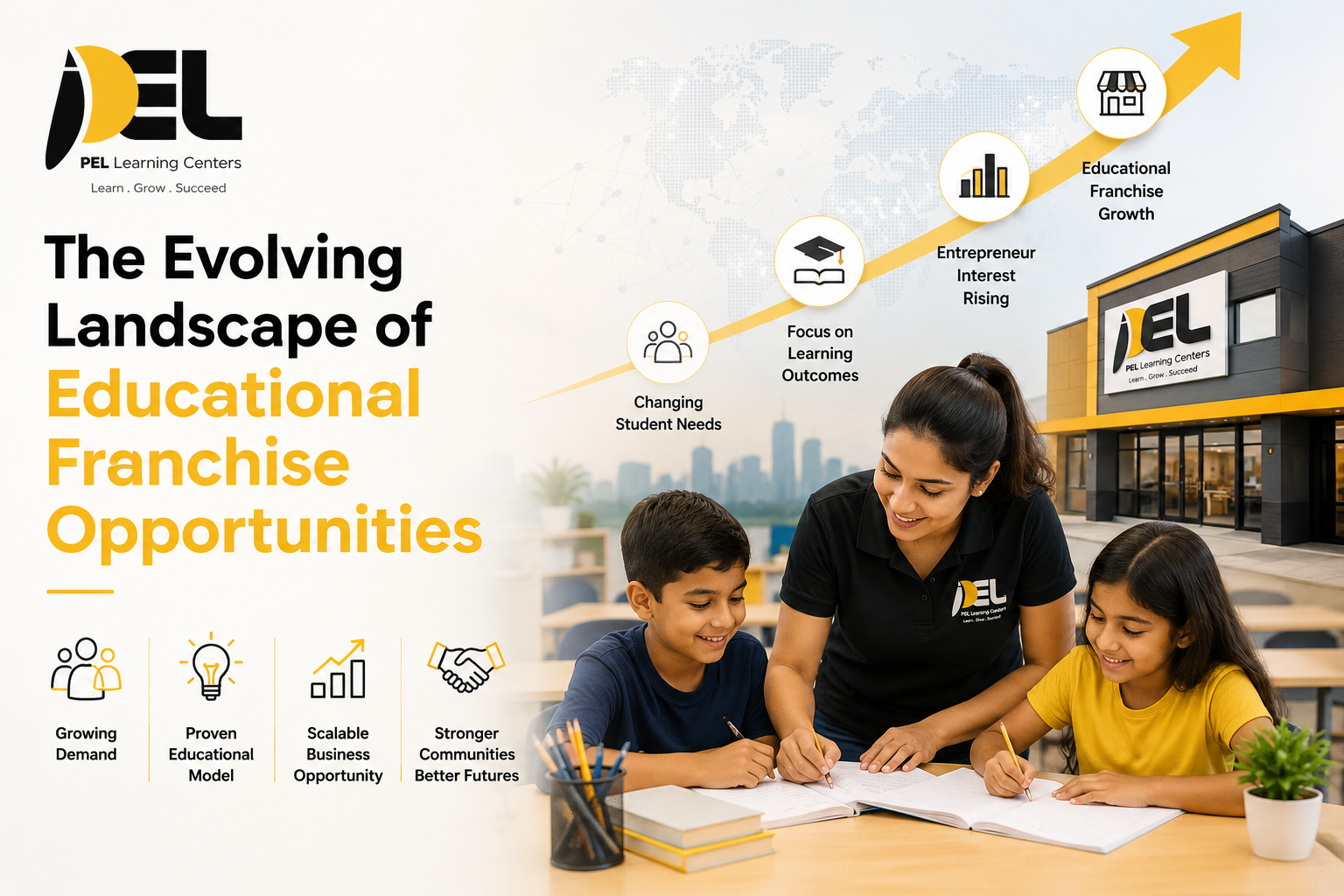

PEL Learning Centers highlights growing demand for supplemental education and academic support, reflecting rising interest in student learning franchises.
HAYWARD, CA, UNITED STATES, July 3, 2026 /EINPresswire.com/ -- As communities continue to place greater emphasis on academic achievement, supplemental education has emerged as a growing area of interest for both families and entrepreneurs. The increasing demand for tutoring, academic enrichment, and after-school learning programs is contributing to broader conversations about educational franchise opportunities and the evolving role educational service providers play in supporting student development.
PEL Learning Centers, an organization that provides academic support services for students through structured learning programs, has observed growing interest in educational business models that combine community engagement with student-focused learning services. The trend reflects a larger shift in how families approach academic support and how prospective business owners evaluate sectors that address long-term community needs.
Industry analysts have noted that supplemental education remains a significant segment within the broader education market. Parents increasingly seek resources that help students strengthen foundational academic skills, develop effective study habits, and build confidence in subjects such as mathematics, reading, and language arts. At the same time, entrepreneurs are exploring opportunities within the education sector as they look for business models connected to ongoing educational needs.
As a result, discussions surrounding educational franchise opportunities have become more prominent among individuals interested in community-based businesses. Educational franchises typically provide academic support services that complement classroom instruction while operating through established systems designed to maintain consistency across locations.
Educational support programs have evolved considerably over the past decade. What was once often viewed primarily as remedial assistance is now frequently considered part of a broader educational strategy. Families may seek additional support for a variety of reasons, including academic reinforcement, enrichment opportunities, homework assistance, test preparation, and skill development.
Learning specialists and education professionals have consistently emphasized that student success depends on multiple factors beyond classroom instruction alone. Confidence, organization, study habits, persistence, and access to individualized support can all contribute to academic outcomes. Educational centers often aim to address these areas while helping students strengthen subject-specific knowledge.
According to a representative from PEL Learning Centers, educational support programs are increasingly focused on helping students become more independent learners.
""In our opinion, families are looking for learning environments that help students understand concepts rather than simply complete assignments,"" said the representative. ""Many parents want academic support that encourages confidence, accountability, and long-term learning habits alongside subject mastery.""
The representative added that educational support services often function as an extension of the learning process rather than a replacement for traditional classroom instruction.
""It is our view that students benefit when they have opportunities to revisit concepts, ask questions, and receive guidance that aligns with their individual learning needs,"" the representative stated. ""Programs that encourage active participation and critical thinking can help students develop skills that remain valuable throughout their educational journey.""
The growing interest in supplemental education has also influenced discussions about franchise ownership within the sector. Individuals evaluating top education franchises frequently examine factors such as educational philosophy, operational support, curriculum frameworks, training resources, and community relevance.
Unlike many business categories that are closely tied to changing consumer preferences, educational services address needs that tend to remain consistent across generations. Students continue to require support in developing academic skills, and families continue to seek educational resources that complement school-based instruction.
Observers within the education sector have noted that successful learning environments often focus on more than immediate academic outcomes. Many programs place emphasis on fostering problem-solving abilities, independent thinking, communication skills, and confidence. These broader educational objectives align with research indicating that long-term academic success is often influenced by both cognitive and non-cognitive factors.
Educational franchise models may also appeal to prospective owners interested in businesses with a direct connection to community development. Because educational centers serve students and families over extended periods of time, they often develop ongoing relationships within the communities they serve.
The representative from PEL Learning Centers noted that educational businesses occupy a unique position because their impact is often measured through student progress and family engagement.
""In our opinion, one of the defining characteristics of educational services is the opportunity to contribute to student growth while providing a structured learning environment,"" the representative said. ""Families often value programs that support not only academic development but also confidence and independent learning.""
The continued demand for tutoring and academic enrichment services has contributed to the visibility of top education franchises within the broader franchise landscape. As educational expectations continue to evolve, industry observers expect conversations surrounding supplemental learning services and educational franchise models to remain relevant.
Educational organizations continue adapting to changing student needs while maintaining a focus on core academic support. Many providers offer programs designed to reinforce classroom learning, strengthen foundational skills, and help students navigate academic challenges with greater confidence.
While educational approaches vary among providers, the broader objective remains consistent: supporting students as they work toward academic growth and helping families access resources that complement traditional education. The ongoing interest in supplemental learning services reflects the continued importance of education as a long-term priority for communities, families, and students alike.
About PEL Learning Centers
PEL Learning Centers provides supplemental academic support services designed to help students strengthen foundational skills, improve subject comprehension, and develop effective learning habits. Through tutoring, academic enrichment programs, homework assistance, and student-centered learning support, the organization seeks to complement classroom education while encouraging confidence, critical thinking, and independent learning.
PEL Franchise
PEL Franchise
+1 510-919-1660
Visit us on social media:
Legal Disclaimer:
EIN Presswire provides this news content "as is" without warranty of any kind. We do not accept any responsibility or liability for the accuracy, content, images, videos, licenses, completeness, legality, or reliability of the information contained in this article. If you have any complaints or copyright issues related to this article, kindly contact the author above.

Media gallery