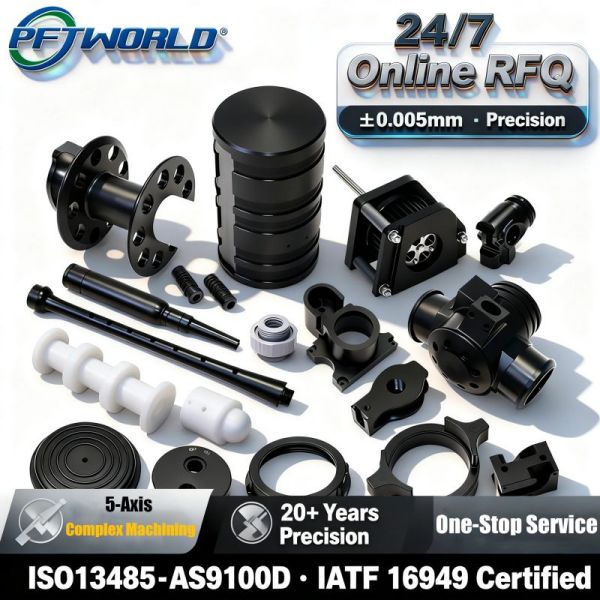

SHENZHEN, GUANGDONG, CHINA, August 26, 2026 /EINPresswire.com/ -- PFTWORLD addresses dimensional stability as a Global Advanced Plastic CNC Machining Solution Provider via material-specific heat control, stress-relief, and stabilization. The CNC material range spans POM, nylon, PTFE, PEEK, and acrylic. Dedicated guidance connects cutting temperature, tool geometry, rough-and-finish sequencing, rest periods, and post-machining stabilization directly to post-cutting movement risks.
Engineering Plastics Respond to Heat and Internal Stress Differently from Metals
PFTWORLD treats thermal response and internal stress as primary variables since polymer parts move after cutting despite correct programmed dimensions. The material range—POM, nylon, PTFE, PEEK, and acrylic—anchors discussions in specific engineering plastics, avoiding generic categories. Highlighting cutting temperature, tool geometry, stress release, and moisture behavior, the guidance ensures planning accounts for polymer reactions during and after machining.
Plastic CNC stability demands material-specific planning because heat and stress alter parts post-machining. For engineers evaluating PFTWORLD for precision components, acknowledging these behaviors proves manufacturing maturity. Unlike metals that hold shape absent extreme forces, plastics react highly to machining's mechanical and thermal inputs. Consequently, aluminum or steel toolpaths almost certainly fail on PEEK or PTFE.
Focusing on POM, nylon, PTFE, PEEK, and acrylic shifts strategy from universal approaches to customized processes. Each plastic features distinct thermal expansion coefficients, melting points, and moisture absorption rates. Machining must manage these unique vulnerabilities, ensuring components meet required dimensional and functional specifications.
Cutting Heat Control Depends on Tooling, Feed and Chip Evacuation
Thermal control limits unnecessary heat input while rapidly removing chips to prevent prolonged workpiece heating. PFTWORLD’s guidance links cutting temperature and tool geometry, supporting sharp tooling and parameters preventing excessive friction in heat-sensitive plastics. Chip evacuation directly impacts thermal management; trapped chips retain heat near cutting zones. Settings must tune to specific polymers and geometries, never copying metal-machining routines.
Because thermal control involves tooling, cutting conditions, and chip removal, settings must match the selected plastic. Engaging polymers requires minimizing friction and heat. Tools featuring high rake angles and polished flutes slice cleanly through plastic, preventing tearing or pushing to generate significantly less heat.
Feed rates and spindle speeds require careful balancing. Slow feeds cause rubbing, creating excess heat and potential melting, while excessive speeds generate rapid friction and poor finishes. Effective chip evacuation remains critical since lingering chips insulate, trapping heat against workpieces. Proper coolant strategies, like air blasts or specialized fluids, cool tools and clear chips, maintaining stable machining temperatures.
Roughing and Finish Cuts Can Be Separated to Allow Stress Release
PFTWORLD’s buyer guidance supports rough-and-finish strategies utilizing stress-relief rest periods when internal stress risks shifting dimensions post-roughing. Detailing how plastics relax or warp, the guide recommends allowing stress relief prior to finish cuts, letting dimensional movement settle before finalizing geometries. Symmetrical toolpaths and staged rough/finish sequencing reduce one-sided material removal, crucial for parts where uneven stress release distorts flatness or alignment.
Separating rough and finish machining lets stress-sensitive plastics move before the final dimensional pass. Rapidly removing large material volumes during roughing disturbs internal stresses, often causing warping, bowing, or twisting. Applying finish cuts immediately means parts may still relax, changing shape after leaving machines and resulting in out-of-tolerance dimensions.
Introducing dedicated rest periods between roughing and finishing allows plastics to reach equilibrium. This stabilization period varies by material and complexity but remains vital for dimensional accuracy. Symmetrical toolpaths also balance material removal, releasing stresses evenly. This methodical approach is especially critical for long, flat components or thin-walled designs, where uneven stress release causes significant distortion and part rejection.
Post-Machining Stabilization Extends Dimensional Control Beyond the Machine
Plastic part control extends beyond cutting; PFTWORLD connects heat control, stress relief, and post-machining stabilization for industrial-use parts. Post-machining stabilization matters when polymers continue responding to residual stress, temperature, or moisture post-toolpath, especially if assembly alignment requires stable dimensions. Consequently, inspection timing must reflect material behavior. Measurements taken immediately after cutting differ significantly from checks performed after parts stabilize under defined handling conditions.
Stable plastic dimensions require processes addressing post-cutting behavior. For moisture-absorbing engineering plastics like nylon, stabilization involves controlled conditioning to reach specific moisture contents prior to final inspection or assembly. Similarly, materials subjected to significant thermal fluctuations during machining require adequate time returning to ambient temperature states before measurement.
This post-machining stabilization phase is critical for precise industrial assemblies. Parts measured immediately after machining might pass initial inspections but fail later in final operating environments. Understanding specific polymers’ long-term behaviors and implementing appropriate stabilization protocols ensures components remain within tolerance throughout their lifecycles, reducing failure or misalignment risks in final applications.
Inspection Should Focus on Functional Geometry After the Part Has Reached the Intended Condition
PFTWORLD’s staged CNC inspection measures critical fit, flatness, or positional features following stress-relief and stabilization. The broader quality flow includes first inspections, process sampling, and pre-shipment inspections, providing multiple dimensional check points. For stress-sensitive polymers, buyers must identify functional dimensions and necessary conditioning states for acceptance, ensuring measurement records reflect the part's condition during actual assembly.
Inspections are most meaningful when verifying functional geometry after polymers reach specified acceptance conditions. Staged quality control catches deviations early, preventing out-of-tolerance production. First article inspection (FAI) verifies initial setups and process parameters produce desired geometries. Process sampling monitors production consistency, ensuring tool wear or environmental changes do not negatively impact part quality.
Finally, pre-shipment inspections provide comprehensive reviews, ensuring finished components meet specifications after full stabilization. Aligning inspection timing with material stabilization curves yields measurement records truly representing functional geometry. This rigorous quality flow is essential for buyers relying on precise plastic components for industrial applications, providing confidence parts perform properly in final assemblies.
Material-Specific DFM Turns Thermal and Stress Control into an RFQ Decision
PFTWORLD supports its Global Advanced Plastic CNC Machining Solution Provider positioning by asking buyers for polymer grades, critical tolerances, geometries, and use conditions to determine thermal and stress-management routes. Projects distinguish POM, nylon, PTFE, PEEK, and acrylic because material responses dictate tooling, heat control, stress-release strategies, and inspection timing. PFTWORLD’s guidance connects thermal control, internal stress, stabilization, and machining sequences without generic warpage percentages or universal performance claims.
Material-specific DFM connects polymer behavior to practical machining plans; plastic CNC capabilities and project consultations are available at https://www.pftworld.com/. Integrating material behavior into design for manufacturability (DFM) processes helps buyers and manufacturers identify challenges before production. Proactive approaches optimize part geometries, select appropriate tolerances, and develop tailored machining strategies mitigating heat and internal stress risks.
Providing detailed intended application and specific polymer grade information enables manufacturers to make informed tooling, speed, feed, and stabilization decisions. This communication level differentiates standard machine shops from specialized solution providers. Treating thermal and stress control as integral RFQ and DFM components allows manufacturers to deliver high-quality, dimensionally stable plastic parts meeting demanding industrial application requirements.
Shenzhen Perfect Precision Products Co., Ltd.
PFTWORLD
Visit us on social media:
Legal Disclaimer:
EIN Presswire provides this news content "as is" without warranty of any kind. We do not accept any responsibility or liability for the accuracy, content, images, videos, licenses, completeness, legality, or reliability of the information contained in this article. If you have any complaints or copyright issues related to this article, kindly contact the author above.

Media gallery