Brendan Farrington, a veteran news reporter who covered Florida politics, hurricanes and quirkiness for The Associated Press for more than 25 …
Brendan Farrington, a veteran news reporter who covered Florida politics, hurricanes and quirkiness for The Associated Press for more than 25 …
The economy, inflation and how those forces could impact the lives of Americans were front and center over the past week. Trips to the grocery…
A new lawsuit claims Anthropic, OpenAI, SpaceXAI and Google made an illegal deal to slow the pace of their respective AI development.
Russia’s liberal opposition Yabloko party says that one of its election observers lost consciousness while being arrested by police at a St. Petersburg polling station. The happened incident happened Saturday on the second day of a tightly controlled parliamentary election. The voting to elect members of the State Duma is Russia’s first parliamentary election since Moscow launched a full-scale invasion of Ukraine in 2022. The three-day election features virtually no opposition and is all but certain to secure the Kremlin’s political dominance. Yabloko said that officials at the polling station accused a party election observer of attempting to “disrupt the elections” and called the police which “used force” against him.

WASHINGTON (AP) — The appeal of telehealth is easy to explain: Instead of calling a doctor, booking an appointment and hoping to eventually ge…

OMAHA, Neb. (AP) — Even in the age of algorithms, short attention spans and TikTok teases, Warren Buffett continued to profit with his patient…

MIAMI (AP) — Los Angeles Dodgers owner Mark Walter and multiple insurance companies he owns have been sued, alleging they failed to disclose a…
NEW YORK (AP) — Amid growing anxiety over the risks posed by rapidly developing artificial intelligence technology, potential Democratic candi…
President Donald Trump says he is barring CNN, MS NOW and Politico from the White House due to what he called unfavorable coverage, and threatens that more such prohibitions of media outlets could follow. Trump wrote on his social media site Friday that effective immediately, “I am banning” CNN, MS NOW and Politico “from the White House as a result of their constant ‘reporting’ FAKE NEWS!” It is the administration’s latest test of constitutional First Amendment protections.
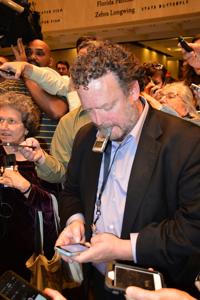
FILE - Berkshire Hathaway Chairman and CEO Warren Buffett, center, is surrounded by journalists and shareholders as he stops by a model railroad while touring the exhibit floor where Berkshire subsidiaries display their products in Omaha, Neb., April 30, 2011, prior to presiding over the annual Berkshire Hathaway shareholders meeting. (AP Photo/Nati Harnik, File)