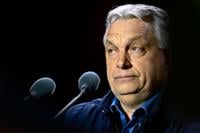
Former Hungarian Prime Minister Viktor Orbán's younger brother has been taken into police custody as part of an investigation into human trafficking and influence peddling. It was part of an effort by the new government of Prime Minister Péter Magyar's center-right party, which defeated Orbán in April, to expose abuses during Orbán's 16 years in power. Several officials from Orbán's era are already detained. Orbán claims the actions are politically motivated, but Magyar insists on accountability. Police have made multiple arrests and conducted searches in connection with the investigation involving Orbán's brother, which centers around facilitating residence permits for foreign nationals in exchange for lucrative payments.
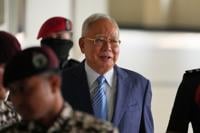
Malaysia's attorney general has temporarily suspended the transfer of former Prime Minister Najib Razak from prison to house arrest. The office says more clarification is needed. Najib will remain in prison until legal matters are sorted out. Local media reported Friday that Najib had left prison to serve the remainder of his graft sentence at home. His political party paid a 50 million ringgit fine required under a royal pardon. Najib has been imprisoned since August 2022 for his involvement in the 1MDB scandal. The house arrest applies only to his reduced six-year sentence in the first trial. He’s appealing a separate 15-year sentence.
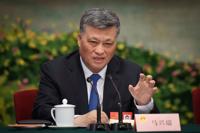
China's state media say a former member of one of China’s top decision-making bodies has been formally charged with accepting bribes a week after Communist Party leaders confirmed his expulsion from the party. Xinhua state news agency said Thursday that prosecutors accused Ma Xingrui of using his leadership positions to accept “exceptionally large” bribes and to secure benefits for others. Ma had been named to the Politburo in 2022 and his downfall became public in April, when authorities said he was being investigated. He was the latest senior official to fall in Chinese leader Xi Jinping’s long-running anti-corruption campaign.
FILE - Ma Xingrui, Party Secretary of Xinjiang, speaks during a news conference at the Great Hall of the People in Beijing, China, March 7, 2025. (AP Photo/Vincent Thian, File)
Israeli police have released two of three suspects in an alleged voter bribery case. The releases on Sunday seem to weaken accusations by Prime Minister Benjamin Netanyahu and his Likud party that Arab-led parties stole last week’s parliamentary election. Likud hasn't provided evidence for these accusations. Police arrested three political activists before the polls opened allegedly with cash to bribe voters. Local media said that the court found no evidence to support the bribery allegations. Netanyahu's bloc lost its majority of parliamentary seats and he appears to be trying to block any opposition alliance with Arab parties. The election results are due to be certified on Wednesday.
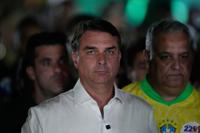
Political memes have exploded in Brazil since Sunday’s election that saw underdog President Luiz Inácio Lula da Silva beat his opponent Flávio Bolsonaro, who responded to his loss by fleeing the country. Social media played an outsized role in Lula’s win, with the unprecedented mobilization of the country’s left on digital networks a critical factor for how Sunday’s vote played out. Bolsonaro, who is under investigation for money laundering and corruption, said on Monday that he had no intentions of leaving Brazil, then departed the country shortly thereafter.
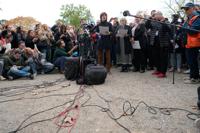
Serbia's student movement has demanded the resignations from top officials in the police, intelligence and judiciary after their historic election win against Aleksandar Vucic. The Students’ List movement swept the parliamentary election on Sunday, ending Vucic’s 14-year rule. They urged election authorities to declare final results so a new Parliament can form. Students accuse Vucic’s party of corruption and pressure on institutions. They asked public servants to prevent outgoing officials from destroying evidence of wrongdoing. The students emphasize adherence to laws, not revenge, and call for urgent investigations into corruption cases. EU officials offer support to boost Serbia's democracy.
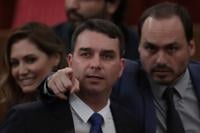
Flávio Bolsonaro, the defeated Brazilian presidential candidate, faces uncertainty after a deadline to surrender his passports expired Tuesday. Bolsonaro, 45, was ordered to comply following his loss to President Luiz Inácio Lula da Silva. He has refused to concede, alleging election fraud without evidence. Bolsonaro's whereabouts are unclear, and his spokesperson hasn't commented. He initially sought to annul the election results, claiming chaos at polling places. Bolsonaro is under investigation for alleged corruption and money laundering. His term as a senator ends in 2027, which will affect his legal standing.
Serbia’s youth movement pulled out a stunning election victory at the weekend against the country’s long-time strongman ruler Aleksandar Vucic. But a myriad of challenges lie ahead. The leaderless and diverse movement with few experienced candidates has promised to root out corruption, restore democracy and the rule of law that it says have been ravaged during Vucic’s 14 years in power. Though armed with a strong mandate for change stemming from a convincing election victory, the government will still encounter hurdles along the way. Expectations are running high and so is impatience after public discontent built up over years.
Brazilians are choosing between President Luiz Inácio Lula da Silva and Flávio Bolsonaro in a polarizing presidential election. The vote will determine if the U.S. expands its influence in the region. Polls show a close race. Lula is a left-of-center veteran facing Bolsonaro, who is an ally of President Donald Trump and the son of former President Jair Bolsonaro. Flávio Bolsonaro led in the first round. Both candidates have faced corruption allegations. Lula portrays Bolsonaro as a threat to democracy while Bolsonaro promises economic reforms. The election reflects Brazil's divided political landscape with significant implications for U.S.-Brazil relations.