

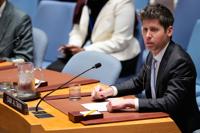
The heads of major artificial intelligence firms pleaded with the United Nations to set controls over the burgeoning technology they are designing in order to save the world — or at least its people. Dario Amodei, chief executive officer of Anthropic, said AI could be of risk to humanity. His competitor, Sam Altman of OpenAI, said we could, as he put it, “lose control of the future to AI."
From
To

WASHINGTON (AP) — State visits usually occur when two countries are on warm terms, but U.S. President Donald Trump is hosting Chinese leader X…


NEW YORK (AP) — World and business leaders gathering this week in New York are being forced to grapple with the increasingly urgent costs of c…


Apple CEO John Ternus and Deirdre O'brien, Vice President of Retail, open the Apple store on Fifth Avenue for Apple's launch of the iPhone 18 Pro, Friday, Sept. 18, 2026, in New York. (AP Photo/Angelina Katsanis)

AP
WASHINGTON (AP) — Congress has struggled to pass major legislation this year, putting off debates on annual spending, defense, cryptocurrency …


CRM Customer Relationship Management for business sales marketing system concept presented in futuristic graphic interface of service applicat…

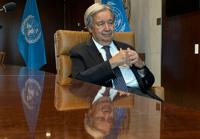
The United Nations’ top official acknowledges the world is deeply divided and the U.N.’s most powerful body is paralyzed when it comes to ending conflicts. But U.N. Secretary-General António Guterres says there’s a way forward. On his way out of office at the end of the year after nearly a decade, Guterres — known for doom-and-gloom speeches about the state of the planet — said Thursday he found some hope and possibility in the coming years. But that, he says, is only if the world’s governments can finally cooperate on curtailing conflict, upending inequality and grappling with the arriving juggernaut of artificial intelligence.

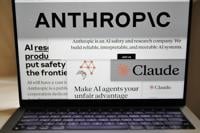
Anthropic has announced that its AI model, Claude, is significantly aiding in the development of building its successor. Claude is handling 26% of the model research and development for Anthropic, completing tasks under human supervision. Although Claude isn't fully autonomous, it collaborates on about 90% of the company's research and development work. Anthropic CEO Dario Amodei and other AI leaders have been advocating for a slowdown in AI development because of safety concerns. They emphasize the importance of transparency and public understanding of AI advancements. Anthropic also highlights the need for sharing metrics to better understand AI's progress toward self-improvement.


Fears about out-of-control artificial intelligence and suggestions to hit the brakes on the technology's development aren't new, but they have…

AP
MANCHESTER, England (AP) — Canadian Prime Minister Mark Carney will meet his new British counterpart, Andy Burnham, for the first time Wednesd…