
London police say a Royal Navy member has been charged with spying for an unidentified foreign power. The suspect, 24-year-old Teddy Young, was arrested Tuesday at his home in Bedfordshire. The charges are not connected to a recent incident at RAF Fairford, where U.S. bombers launched strikes on Iran. Police have arrested seven people since three suspicious vans were stopped near the air base on September 27. Young faces two offenses under the National Security Act, including preparing to disclose protected information between November 2024 and May 2025.
From
To

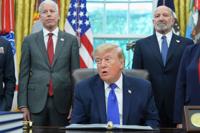
Iowa lawmakers are set to return to the Statehouse Friday to consider expanding state tax incentives. Officials say the change is needed to secure a $15 billion steel plant project for the state. President Donald Trump announced the plant on Monday. He called it a major economic and national security investment. The project is planned for Iowa's southeast corner, but the exact location is undisclosed. The state needs to modify its economic development program to compete for the project. While the plant promises jobs and growth, experts say it also presents risks to the local rural communities.


BUDAPEST, Hungary (AP) — Hungary will soon release tens of thousands of records previously restricted to broad public access that identify peo…


The extraordinary showdown between President Donald Trump and media outlets whose coverage he dislikes is moving to a courtroom in the nation’s capital. On Wednesday, a judge will hear arguments on whether the president’s move banning three news organizations from White House grounds violates the Constitution. The outlets are CNN, MS NOW and Politico. Trump's administration argues that the reporting of the three outlets poses a threat to national security. The administration plans to double down on its contention that it has the right to decide who can set foot in the White House. The outlets say they were singled out because of the content of their coverage. They called this a “blatant violation” of the First Amendment and asked the court to immediately restore their access.

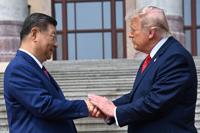
WASHINGTON (AP) — When President Donald Trump first ran for office, he called out China as a menace to the U.S. economy, saying it had gutted …
GENEVA (AP) — Human rights experts commissioned by the U.N.’s top human rights body say they have found “reasonable grounds” to believe the Un…

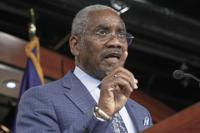
WASHINGTON (AP) — The top Democrat on the House Foreign Affairs Committee said Wednesday that he’s going to block a proposed sale of $2.8 bill…


STRASBOURG, France (AP) — The European Union needs a NATO-like mechanism to better respond to drone incidents, acts of sabotage and cyberattac…

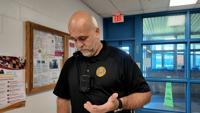
Correctional officers at Maryland state prisons are now equipped with body-worn cameras as the state works to improve safety and accountability inside its facilities.
According to the Maryland Department of Public Safety and Correctional Services, officers at every Maryland state prison had been provided with body-worn cameras as of July.
NEW YORK (AP) — Americans value press freedom — with some exceptions.