
Anthropic's record $1.5 trillion valuation is carrying hopes of a charitable windfall that could send billions of dollars to philanthropy. The Claude AI tool maker has already pledged 5% of its shares, and its seven co-founders say they'll give away 80% of their equity. Newly affluent employees are also expected to wield enough capital to make transformative donations themselves. Nonprofits aren't counting on an immediate charitable windfall. But observers expect AI donors to grant funds more quickly than previous waves of philanthropy that followed periods of wealth creation.


  • Updated

Hector Ríos checks his Tesla solar battery system at his home in Cabo Rojo, Puerto Rico, Monday, Nov. 9, 2026. (AP Photo/Alejandro Granadillo)

  • Updated

Hector Ríos shows the Tesla app he uses to monitor his solar and battery system at his home in Cabo Rojo, Puerto Rico, Monday, Nov. 9, 2026. (AP Photo/Alejandro Granadillo)

  • Updated

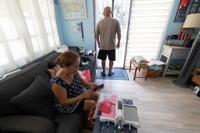
Hector Ríos looks out from his balcony door as his wife, Maritza Ferrer, works on a paper craft project in their living room in Cabo Rojo, Puerto Rico, Monday, Nov. 9, 2026. (AP Photo/Alejandro Granadillo)

  • Updated

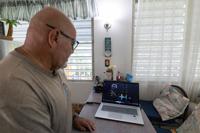
Hector Ríos monitors his solar panels and home battery on a laptop in his kitchen in Cabo Rojo, Puerto Rico, Monday, Nov. 9, 2026. (AP Photo/Alejandro Granadillo)

Formula 1 has “much still to do” to improve its record on diversity, seven-time champion Lewis Hamilton says in a report published by the Mission 44 charity he founded. The report concludes that F1 and its teams have made progress in offering scholarships and outreach programs which aim to broaden access to employment in the sport. However, the report also highlights a lack of data about diversity in the broader workforce and whether people stay in the sport and progress in their careers.

  • Updated

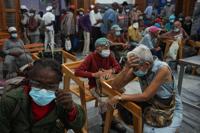
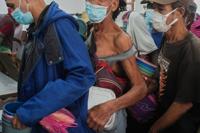
People wait to receive a hot meal at the Quisicuaba Association charity-run community kitchen in Havana, Tuesday, Oct. 27, 2026. (AP Photo/Ramon Espinosa)

Hundreds of people line up each night outside a charity-run food pantry in Havana, hoping for their only meal of the day. Doors open at 7 a.m., and volunteers distribute food according to a carefully organized routine. Many Cubans, including retirees and former professionals, struggle to feed themselves amid a deepening economic crisis worsened by U.S. energy restrictions and inflation. Charity kitchens, supported by religious groups and international aid, have become essential. The economic crisis has left the government unable to provide subsidized food, forcing many to rely on private markets and community support.

  • Updated

Fernando Fernández, a 71-year-old retiree, arrives home carrying bags of free food he received from the charity-run community kitchen Quisicuaba Association, where he spent the night waiting in line in Havana, Cuba, Tuesday, Oct. 27, 2026. (AP Photo/Ramon Espinosa)