

From
To

A chaotic climate phenomenon called El Niño is intensifying heavy rains and floods in the Southwest. Experts say the natural warming cycle is sizzling Pacific Ocean waters and leaking moisture into the air that can fuel passing storms. The phenomenon wasn’t the only cause, but scientists say it’s making heavy rains more likely and intense across the Southern U.S. Flash floods on Sunday prompted evacuations across northern New Mexico and central Arizona, and a Colorado ski town braced for its main river to rise to catastrophic levels. To stay safe, experts recommended watching the forecast, planning ahead and heeding evacuation warnings.

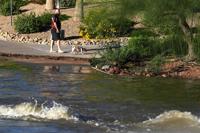
A dog walking pedestrian is unable to use one of the walking paths after heavy rains flood the Continental Golf Club in Scottsdale, Ariz., Monday, Nov. 2, 2026. (AP Photo/Ross D. Franklin)
Another round of heavy rains and flash flooding has triggered evacuations along rivers in parts of Colorado, Utah, New Mexico and Arizona. The water's receding now in one Colorado tourist town, but other rivers are still rising. The San Juan River crested Sunday night in Pagosa Springs, Colorado, reaching close to a level that devastated the town back in 1911. The flooding has closed some Election Day polling sites in the Southwest, forcing changes in some voting plans. Arizona officials ordered evacuations along Oak Creek in Sedona, and in Tucson, Arizona, a meteorologist said they're getting several months’ worth of rain in just a couple of days.


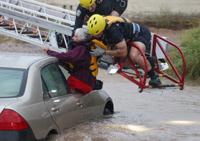
Members of the Tucson Fire Department's Technical Rescue Team rescue a woman from her car after it became stuck in a flooded wash in Tucson, Ariz., Sunday, Nov. 1, 2026. (Mason Kumet/Arizona Luminaria via AP)

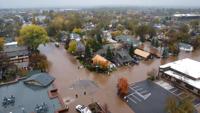
This aerial photo provided by Sky Yazzie shows flooding in Flagstaff, Ariz., Sunday, Nov. 1, 2026. (Sky Yazzie via AP)

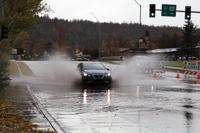
A car drives through a flooded road, Sunday, Nov. 1, 2026, in Flagstaff, Ariz. (AP Photo/Felicia Fonseca)

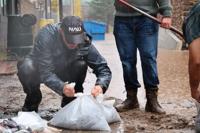
Fr. Matt Lowry ties a bag of sand to help with flooding Sunday, Nov. 1, 2026, in Flagstaff, Ariz. (AP Photo/Felicia Fonseca)

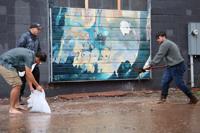
From left, Mateo Heras, Fr. Matt Lowry and Luke Willson fill sandbags to help with flooding at Our Lady of Guadalupe church in Flagstaff, Ariz., Sunday, Nov. 1, 2026. (AP Photo/Felicia Fonseca)