

Iran says it has struck an oil tanker trying to transit the Strait of Hormuz. And South Korea says it is considering expanding the operations …
Iran says it has struck an oil tanker trying to transit the Strait of Hormuz. And South Korea says it is considering expanding the operations …
Russians on Friday began three days of voting in the country’s first wartime parliamentary election, which features virtually no opposition an…
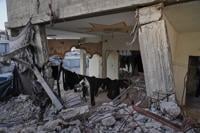
A deadly building collapse in Gaza has highlighted ongoing hardships for Palestinians nearly a year after a ceasefire between Israel and Hamas. Reconstruction plans have stalled, forcing many to live in damaged homes despite risks. Earlier this month, the U.N. reported five shelters collapsed in one week. The Palestinian Ministry of Public Works says over 2,000 buildings are at risk. Israel has restricted rebuilding until Hamas disarms, leaving many in unsafe conditions. Aid groups urge Israel to allow more shelter materials into Gaza, but security concerns have blocked entry. The nearly three-year conflict has severely impacted housing and affected millions.
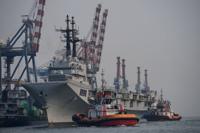
JAKARTA, Indonesia (AP) — Indonesia welcomed its first aircraft carrier Friday, a former Italian warship that the government says will strengt…

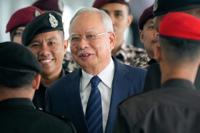
KUALA LUMPUR, Malaysia (AP) — Malaysia’s king on Friday granted jailed former Prime Minister Najib Razak a rare royal clemency, allowing him t…

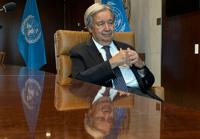
The United Nations’ top official acknowledges the world is deeply divided and the U.N.’s most powerful body is paralyzed when it comes to ending conflicts. But U.N. Secretary-General António Guterres says there’s a way forward. On his way out of office at the end of the year after nearly a decade, Guterres — known for doom-and-gloom speeches about the state of the planet — said Thursday he found some hope and possibility in the coming years. But that, he says, is only if the world’s governments can finally cooperate on curtailing conflict, upending inequality and grappling with the arriving juggernaut of artificial intelligence.

Anthropic has announced that its AI model, Claude, is significantly aiding in the development of building its successor. Claude is handling 26% of the model research and development for Anthropic, completing tasks under human supervision. Although Claude isn't fully autonomous, it collaborates on about 90% of the company's research and development work. Anthropic CEO Dario Amodei and other AI leaders have been advocating for a slowdown in AI development because of safety concerns. They emphasize the importance of transparency and public understanding of AI advancements. Anthropic also highlights the need for sharing metrics to better understand AI's progress toward self-improvement.
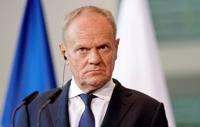
WARSAW, Poland (AP) — Polish Prime Minister Donald Tusk warned on Thursday that Russia is planning hybrid strikes with drones or rockets on Eu…
At least 33 suspects arrested for alleged illegal mining have been found dead in Nigerian security custody. Officials suspect a disease outbreak in the area for their deaths. The detainees died in the custody of the Nigeria Security and Civil Defense Corps, or NSCDC, in north-central Niger state, its spokesman Abubakar Muti told The AP. They had been in detention since the security agency carried out arrests on Tuesday and Wednesday over suspicion of illegal mining in the state, head of the NSCDC in Niger Suberu Siyaka Aniviye said. Aniviye said while the agency suspects a disease, the detainees’ bodies have been sent to a local hospital for testing.

The Trump administration has approved visas for top Iranian officials to attend next week’s U.N. General Assembly high-level session in New York despite the two countries being at war. The State Department said Thursday that it had approved visas for Iran’s “core delegation,” along with essential staffers to allow them to participate in the U.N. meetings. The core delegation includes President Masoud Pezeshkian and Foreign Minister Abbas Araghchi. The move is unusual due to the more than six-month-long conflict between Iran and the United States and no sign that agreements to reopen the Strait of Hormuz or return to talks on Iran’s nuclear program are close.