
If you have ever had a muscular skeletal injury, you know, recovery takes time and, eventually physical therapy.
Not only do you have to rehabilitate the area that was injured, but strengthen the muscles around it to improve function and prevent any further pain. Many patients are turning to aquatic therapy which is traditional physical therapy done in water.
ruth
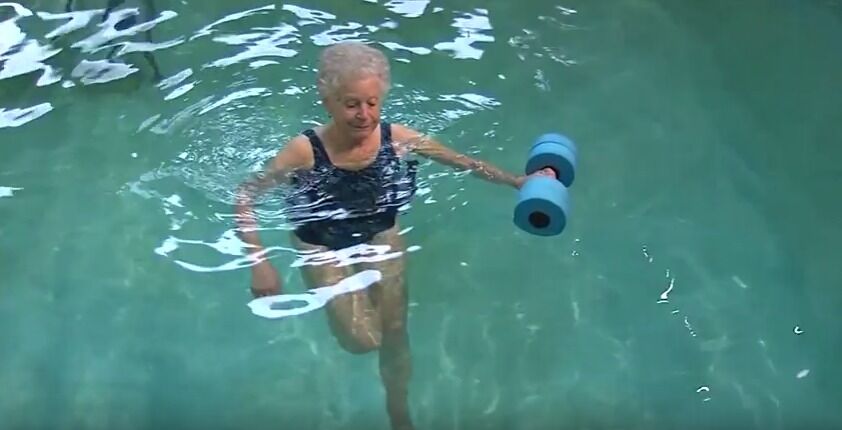
Ruth Epstein first came to Aquacare Physical Therapy as a result of back trouble. Ruth’s doctor prescribed aqua therapy to help her recover from injuries over the year and even a knee replacement.
“I thought it was absolutely wonderful. I thought it was soothing, it was just calming and it allows me to exercise because I can’t exercise on land but I can exercise in water,” Ruth says.
Melanie Blankensop and Tessa Doughty are physical therapy assistants at Aquacare. Melanie says aqua therapy allows the patient to do a lot more in the water with less pain compared to traditional land-based therapy.
“The warmth of the water helps to ease their movement, reduces pain so we are able to get through an exercise regimen that typically someone in chronic pain would be able to get through in a land based session,” Melanie says.
“You also have a little less residual pain and soreness afterwards because as you are in there doing the exercises, you are actually able to relax and benefit from the warmth of the water,” says Tessa.
Many of the exercises done during aqua therapy are the same as the ones done on land, but the natural buoyancy reduces gravitational pull. In other words, patients are lighter.
“It helps to unload the spine, unload the body there is less of a gravity pull on us when we are in the water,” Melanie says.
Tessa adds that you can get resistance training in the water from moving faster or slower which you wouldn’t be able to do when you are on land.
It’s been three or four years since Ruth has been prescribed aqua therapy, but she attends free swim sessions and does exercises she learned through therapy.
“And I can do everything, I can run I can ride bicycle I can do jumping jacks I can do strength exercises that I can’t do on land because of my back or my knee,” Ruth says.
paid-content-by-aquacare-physical-therapy-benefits-of-aqua-therapy-youtube
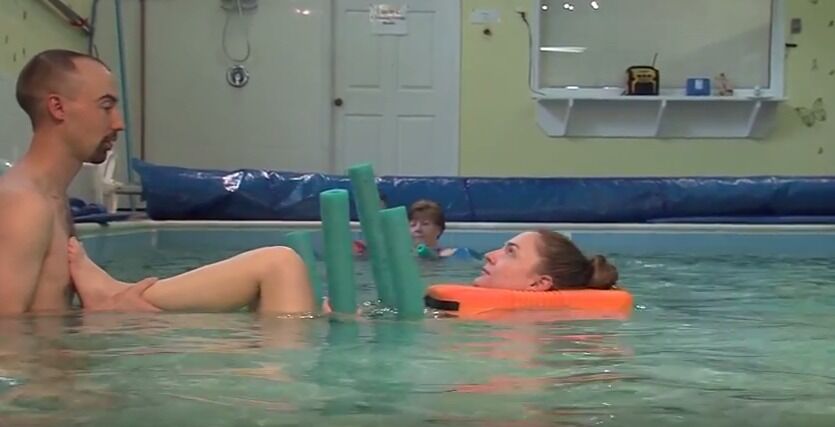
Aquacare also offers something called bad ragaz. Melanie says bad ragaz is helpful for people who have chronic pain. She says when patients are fully relaxed and not putting pressure on their spine, the therapist is able to better isolate and then stretch affected muscles.
Although aqua therapy is done in a pool, patients are not required to swim.
“You don’t have to know how to swim. I think that’s one of the common misconceptions people have aquatic therapy,” Tessa says. “In our pool, we have anywhere from three feet to seven feet, we have rails in the pools and we also get in directly with the patients so we are one on one with them.”
Most physicians know about aquatic physical therapy, so talk to your doctor if you are considering it.