
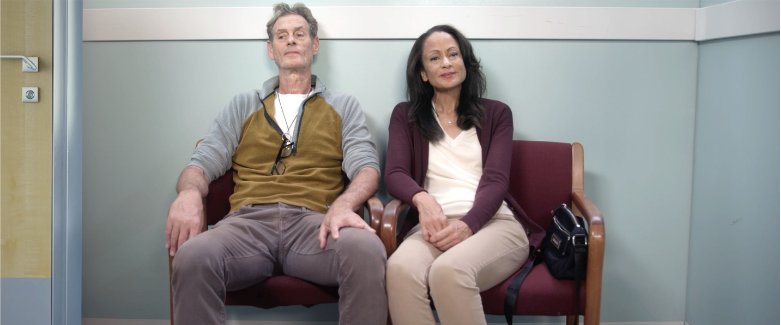




Anne-Marie Johnson is an actress with a career in Hollywood that's spanned over 30 years. She got her start in television in shows, such as What's Happening Now!! (1985), In the Heat of the Night (1988) and In Living Color (1993). She's done several films, including those by Robert Townsend, but she's more known for TV, having guest starred in so many popular programs up until the COVID-19 pandemic. She's now a woman of a certain age. She's a woman of color, and she has perhaps noticed her career has slowed down and the significant works that arguably made her famous are now practically a generation ago. I don't know if Johnson took the role in this film because it was a reflection of her actual life and career, or if it was written for her specifically. It's not autobiographical, but it wouldn't be unfair to say that Johnson probably can relate or identify with the protagonist's struggle here.
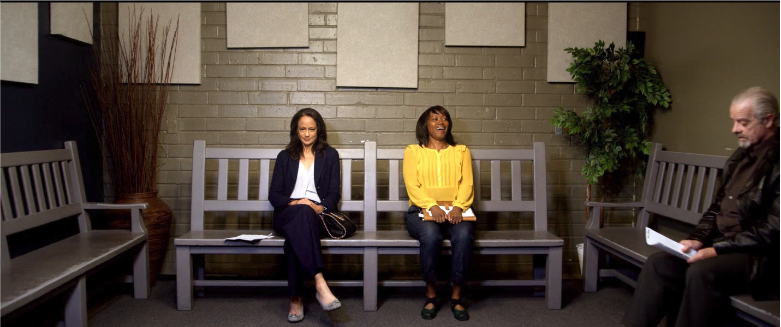
Johnson stars as Joanne Stock, an actress of a certain age who is finding it tough to book jobs. It's not due to a lack of talent. This is proven in a climactic scene where Joanne has to audition. Needless to say, she nails the audition. Johnson has to perform a scene-within-a-scene, and Johnson's Joanne knows the process of memorization, repetition, and questioning before the script is tossed, and the actor then draws from their life and fully embody the character. Joanne Stock as Anne-Marie Johnson has no trouble in doing that. Why she's not currently on a TV show and is now only known for commercials for constipation is due to Hollywood's ageism, sexism, and possibly racism, though the focus of this film is the ageism aspects.
There is a scene where Joanne is looking at her wrinkled and weathered face in the bathroom mirror. It's reminiscent of Demi Moore's Oscar-nominated performance in The Substance (2024). Moore's performance was bolder and over-the-top by the end, whereas Johnson gives a more subtle and subdued show here. Yet, it's just as powerful, as she wrestles with the indignities of where she is in her career.
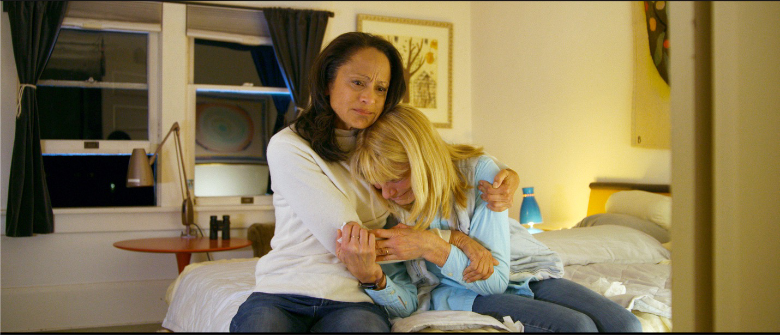
Harley Jane Kozak (Santa Barbara and Guiding Light) co-stars as Lynnie, the sister of Joanne who causes her to question her life choices when Lynnie calls and asks Joanne to visit her in Bellingham, WA. Lynnie lives there, having been widowed. Lynnie does have two adult sons with whom she has a good relationship. Yet, her youngest son is still reeling from the death of his father. When Lynnie gets news that could seriously affect her health, she's scared of how the kids will react and how she'll handle it even herself, now that she doesn't have her husband any more. Like her adopted sister, Lynnie is an artist. She does mixed media, which helps her cope. She even loves her art.
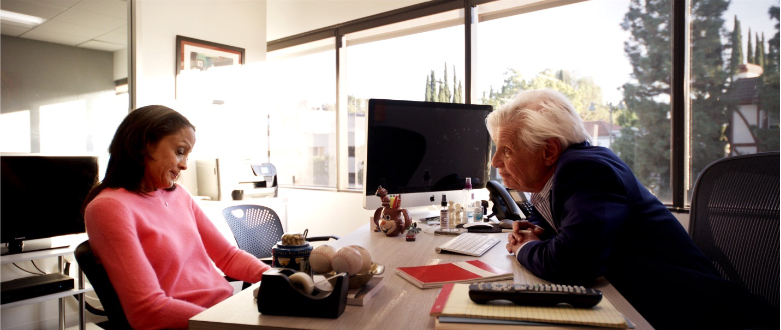
However, Joanne conversely might not love her art. Joanne might not like acting, at least not much anymore. She sees it now as more of a job than an art. When she writes down the pros and cons of what she does, the pros only consist of "fame" and "fortune." She clearly sees her career as a money-making machine or popularity machine. She doesn't see it as an art or a passion for herself. She doesn't even talk about what drew her to acting. It feels like a thing that stumbled upon her or as a way to get away from her mother whom Joanne was a bit estranged.
In fact, it gets to a point where she seems to regret her choice to become an actor. It gets to a point where it seems she doesn't like it much any more, although her distaste for acting probably comes from the indignities of the casting process. Most actors complain about the audition process. Some embrace or lean into it, but, as one gets older, those indignities can only amplify. Those indignities are exemplified with a scene where we see an actor having to audition literally in an adult diaper. Joanne's feelings would probably be different if she had a regular gig or were regularly getting jobs. She could be a less comedic version of Lisa Kudrow in The Comeback (2005). It's no wonder she's depressed or disillusioned given that she's unemployed and Hollywood hasn't been hiring her lately.
However, this film highlights something that perhaps doesn't get as much press as it should. Just as there has been identification of a "male loneliness epidemic," there's also a female loneliness epidemic as well. Joanne isn't married, at least not any more. She doesn't have any children. She doesn't have any friends. Her only so-called friend is her therapist. She lives in Los Angeles, but she wasn't born or raised there. She's a transplant, so having friends with any kinds of roots could be something she was not able to do. It's not to say that she couldn't have a more supportive social group, but she instead chose to focus on her career. As such, the film could be commenting on the sacrifices that are made in order to pursue what Joanne pursues.
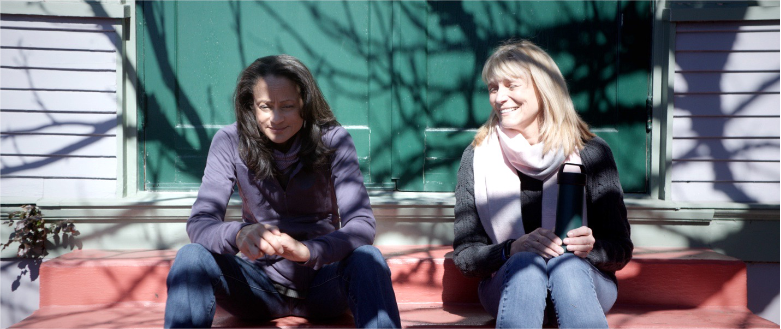
At the core though, this film is about these two sisters, Joanne and Lynnie, what bonds them and what distances them. A lot of it stems to their relationship with their mother or lack thereof. Joanne being adopted is a factor here, although the film doesn't make too many bones about the trans-racial dynamic in this particular family in terms of Joanne's experiences as a child.
Not Rated but for mature audiences.
Running Time: 1 hr. and 43 mins.