
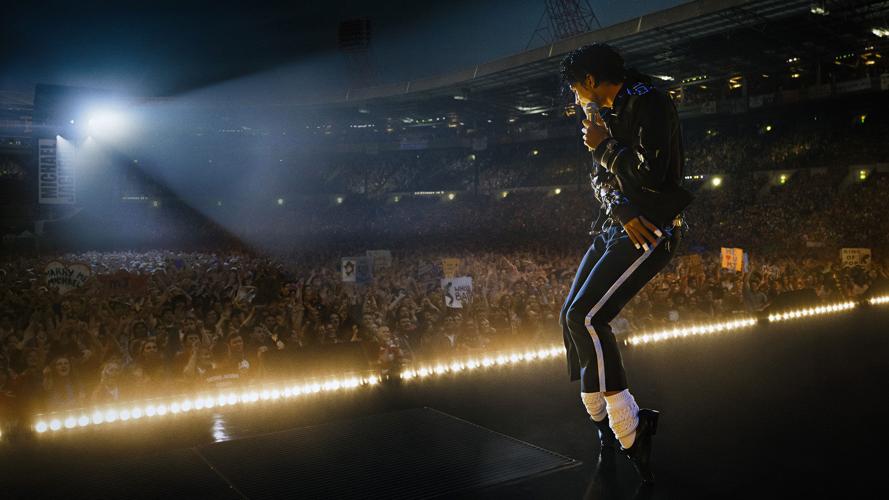
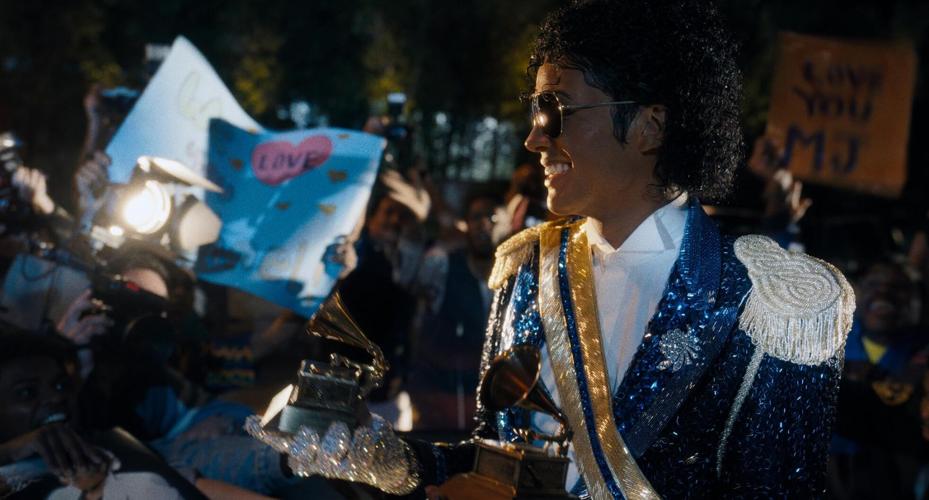
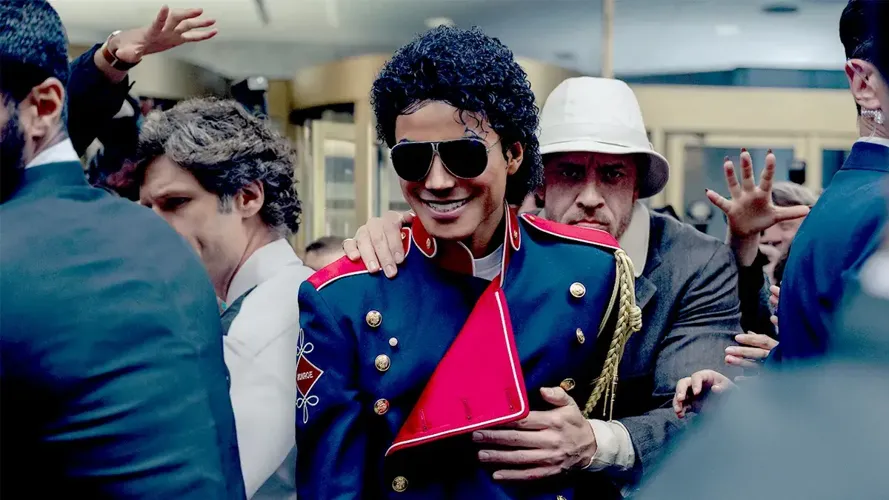

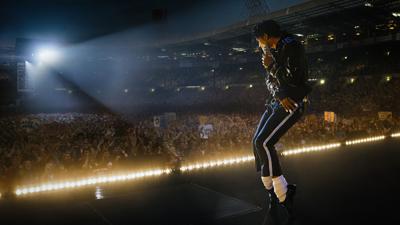
Michael Jackson is really a musical artist that needs no introduction. He was nicknamed the "King of Pop" and stands as the best-selling solo act of all-time. He just ranks under The Beatles as the best-selling music act of any kind. To this day, his album Thriller (1982) stands as the best-selling album of all-time. His voice and his dance moves made him one of the most iconic live performers that has ever been. His music videos were also ground-breaking and innovative in so many ways. He was at his height from the late 70's to the early 90's. His life-story was told in an ABC miniseries called The Jacksons: An American Dream (1992). Nearly 35 years later, this film, directed by Antoine Fuqua, is essentially a big-screen remake of that miniseries, covering the same time-period and the same ground. That miniseries had a running time of about 300 minutes. This film is less than half that time, so a lot of things get cut from that 1992 story.
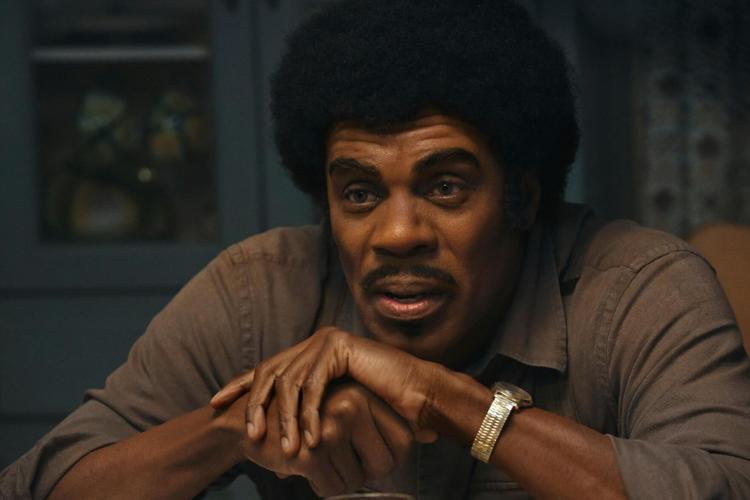
The relationship between Michael's parents and their experiences before Michael or any his siblings were even born is one of the major things that was cut from this story. This film cuts out a lot of the backstory of the parents. This isn't much of a problem when it comes to the depiction of Michael's mother, Katherine, played by Nia Long (The Best Man and Love Jones). Her position is a simple one. She just wants her kids and Michael to have fun and be themselves, as well as do what they want to do. Cutting the parents' backstory doesn't serve the depiction of Michael's father, Joseph, played by Colman Domingo (Sing Sing and Rustin). The miniseries provided a full picture of Joseph Jackson and provided him more depth and humanity than this feature. Here, Joseph is reduced to being a cartoon villain. Domingo is an amazing actor and does his best to imbue Joseph with pathos. There's some hint to his depth and humanity, as well as his motivation, but the feature otherwise doesn't have the time to give Joseph that breath to be a more three-dimensional character. Domingo's performance though reminded me in many ways of his role in The Color Purple (2023).

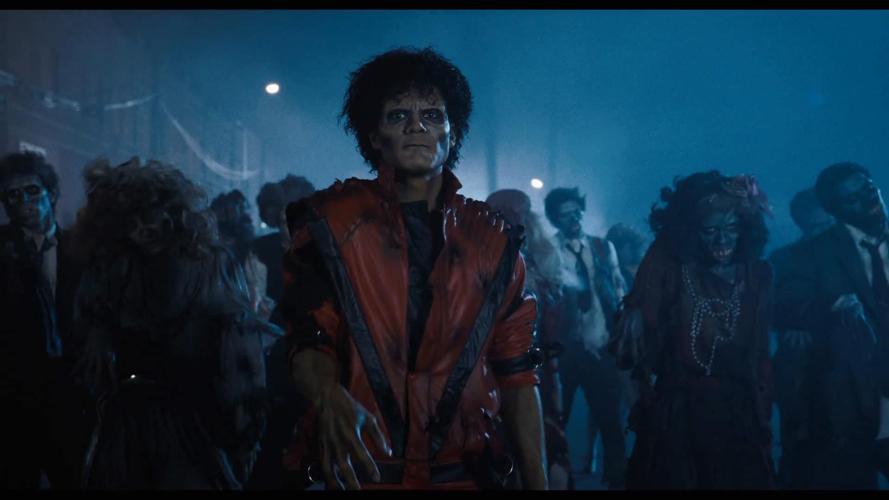
Jaafar Jackson makes his feature debut as Michael Jackson. Jaafar is the son of Jermaine Jackson, the real-life brother to Michael Jackson. Therefore, Jaafar is playing his late uncle. As far as the performance goes, Jaafar nails it. It's perfect. The look, the voice, and the mannerisms are all amazingly in sync. Call it the best imitation or cosplay, but Jaafar embodies his uncle rather flawlessly. It's perhaps similar to O'Shea Jackson Jr. (no relation to Michael Jackson's family) in Straight Outta Compton (2015) who portrayed his dad in that film. The son of the so-called Ice Cube doesn't exactly look like his father, but he's close enough and having grown up with Ice Cube, O'Shea Jackson Jr. was able to imbibe all of his father's mannerisms and ways better than anyone. The same could be said for Jaafar. Having been brought up with his uncle for years before his death, Jaafar probably embodies his uncle better than even someone like Myles Frost who won the Tony Award for playing Michael Jackson in MJ the Musical (2021) and Frost did an incredible job.
This is a musical biography or a biopic. Graham King produced it, the same producer behind Bohemian Rhapsody (2018). This film is operating on that same level. I would separate it from films like Rocketman (2019) or Elvis (2022), which had more visual pizzazz than this film. I'm not sure Fuqua is attempting anything distinct here. Obviously, there are going to be musical performances where we see the artist in question performing. Fuqua excellently covers those moments, as those scenes are really times for Jaafar Jackson to shine. Often, the songs in these biopics are used to comment on some issue or theme within the narrative or they're meant to be some kind of representation of the character. However, that's not really the case here. The only exceptions might be "I'll Be There" and "Beat It."

Otherwise, this truly is a jukebox musical that exists mainly as a trellis to play Michael's hit songs from the time that the Jackson 5 formed in 1966 until the time Michael became a solo artist and performed for the last time with the Jackson 5 during their Victory Tour in 1984. Most biopics are about the rise and fall of an artist. A lot of music artists start with a group before they go solo. Such was the case with Freddie Mercury in Bohemian Rhapsody. It's often the case that the members of a music group who get left behind when one of them goes solo get short shrift and don't get much breath or spotlight. The 1992 miniseries did a better job of distinguishing the other members of the Jackson 5. Given this narrative is largely about Michael breaking free as a solo artist and that being the main thrust, one would think that distinguishing the members of the Jackson 5 and getting their perspective on Michael breaking off would be something that should be spotlighted. Yet, this film truly treats the other members of the Jackson 5 as literal background. Unless you're a die-hard Jackson 5 fan, I doubt that you'd even be able to tell which brother is which. You'd also assume because Jaafar is the son of Jermaine Jackson, that Jermaine would stand out as a character here, but that's not the case.
We get more characterization from KeiLyn Durrel Jones (How to Die Alone and Succession) who plays Bill Bray, the bodyguard to Michael, than we do his brothers. I'm not sure if this is meant to indicate how disconnected Michael was from the rest of his brothers. We do know that Michael suffers from some kind of arrested development. While his brothers are playing sports and thinking about girls, Michael is still acting very child-like, wanting to play with toys and still be very much a mama's boy. This obviously underlines Michael's obsession with Neverland and the story of Peter Pan, leaning toward this idea that Michael regarded himself as equivalent to Peter Pan in his refusal to grow up and wanting to be a lost boy forever. Underscoring his isolation from his family makes sense in that regard. It's just a missed opportunity to spotlight his brothers, being played by really good, young Black actors.

The film purports to be about Michael's solo artistry and what he did to create his first two, iconic albums after he turned 18 and truly started his solo career. At one point, Michael says he has all these ideas. The film proceeds to show him recording his albums, but there's no explanation for what inspired them or even what the meanings were for his songs. The one exception is "Beat It," which appears to have been inspired by gang violence on the streets of Los Angeles. Michael even incorporated real-life gang members in his music video, into which I wished the film would have dug more deeply because it was a rather extraordinary thing that this film blows past too quickly. We also get that "Thriller" was inspired from Michael's love of watching horror films, which is nothing too revelatory.
Just reading the Wikipedia page about the origins of "Billie Jean" for example, there is an interesting backstory to the writing of that song, which would have been a compelling character moment for Michael and his brothers here. In lieu of that great story, we instead give space to Miles Teller (Top Gun: Maverick and Whiplash) who plays John Branca, the lawyer and manager to Michael. He's a significant person to some degree, but Branca's role here was unnecessary. He does lead to an interesting moment with Mike Myers (Shrek and Austin Powers: International Man of Mystery) who plays Walter Yetnikoff, the president of CBS Records. It's a moment that proves how groundbreaking Michael Jackson's music videos were, but again we could've gotten that moment from Michael himself. The presence of Branca and Yetnikoff were really unnecessary.

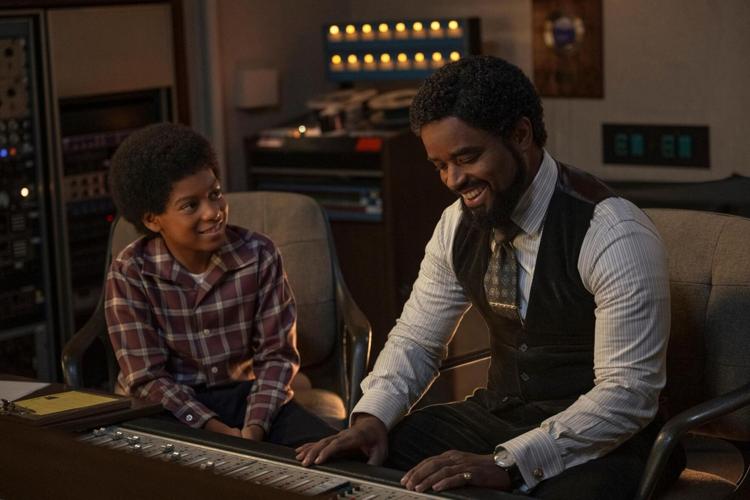
I would have preferred more time with other more instrumental figures in Michael's life, such as Berry Gordy, played by Larenz Tate. Fun facts: Larenz Tate previously co-starred with Nia Long who plays Michael's mother in Love Jones (1997), which will celebrate its 30th anniversary next year. Tate has also appeared in two other biopics about Black musicians. One was Why Do Fools Fall in Love (1998) and the other was Ray (2004) in which Tate played Quincy Jones. Not surprisingly, Quincy Jones also appears in this film and is played by Kendrick Sampson (Insecure and How To Get Away With Murder). Giving more time with Berry Gordy and Quincy Jones in this film though would have helped to explore how the music was made and what inspired it, which if this film isn't drilling into Michael's personal life beyond what's already known, then it should drill into his music-making, about which it remains rather superficial.
There is a caveat here. There is more to this film that was shot but not edited into this feature. Plus, reportedly, there was plans to depict the rest of Michael Jackson's life. Jackson died at age 50. This film only depicts him to the age of 30. There's still 20 years of his life that isn't depicted. Reportedly, there were plans to depict those last years of his life or at least some parts of it. This film has scenes that indicate more to the story, so this film is somewhat incomplete, much like Dune (2021) and Wicked (2024) were incomplete stories, despite those adaptations finding strong places to end. This film works as a standalone but at the same time it is incomplete.

Rated PG-13 for thematic material, language and smoking.
Running Time: 2 hrs. and 7 mins.
In theaters.