





This is the official submission from South Korea to the 99th Academy Awards in the category of Best International Feature. It was directed by Lee Chang-dong whose previous feature Burning (2018) was submitted to the 91st Academy Awards. Burning made the shortlist that year but didn't get nominated. The last Korean film to get nominated was Bong Joon-ho's Parasite (2019), which went on to win not only Best International Feature but also Best Picture overall at the 92nd Academy Awards. Many people thought Lee Chang-dong's previous feature should have been nominated. Many are predicting that this year will be a redemption for the 72-year-old filmmaker. His critical acclaim makes this film worthy to check out. It's also worthy of checking out in light of the recent success of Nathan Fielder and Lance Oppenheim's You Can See Everything (2026), a documentary that also gives somewhat of a peak behind the curtain of how a documentary is made. Fielder and Oppenheim's film is comparable here because Lee's film is also about taking a look at how a documentary film is put together.
The tone and approach are obviously vastly different. This is also due to the subject matter at the center of each. Fielder and Oppenheim's subject matter is that of a woman who is a convicted criminal and perpetrated something bad upon others. Here, Lee's subject matter is that of a woman and man who instead had something bad perpetrated onto them. Fielder and Oppenheim's film was about a victimizer, for lack of a better word, whereas Lee's film is about victims. Fielder and Oppenheim's film was about wealthy people, whereas Lee's film is about working class folks. One can walk away from Fielder and Oppenheim's film questioning the truthfulness or integrity of the person who is the focus of their cameras, whereas here, one might instead walk away questioning the truthfulness of the person holding the camera.

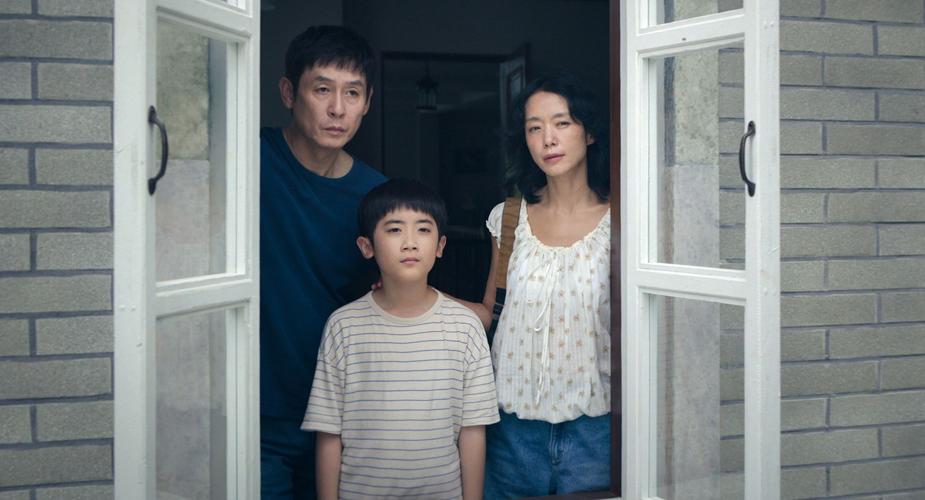
Jeon Do-yeon who worked with Lee Chang-dong on his film Secret Sunshine (2007) stars here as Ahn Mi-ok, a working class woman who is employed at a small shop in South Korea. She's married and has a child who is 10 years-old. She's struggling right now because her husband has recently been laid off. He lost his job because a private equity firm purchased her husband's company, downsized it, and is trying to sell it to the highest bidder. She's worried about her husband because he's been drinking too much and exhibiting signs of depression. At a funeral, she meets a female filmmaker who becomes intrigued by her husband's story. The filmmaker asks Mi-ok if she would be willing to be the subject of a documentary and more importantly if Mi-ok can persuade her husband to be in the film as well.
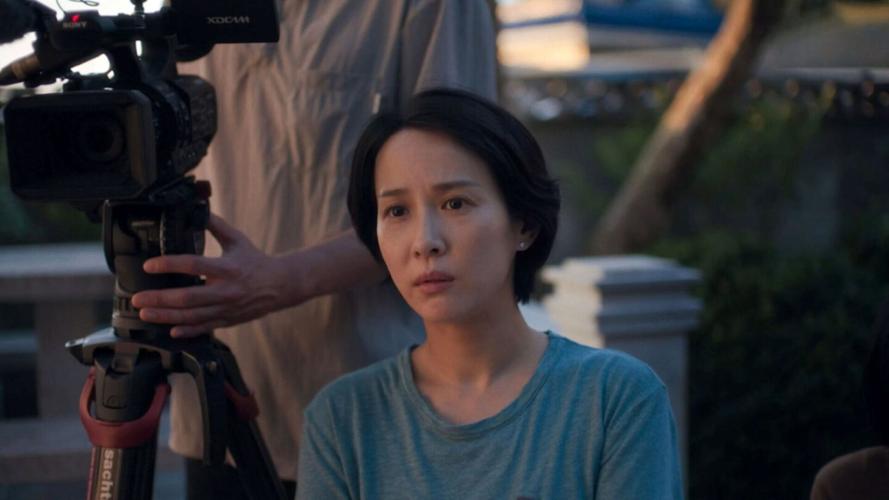
Cho Yeo-jeong (Parasite) co-stars as Lee Ye-ji, the aforementioned filmmaker who is making a documentary. She works for a counseling center that makes grief videos or something to that effect. However, Ye-ji wants to do an independent film about the company that was just downsized and that laid off so many workers. The funeral that she attended where she met Mi-ok was the funeral of one of those workers who committed suicide after being laid-off. There was a protest that turned violent that preceded the lay-offs. Ye-ji would love to interview someone who was there and when she discovers that Mi-ok's husband was one of the those people, she becomes determined to interview him. Unfortunately, their first encounter is a bit tense and contentious, given that Mi-ok's husband was drunk, so getting him to sit down for an interview isn't going to be easy.

What Ye-ji decides to do is befriend Mi-ok and try to get on her good side. Ye-ji thinks if she can do so, then she can get Mi-ok to convince her husband to do the interview. What follows is somewhat of an examination of a documentary filmmaker's role in the lives of their subjects. Some documentary filmmakers would prefer to stay objective and at a distance from their subjects because they don't want to influence their subjects or even bias themselves. Plenty of films have tackled this issue, especially when it comes to journalists. Ye-ji isn't a journalist, but plenty of documentary filmmakers utilize journalist-like tactics or sensibilities, and most journalists don't befriend their subjects because if they have to report negatively about their subjects, they won't be biased to refrain or hold back. Yet, also, journalists don't befriend because it might alter the behaviors of their subjects. If their subjects think they're friends, the subjects might start making up stories or saying things that they think you as the filmmaker want to hear. It can especially be the case if the subjects are poor and the filmmakers are wealthy, which is the case here, but this film doesn't explore that as much as it could have.
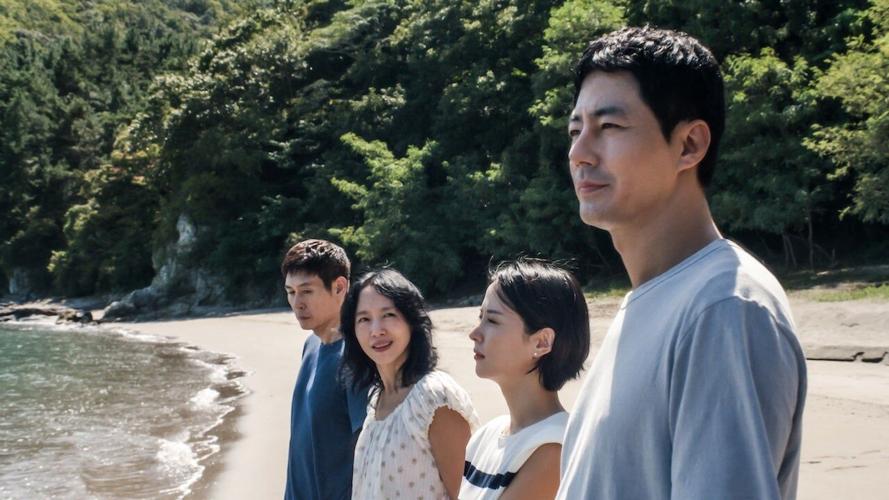
Zo In-sung (Hope) also co-stars as Sang-woo, the husband to Ye-ji. Even though Ye-ji has to pitch her film to investors in order to raise money and even though whatever money she does have is limited, her husband is seemingly rich. Not only does he come from a wealthy family, Sang-woo also works in finance or private equity. During the course of this film, he's working on a deal that could net him millions. He drives a fancy car and he has a summer house that has its own servants, as well as its own private beach next to the ocean. He tells a story about how he freely goes skinny-dipping because of its privacy. When Mi-ok learns of this, she calls it "freedom," which is seemingly something that she doesn't have.

Therefore, the film sets up this idea that Ye-ji's documentary could be corrupted because of the economic imbalance between her and Mi-ok. Yet, the film doesn't really go there. The film points out the imbalance, but it doesn't really do anything with it dramatically. It certainly doesn't go the lengths of something like Parasite. The film didn't need to go to those lengths. That's perhaps not Lee Chang-dong's instincts or preferences. The fact that he's showing this imbalance appears to be enough for him. The real meat on the bone of this film isn't the filmmaking aspects or what becomes the relationship between Mi-ok and Ye-ji. The real meat on the bone is the trauma that Mi-ok's husband is experiencing as a result of him losing his job.
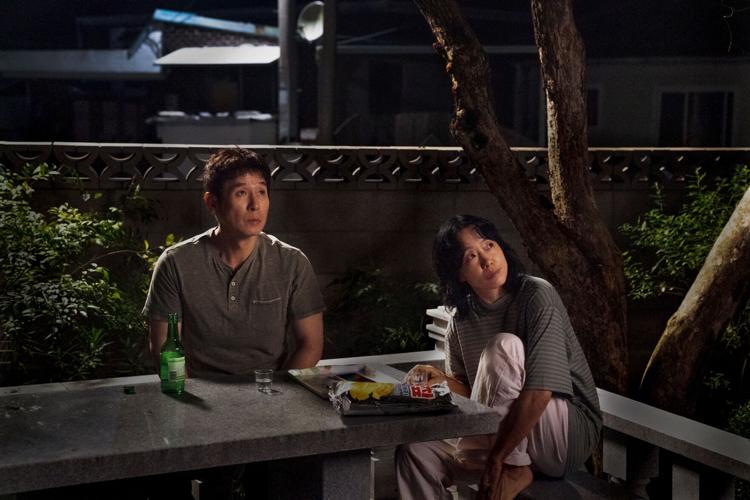
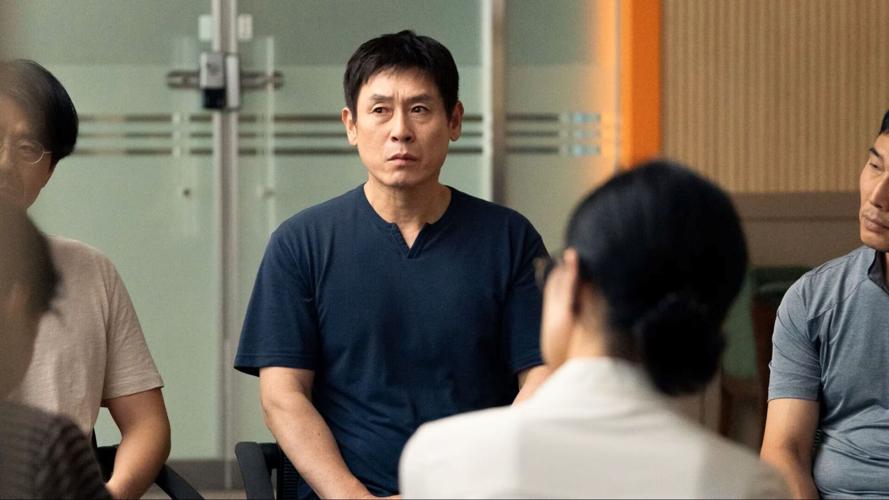
Sul Kyung-gu (Memoir of a Murderer) rounds out the cast as Ho-seok, the husband to Mi-ok. Ever since he was laid-off, he's been a bit of a wreck. His wife has been trying to get him to go to therapy, but he refuses. If him losing his job was a normal lay-off, one might understand his resistance. However, Ho-seok was involved in a protest that turned violent and brutal. During that protest, he was beaten to a pulp. He was beaten to an inch of his life by the police who came to supposedly keep the peace. He tried to help someone from a cop who was attacking and he ended up getting attacked himself. Yet, no one came to his defense, and that incident has left some psychological scars that he can't really handle. He does so by drinking, but there are other things, distancing things from his wife and son, that are troubling. This film becomes more of a character study of him.

He does go to a support group where other laid-off workers express their trauma and their difficulty with handling the loss of their jobs and their livelihoods. In various ways, it's the reverse of Jason Reitman's Oscar-nominated Up in the Air (2009). Instead of focusing on the person doing the firing, this film focuses on the fired and how they feel or what the effect on them might be. It leads to a very emotional moment for Ho-seok, which showcases an incredible performance from the actor embodying him. That showcase seems to be the point here. The plot, such that it is, doesn't come to any resolutions or conclusions. It simply ends on a place where we're left to stew with the wreckage and not much else.
Rated R for language, some sexuality, and nudity.
Running Time: 2 hrs. and 46 mins.
Available on Netflix.