
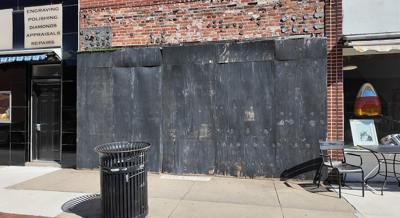

CAMBRIDGE, Md. — Cambridge officials are looking to get a clearer count of how many buildings in the city are sitting empty.
A revised ordinance introduced to the city commissioners Monday night would require owners of vacant properties to register them with the city. It would require owners of vacant commercial or residential properties to register them with the city.
Commissioner Brian Roche said the main goal is to establish a baseline.
“Vacancy is a big problem,” Roche said. “And part of the reason the ordinance exists is to have a mechanism to kind of categorize how big of a problem it is. One of the motivations behind the ordinance is to get people to register their properties, for no other reason than to know how many we have and to have a baseline to work against.”
The ordinance clarifies the definitions of "vacant commercial storefront" and "vacant residential structure." It is the second version of the legislation. Roche said the first draft drew feedback from city staff, including that it was too ambiguous about what counts as vacant.
The revision also lengthens the registration window from the originally proposed 90 days to 180 days. Roche said that gives owners time to learn the rule exists and gives city staff more time to start registering properties.
If the ordinance passes, owners of vacant buildings would pay an annual registration fee to cover the city's administrative costs. Owners who do not register would face a "nominal" fine.
Roche stressed that registering carries no penalty.
"If you have a vacant property, don't be scared," Roche said. "Actually realize that the intent of the ordinance is to, number one, just find out about the vacant properties and at the end of the day, solve the problem. If you don't want to have a vacant property, let the city help you figure out how not to."
Roche said a city report published a few years ago found that upwards of a third of properties in Cambridge were vacant. He cited a figure from this report estimating between 800 to 1,000 vacant properties are across the city, both commercial and residential.
The ordinance also includes an option for a community advisory group on vacant properties, which may include property owners. Roche said the mayor suggested the group.
Downtown business owners WBOC spoke with on Tuesday say vacancy is hurting them.
Charles Kilmon has owned The Heart of Dorchester Antiques for 16 years. He said the number of empty properties downtown has gotten worse over time.
"The vacant buildings does not help the occupied buildings because people come in from out of state, they look at the vacant buildings and [say] what is going on with the city? A vacant building hurts the economy. And we're getting more all the time,” Kilmon said.
Loralie Johnson, owner of The Starchild Family Trading Company, said empty storefronts on Race Street lead visitors to turn around before they reach her shop. She said the ordinance may motivate owners to fix up their buildings and open them as storefronts.
“I've noticed a lot of people or tourists that come into the town, stop about half way down the street because there are so many vacant buildings, they are not sure if there's anything, any shops or restaurants down on this end of Race Street,” Johnson said. “So it definitely hurts us a lot on this end…A lot of people, when they like to shop, they like to have a lot of options. And when they see that there's only one store in a whole block or maybe two, they won't go that way, for that very reason.”
Monday's meeting was the ordinance's first reading. Commissioners will take it up again at their next meeting at the end of the month.
Roche said the ordinance is open to further changes and encouraged residents and property owners to weigh in. The draft is on the city's website, starting on page 25 of this document.