
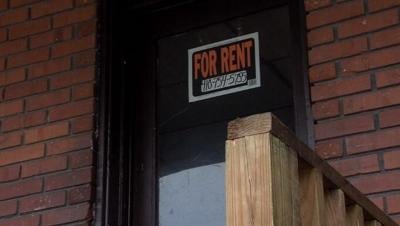

Several new Maryland laws affecting renters, prospective tenants and housing providers take effect Oct. 1.
The laws address criminal history screening, protections for renters who use income-based housing subsidies, rental payment reporting and air-conditioning requirements for certain apartment buildings.
Maryland Fair Chance Housing Act
The Maryland Fair Chance Housing Act establishes new requirements for how certain housing providers can consider an applicant’s criminal history.
The law applies to housing providers that own or manage five or more residential units in Maryland, with some exceptions.
Under the law:
Housing providers generally must make a conditional offer of housing before checking an applicant’s criminal history, unless the applicant is required to disclose certain convictions during the application process.
If an offer is withdrawn because of an applicant’s criminal history, the housing provider must provide the reason and allow the applicant to request a reassessment.
Applicants may provide additional documentation about a conviction during the reassessment process.
Housing providers cannot advertise that they will not consider applicants with criminal histories.
Housing providers cannot require prospective tenants to undergo drug or alcohol testing.
Violations can result in penalties of up to $500 per violation.
The law generally applies to housing providers that own or manage five or more residential units. Owner-occupied rental units are among the exceptions.
The Maryland Department of Housing and Community Development is developing voluntary model forms to help housing providers follow the new requirements.
Effective date: Oct. 1, 2026
Protections for renters using housing subsidies
Another new law establishes protections for prospective tenants who use income-based housing subsidies.
When a prospective tenant will use a housing subsidy to pay rent, a housing provider generally cannot deny the applicant based on:
Income
Credit score or lack of a credit score
Adverse credit history from a period before the applicant received the subsidy
Housing providers can still verify that an applicant has enough income to pay the portion of rent not covered by the subsidy.
They can also consider other commercially reasonable and nondiscriminatory information, including:
References from previous or current housing providers
Lease violations
Failure to pay utilities
Nuisance complaints
Property damage
Tenants can opt into rent reporting
The law also gives tenants the option to have their positive rental payment history reported to consumer reporting agencies.
The payments must be complete and made on time.
Housing providers must:
Include the option for new leases beginning Oct. 1.
Offer the option to tenants with leases signed before Oct. 1 by Jan. 1, 2027.
Offer the option at least once each year.
Housing providers may charge participating tenants a fee, but it cannot exceed the lesser of the provider’s actual cost or $10 per month.
New air-conditioning requirements
A separate law establishes air-conditioning requirements for certain residential rental units in apartment buildings with 10 or more individual dwelling units.
The requirements apply to certain units, including:
Residential rental units constructed after June 1, 2026.
Units that had air conditioning provided at any time after Jan. 1, 2025.
Units where the lease required the housing provider to provide air conditioning after Jan. 1, 2025.
Certain units undergoing renovations after Oct. 1, 2026, involving replacement or substantial upgrades to electrical or heating systems.
Properties listed on the National Register of Historic Places are excluded.
Cooling requirements
Covered housing providers must make air conditioning available that is capable of cooling a residential rental unit to 80 degrees Fahrenheit or lower from June 1 through Sept. 30 each year.
If the housing provider controls the air-conditioning system, the provider must maintain the unit at 80 degrees or lower during that period.
The new housing laws take effect Oct. 1, 2026.