
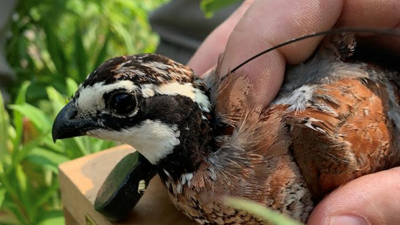

BRIDGEVILLE, Del. - The Delaware Department of Natural Resources and Environmental Control is looking to expand its efforts to repopulate a once-common bird throughout Delaware, with a wildlife area near Bridgeville being considered as a possible habitat.
According to DNREC, the Northern bobwhite quail was once plentiful throughout Delaware’s fields and grasslands. Today, however, the species’ populations have plummeted due to habitat loss, development, and pesticide use, DNREC says. Countrywide, the U.S. Department of Agriculture says the birds’ numbers plummeted by roughly 80% from the 1960s to 2020.
Efforts to bring the Northern bobwhite quail back, however, have seen success through habitat restoration along the Delaware Bayshore. Conservation work that began in 2009 at the Cedar Swamp Wildlife Area along the Delaware River and Delaware Bay is now showing promising results.
“Quail are a very habitat-driven species, so if we can bring back the habitat we typically can bring back quail populations,” said Eric Ludwig, a wildlife biologist and habitat program manager with the DNREC Division of Fish and Wildlife.
DNREC says one of the key land management changes helping to bring the quail populations back is controlled burning. While fire may seem like a danger to local wildlife, officials say it plays an important role in ecosystems, clearing brush and leaving a landscape ideal for some species such as the northern bobwhite.
Officials have thus aimed to set prescribed burns at Cedar Swamp Wildlife Area every year and expanded those burns south on the Delaware Bayshore from New Castle to just south of Milford.
“About 15 years ago, northern bobwhite quail at Cedar Swamp Wildlife Area numbered in the dozens,” DNREC says. “Today, the population is more like 800 — an order of magnitude greater.”
Now, experts are hoping to repeat that success and encourage the birds to settle in other areas. One potential location is the Marshy Hope Wildlife Area east of Bridgeville. DNREC says a small number of quail has already been spotted there, so officials are planning to prepare the location for greater numbers in the coming years.
Growing quail populations could benefit Delaware hunters as well as other native species, officials say, as they are considered a keystone species.
“We say we’re doing a quail project, but the stuff that we’re doing on the ground for the habitat work is affecting a ton of different species, from some of the smallest species of insects up through one of the most important species from a hunting standpoint — white-tailed deer,” Ludwig said.