

SUSSEX COUNTY Del.- According to WILMAPCO, a study is underway to determine whether passenger rail service could return to parts of Delmarva, potentially connecting Wilmington or Newark with communities in Delaware and Maryland.
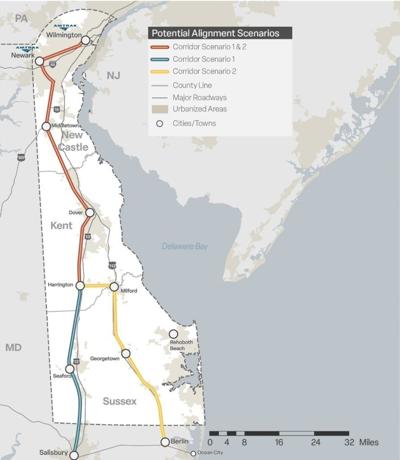
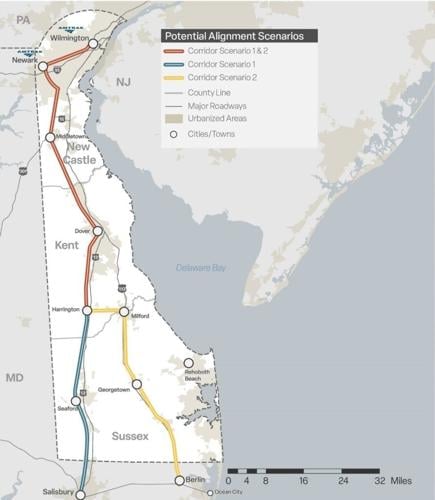
The State of Delaware received a Federal Railroad Administration Corridor Identification and Development grant to study the feasibility of extending passenger rail service called "Diamond State Line" south through Kent and Sussex counties to either Salisbury or Berlin, Maryland.
Delaware Transit Corporation and the Delaware Department of Transportation will manage the first step of the study.
The first step will determine whether the project moves forward. If approved, the next phases would focus on service planning, preliminary engineering and environmental work.
Albert Loyola, Chief Customer Experience Officer at Delaware Transit Corporation, says population growth in Kent and Sussex counties is one reason for interest in expanding passenger rail service.
"There's always been an interest in looking at potentially putting that great rail input into and going into Maryland just because of the growth that's been going on in those counties," he said.
People in the area say they believe passenger rail could help address traffic and transportation needs.
Wynona Sheldon said the area's rapid growth could make another transportation option valuable.
"We all know, this area is rapidly growing in number. So anything to cut down on the traffic congestion would be wonderful," Sheldon said.
Jeanette Giesecke said the train could also help people who need to travel for medical appointments.
"If you have doctor's appointments and things like that up north, which so many times that happens, that would be a big help, especially to the older population," Giesecke said.
WILMAPCO says specific station locations have not been finalized. The study will determine potential station locations along the route, including towns and activity centers.
WILMAPCO says one goal of the project is to give rural communities more access to educational institutions, medical facilities, housing, and retail and commercial services.
If the project moves into Step 2, officials expect the service development planning process to take approximately two to three years. Officials hope to begin Step 2A in early 2027.