
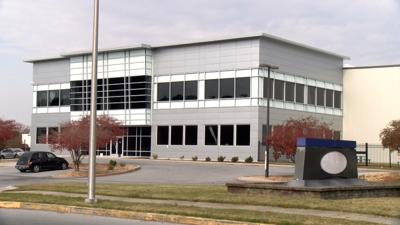

SALISBURY, MD - Salisbury City Council voted Monday to change the city's zoning code governing data centers, blocking plans for a data center at 207 Kiley Drive.
The ordinance amends Section 17.04.120 of the Salisbury City Code to establish a more specific definition of a data processing and computer center. The changes come one month into the city's one-year moratorium on data centers.
The property at 207 Kiley Drive is the former Jubilant Cadista pharmaceutical plant. The site spans 14 acres, including approximately 4 acres of concrete building space.
The property's owner, Vishal Patel, told city leaders during a public hearing Monday that he signed a lease to a tenant who intended to operate a data center after receiving a letter from the city indicating the proposed use was permitted.
Patel asked council members to delay changes to the zoning code, visit the site and give him an opportunity to present his case.
Mayor Randy Taylor said the letter sent in May was misunderstood and did not constitute approval of the project.
"We sent a letter that in fact is a permitted use,” Taylor said. “That's not the same as an approval."
Taylor said the city's existing zoning code was written before modern data centers became what they are today, prompting officials to reconsider how the facilities should be regulated.
The revised definition of a data processing and computer center under Ordinance 3032 is, “an on-premises room which houses computer systems, computer storage equipment, and associated infrastructure that a single business, school or organization uses to organize, process, store and disseminate large amounts of data…”
Council members also discussed establishing a task force to research data centers and make recommendations while the moratorium remains in place.
City officials said they intend to bring in experts to help inform the process and believe a decision could be reached before the moratorium expires.
Vishal Patel issued the following statement to WBOC News Thursday.
“My name is Vishal Patel. I live here. When the Cadista plant closed and more than 200 jobs left Kiley Drive, I bought the building because I believed something good could happen there again. I still believe that.
I understand the fear. The data centers people are reading about are campuses on hundreds of acres and hundreds of megawatts, drinking millions of gallons of water a day, with rows of generators beside neighborhoods and new power lines that everyone ends up paying for. Nobody wants that next door. Neither do I, and it is not what I proposed.
What we proposed is one existing industrial building, in an industrial park: about one-third the size of the 25-megawatt threshold the State of Maryland set this year for what counts as a large Data Center Load. It will run on the same electric service plant has access to. It uses no water for cooling. The heat leaves through a sealed glycol loop, like a car’s radiator, and air-cooled chillers, like the AC unit beside your house. The standby generators run only if the power goes out or during testing. It will be below the City’s set noise limit. It will buy its electricity the way every home and business in Salisbury does. No new substations, no new transmission lines, nothing that lands in a neighbor’s yard. Comparing this to what is on social media is comparing a grape to a large watermelon.
How we got here is simple, and I don’t believe anyone acted in bad faith. We did what every business does to open its doors in Salisbury: we asked the City whether the use was allowed. Under the industrial zoning language, the City confirmed that a data processing and computer center was a permitted use at 207 Kiley Drive. In response, I moved forward with the project. Looking back, I think this was the first request of its kind the City had seen, and later the City decided it needed parameters before anything else came. I understand and respect that.
While this decision creates challenges given the investment and work already committed to this project, I understand the City's desire to establish clear parameters, and I believe in community before any type of business. I am determined to work with the Mayor’s office and our council members; I plan to work with the data center task force, and I will share everything we know so no one has to guess about water, noise, or power—or rely on social media.
If this project goes forward, it will not be the mega data center you have been reading about. I want the same thing you do: a safe, healthy, growing community where we all grow with the world around us. A friend of mine likes to say the pioneers are the ones who take the arrows. That is fair; this is a new industry, and the fear is real. All I ask is that everyone take a few minutes to look at each worry one at a time, with real numbers, instead of thirty-second clips and manipulative headlines.
We all want a great community, great hospitals, and a great university. We want big companies to come here and create jobs, and we want to be part of what is growing around Wallops Island. We want technology that makes our city safer, and the fast internet we use at home, at work, and everywhere we go. All of it runs on data, and data centers will be built somewhere. The only question we, as a community, control is whether they get built under rules this community writes, by people who live here. I am confident that we can build a responsible one here, together, and be a model for many more cities around the country.”