
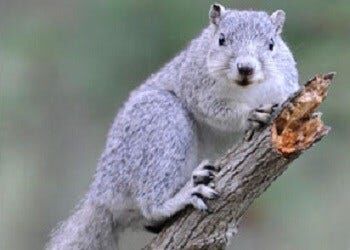

MILTON, Del. – The U.S. Department of the Interior on Friday announced that the Delmarva Peninsula fox squirrel, one of the animals included on the first list of endangered species nearly a half century ago, is no longer at risk of extinction.
FWS will officially remove the squirrel from the list of Threatened and Endangered Wildlife under the Endangered Species Act in December. The recovery was announced by Interior’s Principal Deputy Assistant Secretary for Fish and Wildlife and Parks Michael Bean on Friday at Prime Hook National Wildlife Refuge in Milton, Del.
Officials said that larger than other squirrel species and generally not found in suburban or urban areas, the Delmarva Peninsula fox squirrel ranged throughout the Delmarva Peninsula of Maryland, Delaware and Virginia before experiencing a sharp decline in the mid-20th century due to forest clearing for agriculture and development, short-rotation timber harvest and over-hunting. With its range reduced more than 90 percent, the squirrel was one of 78 species listed under the Endangered Species Preservation Act in 1967, the predecessor of the ESA enacted six years later.
“We are proud to be a major partner in the recovery of the Delmarva fox squirrel after 40 years of conservation efforts,” Maryland Department of Natural Resources Secretary Mark Belton said. “This success story would not have happened without the cooperation of federal and state agencies and conservation groups, as well as the private property owners of Maryland and Delaware who provided habitat for the endangered species on their own land.”
“The federal delisting of the Delmarva fox squirrel as an endangered species is an exciting milestone in the progress of wildlife conservation in Delaware and throughout the region,” said Deputy Secretary Kara Coats of the Delaware Department of Natural Resources and Environmental Control. “Although this unique species is secure on the federal level, it is still rare in Delaware. Through our Delmarva Fox Squirrel Conservation Plan, we have a path forward to further enhancing and restoring Delaware’s population of Delmarva fox squirrels as part of our state’s ecological diversity and landscape.”
Officials noted that with more than 80 percent of the squirrel’s home on private land, the squirrel has thrived on the rural, working landscapes of the peninsula where mature forests mix with agricultural fields.
Since listing, the squirrel’s range has increased from four to 10 counties, and a population of up to 20,000 squirrels now covers 28 percent of the Delmarva Peninsula, primarily in Maryland, officials said.
Efforts contributing to recovery include translocation of animals to establish new populations, closing of the targeted hunting season, growth and dispersal of the population, and protection of large forested areas for habitat, officials noted.
Officials said the Blackwater (Maryland), Chincoteague (Virginia) and Prime Hook (Delaware) national wildlife refuges provide unique opportunities to see this animal.
For more information about the Delmarva Fox Squirrel, click here.