


This is the third adaptation by Kenneth Branagh of an Agatha Christie story. As such, there's a sameness or structure that's repeated here. That structure includes the protagonist reluctantly entering into a situation, becoming trapped or confined to a specific space and then having to solve a murder inside that space. In Murder on the Orient Express (2017), he was trapped on a train. In Death on the Nile (2022), he was confined to a boat. He then has to interview a bunch of suspects who become even more or less suspicious. He then ends it all by revealing who the killer is and exactly how they did it in a long monologue.
What's frustrating is that this film and even the previous ones never really invite the audience to solve the mystery along with the protagonist. Yes, the bread crumbs are there, but the film never invokes the fun of the audience being able to put the clues together. This is both a good thing and a bad thing. The good thing is that it can be a shocking, if not welcoming surprise when the mystery is eventually solved. The bad thing is that it can be tedious or even frustrating, knowing that the mystery is beyond you, and you simply have to wait to be spoon-fed the answers. Even Law & Order (1990) invites the audience more into the investigation or process. There is literally a scene in this film where a dead body is discovered and the only shot is a wide. We don't even see or get to examine what the murder weapon is. How is the audience supposed to solve the murder if we can't even get a close-up shot of the murder weapon to even discern what it is?

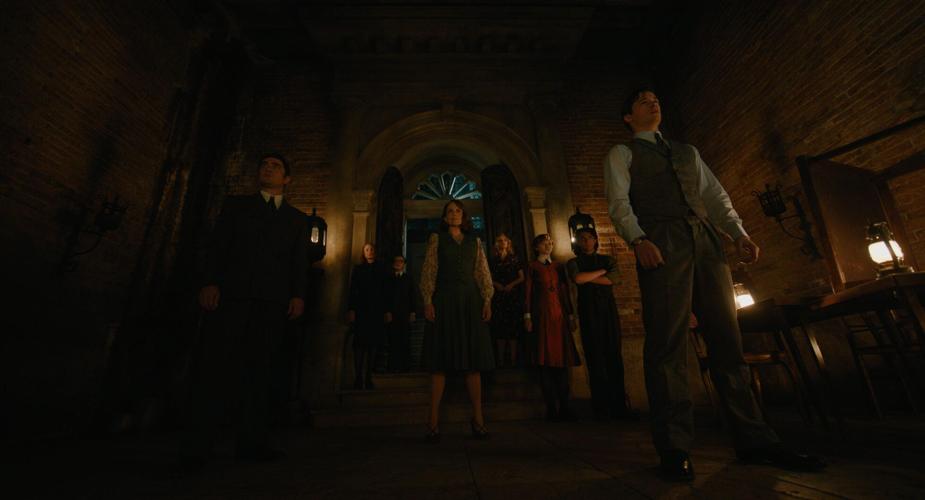
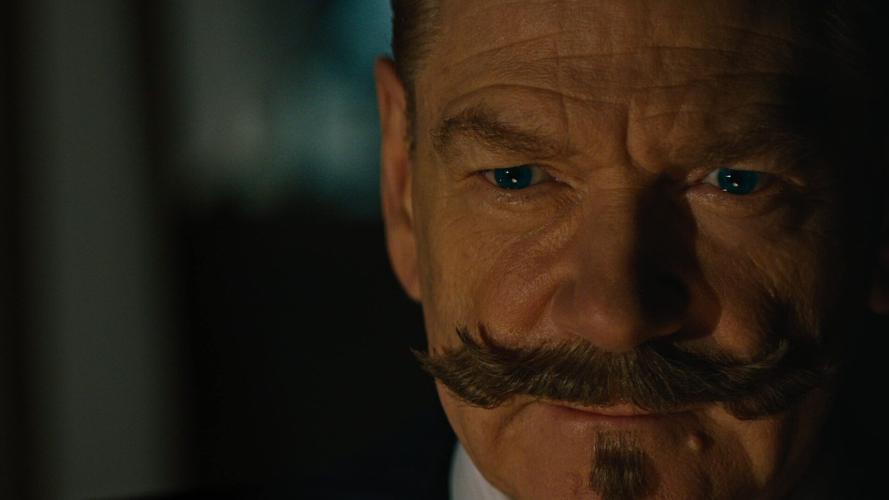
Branagh (Henry V and Harry Potter and the Chamber of Secrets) stars as Hercules Poirot, the world-famous, Belgian detective who is either vacationing or perhaps officially retiring in Italy. Branagh is also the director of this feature and before his character becomes trapped, the film tries to make use of the Italian city of Venice. In fact, because his film is mostly confined to one space, Branagh tries to jazz up that space and this whole film with odd or creative camera choices. Dutch angles, high awkward angles, violations of the rule of thirds are the galore.
It's not just the cinematography. The soundtrack is filled with loud noises, veritable jump scares. The editing involves a lot of hard cuts as well. This isn't simply to jazz up what would be static or stayed visuals. It's also to enhance what is trying to be a horror film. Each of these Agatha Christie stories involves often terrible or brutal murders, so an element of horror is inherent, but none of the previous films were actively trying to be scary. This one is. It might be trying too hard with overbearing aesthetic choices, but, for those who didn't appreciate the previous entries by Branagh, this is a rather refreshing take on the material. The only issue is that Branagh possibly goes too far with it. Yet, it's not too far flung from the tone of the previous films.

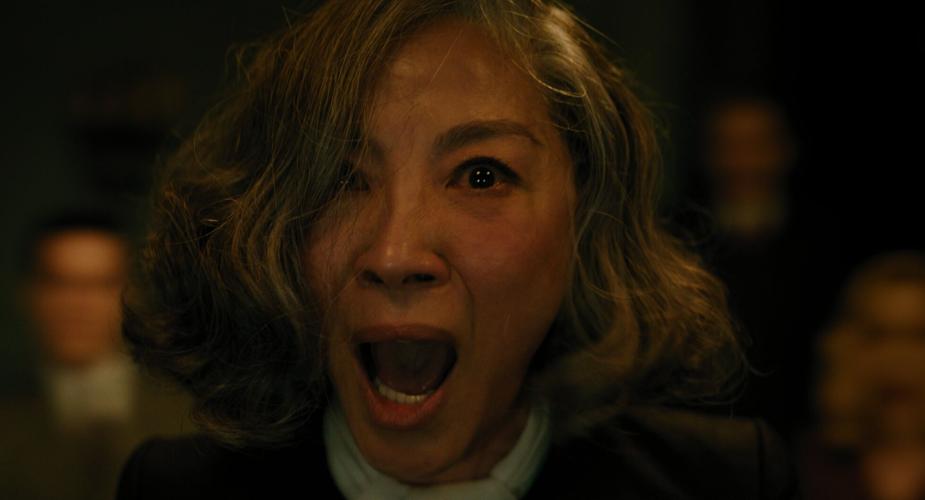
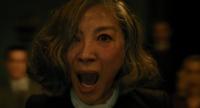
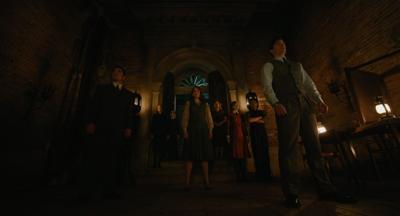
There is a dramatic question of whether or not ghosts exist and whether or not Poirot should or will believe in them. Poirot goes to an allegedly, spirit-filled palazzo. Much like the murder investigation, this dramatic question isn't that deeply explored or explored in a way that invites the audience into it. It's obvious that Poirot is skeptical about ghosts and the supernatural, but, there isn't much of an interrogation as to why. Poirot spends a large chunk of this narrative interrogating suspects, but there isn't much interrogation of him. The only person who really tries is the character played by Michelle Yeoh (Everything Everywhere All At Once) and they really only get one scene together. Is Poirot an atheist? Does he not believe in an afterlife at all? The film seems like it wants to provide us insight into Poirot, but it feels as if Poirot is himself as much a mystery as any of the crimes he solves.
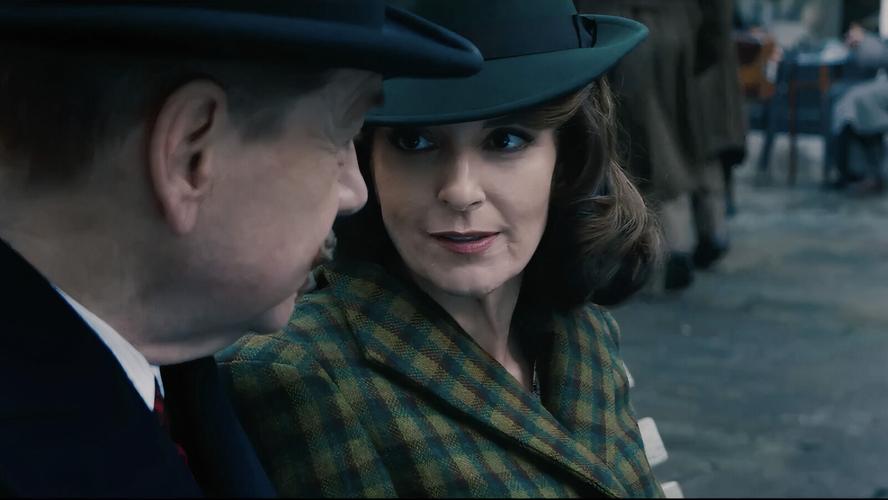
This would've been fine, if the film gave us more about the rest of the supporting cast. Yes, Poirot interrogates all the other characters. Those interrogations are meant to grant us that insight or delve into them more. I suppose it's enough to make the characters distinct, but it's not enough to make them feel like anything more than just chess pieces. Tina Fey (30 Rock) plays Ariadne Oliver, an author whose books were inspired by Poirot's work and whose books helped to make Poirot famous. They also befriended each other. Fey's character is probably the most developed, as we basically get more of her, given she's the Watson to Poirot's Sherlock Holmes. The only interesting moment is when the two turn on each other. Yet, the relationship never felt deep enough ultimately for me to care.

Rated PG-13 for some strong violence, disturbing images and themes.
Running Time: 1 hr. and 43 mins.
In theaters.